
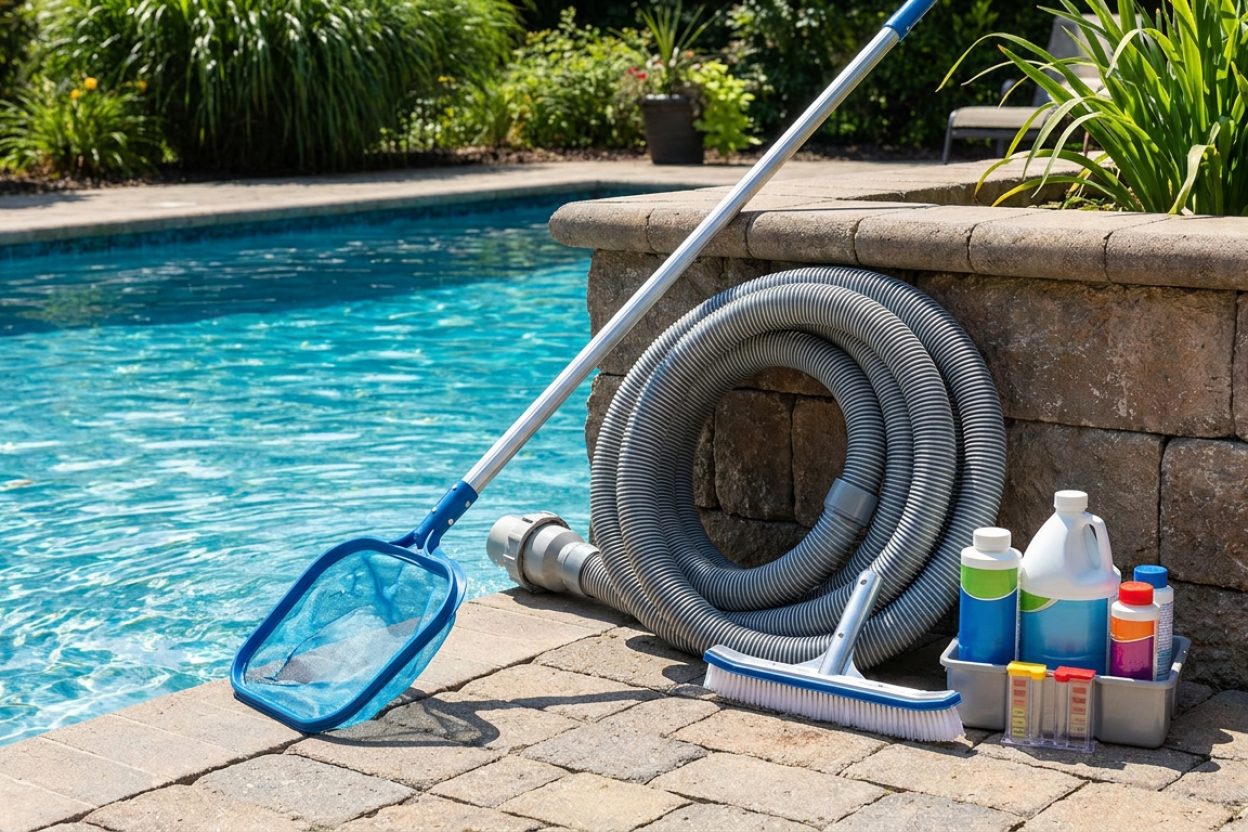
Do I Need to Shock My Pool Every Week? Complete Guide

Frustrated with weekly pool shocking - is this really necessary?
Read full question
Called three pool stores about weekly shock treatments and they're all pushing $15 products, but is this actually necessary or just a sales pitch? My pool has been relatively clear lately and I've been pretty good about keeping up with daily chlorine levels. But then I had one algae outbreak earlier this season and now I'm paranoid about skipping the weekly shock treatment. Is weekly shocking really required, or are there specific situations when I actually need to do it? I want to maintain a healthy pool without going overboard on chemicals.
Quick Answer
Most pools don't need weekly shocking if you maintain proper daily chlorine levels. Shock only when free chlorine drops below minimum levels, after heavy use, storms, or when combined chlorines exceed 0.5 ppm. Maintain consistent sanitizer levels based on your cyanuric acid (CYA) level, and use the SLAM method for algae treatment. For dosing calculations, use our all-in-one pool calculator for a quick estimate, but always re-test your water after dosing.
Understanding When to Shock Your Pool
The "shock every week" rule comes from old pool maintenance practices that didn't account for modern water chemistry understanding. Today's approach focuses on maintaining consistent sanitizer levels rather than routine shocking.
Test-Based Shocking Schedule
Your shocking schedule should be based on actual water testing, not a calendar. Test your pool water 2-3 times per week using a reliable test kit like the Taylor K-2006C. Look for these indicators:
- Free chlorine below minimum: If your FCFree Chlorine — The chlorine actively sanitizing your water right now. This is the number you keep an eye on. how much you need → drops below the minimum level on the FC/CYAFC/CYA chart — The chart that sets your chlorine target from your stabilizer (CYA) level — the two go together. see the chart → chart, bring it back up to target range
- Combined chlorines above 0.5 ppm: This indicates chloramine buildup requiring oxidation
- Cloudy or dull water: Even with adequate FC, water may need oxidation to clear organic contaminants
- Strong chlorine smell: Ironically, this indicates insufficient free chlorine, not too much
Proper Chlorine Levels vs. Shocking
The key to reducing shock frequency is maintaining adequate daily chlorine levels. Your target free chlorine depends on your cyanuric acid level:
- CYACyanuric Acid (stabilizer) — Sunscreen for your chlorine — it keeps sunlight from burning it off. The catch: the more you have, the more chlorine you need to keep. learn more → 30 ppm: FC minimum 2 ppm, target 3-5 ppm
- CYA 40 ppm: FC minimum 3 ppm, target 4-6 ppm
- CYA 50 ppm: FC minimum 4 ppm, target 5-7 ppm
- CYA 60-70 ppm (salt water pools): FC minimum 5-6 ppm, target 6-8 ppm
When you maintain these levels consistently, your pool stays sanitized without frequent shocking.
When Shocking Is Actually Necessary
After Heavy Pool Usage
Large pool parties or extended swimming sessions introduce significant organic load. Shock the evening after heavy use by raising FC to shock level (40% of your CYA level) and let it work overnight.
Following Severe Weather
Thunderstorms, heavy rain, or high winds can introduce contaminants and deplete chlorine rapidly. Test immediately after storms and shock if FC has dropped significantly or if water appears cloudy.
Algae Prevention and Treatment
If you notice early algae formation or want to prevent growth during hot weather, shocking can provide extra oxidation power. However, for established algae blooms, follow the SLAMShock Level And Maintain — raise free chlorine to a target based on your CYA and hold it there until the algae is gone. It's a process, not a one-time dose. the SLAM walkthrough → method (Shock Level And Maintain) - which requires continuously maintaining FC at shock level until algae is eliminated - rather than simple shocking.
How to Shock Properly When Needed
Choose the Right Shock Product
Liquid chlorine (sodium hypochlorite) is the most effective shock treatment. Avoid calcium hypochlorite (cal-hypo) in regular maintenance as it raises calcium hardness and pH. Never use dichlor shock regularly as it adds cyanuric acid with each treatment.
Dosing Calculations
For a quick estimate, you can use our all-in-one pool calculator, but always re-test your water after dosing and follow the product label or manufacturer's instructions.
Timing and Application
Shocking in the evening is best (daytime sun burns off chlorine faster), but you can shock during the day when you need to — like a fresh opening or a green pool — just expect to use a bit more. Pour liquid chlorine around the pool perimeter with the pump running. Retest FC after 1-2 hours to ensure proper distribution, then again the next morning.
Cost-Effective Chlorine Maintenance
Daily chlorine addition costs far less than weekly shocking. A typical 20,000-gallon pool might need 16-24 ounces of liquid chlorine daily during summer, costing roughly $5-10 per week (prices vary by region and bulk vs retail). Weekly shocking uses 1-2 gallons, costing $8-12 weekly while leaving the pool undersanitized between treatments.
Signs You're Over-Shocking
- Consistently high FC readings: If FC regularly tests well above the top of the target range for your CYA (when you're not actively running a SLAM), you're adding too much
- pH constantly rising: Most shock products raise pH significantly
- Skin and eye irritation: Usually from combined chlorines, but can result from excessive FC
Creating Your Personal Schedule
Develop a maintenance routine based on your pool's specific needs:
- Test water 2-3 times weekly during swimming season
- Add daily chlorine to maintain target FC levels
- Shock only when testing indicates need - typically every 2-4 weeks during normal use
- Increase monitoring during heavy use periods or adverse weather
- Adjust based on results - some pools may need more frequent attention
Safety reminder: Always add chemicals to water, never water to chemicals. Store liquid chlorine in cool, dark areas and use within one swimming season for maximum effectiveness.
For the full breakdown of safe chlorine levels by CYA level, see our pool water chemistry guide.
 Taylor K-2006C Complete FAS-DPD Pool & Spa Test Kit
The FAS-DPD kit pool pros trust — reads chlorine accurately even at shock/SLAM levels, plus pH, alkalinity, calcium hardness and CYA. View on Amazon →
Taylor K-2006C Complete FAS-DPD Pool & Spa Test Kit
The FAS-DPD kit pool pros trust — reads chlorine accurately even at shock/SLAM levels, plus pH, alkalinity, calcium hardness and CYA. View on Amazon →
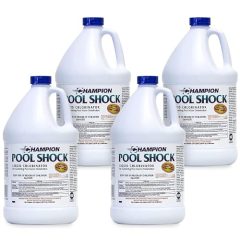 Liquid Chlorine / Sodium Hypochlorite (12.5%)
Everyday sanitizer — the B in BBB View on Amazon →
Liquid Chlorine / Sodium Hypochlorite (12.5%)
Everyday sanitizer — the B in BBB View on Amazon →
Still need help? Ask a Pool & Spa Expert AD
Get a personalized answer from PoolGuy810 — 30 years owning a pool and spa repair company. Describe your issue and get step-by-step help.
Need More Help?
Try our free pool calculators and tools to help diagnose and fix your pool problems.
Browse Pool ToolsSLAM calculator, pH calculator, salt dosing & more