
Do I Need DE in My Pool Filter? Diagnosis & Solutions

Is DE necessary for my pool filter system with kids swimming?
Read full question
I turned to three different pool techs about my 2019 Pentair FNS Plus cartridge system and got three completely different answers about adding DE. My kids spend hours in the pool every day during summer, and I want to make sure the water is as clean and safe as possible for them.
I'm honestly not even 100% sure what type of filter system we have - the previous homeowner left some DE powder in the pool shed, but I don't know if I'm supposed to be using it or not. How do I figure out if my specific filter needs DE, and if so, what's the right way to add it? I just want crystal clear water that's safe for my children to swim in every day.
Quick Answer
You need DE (diatomaceous earth) in your pool filter only if you have a DE filter system. First diagnose your filter type, then follow proper DE application procedures. If you have a Pentair FNS Plus, note that it's a vertical-grid DE filter (not a cartridge), so yes - it needs DE.
First, Let's Diagnose Your Filter Type
Despite what you've heard, not all pool filters need DE to work properly—and adding it to the wrong type could actually damage your system. This is crucial because DE is only used in specific filter types, and adding it to the wrong system can cause serious damage.
If you have a 2019 Pentair FNS Plus, here's the direct answer: the FNS Plus is a vertical-grid DE filter, not a cartridge filter - there is no cartridge version. That's exactly why the previous owner left DE powder in the shed, and yes, you need to add DE after you clean or backwash it. Don't let the "cartridge" label fool you - the rule below about never adding DE to a cartridge filter does NOT apply to your FNS Plus.
Check these key indicators:
- DE Filter: Has a large cylindrical tank with internal grids covered in fabric, requires DE powder to coat the grids
- Sand Filter: Contains sand media in a tank, uses backwashing to clean
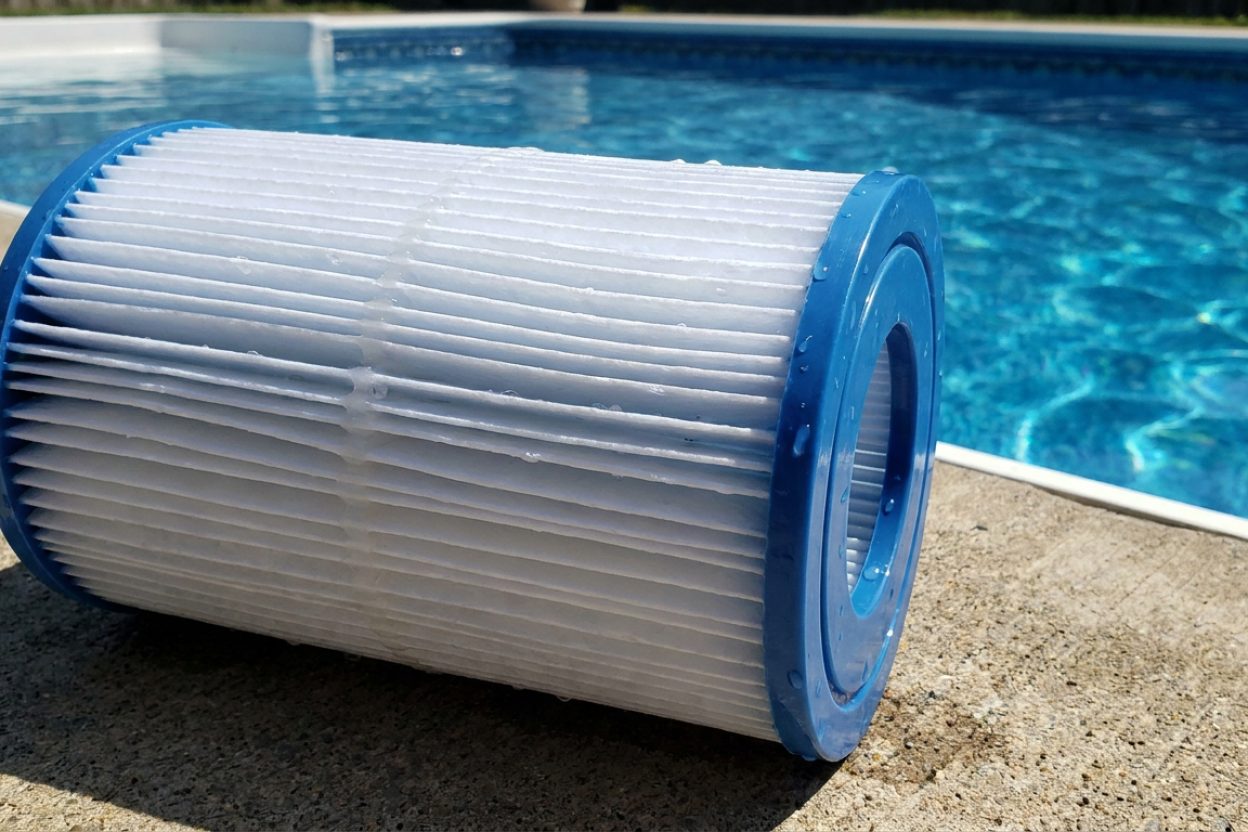
- Cartridge Filter: Uses replaceable pleated cartridge elements that you remove and clean
When You DO Need DE in Your Filter
If you have confirmed you own a DE filter system, then yes, you absolutely need DE powder for proper operation. DE filters work by coating internal grids with a thin layer of diatomaceous earth, which acts as the actual filtration medium. Without DE, your filter cannot trap debris and contaminants effectively.
Signs Your DE Filter Needs Fresh DE:
- Pool water appears cloudy or hazy despite proper chemical balance
- Reduced water flow from return jets
- Pressure gauge reading 8-10 PSI above clean starting pressure
- Visible debris passing through return jets
- Recent backwashing or filter cleaning cycle completed
Step-by-Step DE Application Process
When your diagnosis confirms you need to add DE to your filter, follow this precise procedure:
Calculate Required DE Amount:
Most DE filters require 1 pound of DE powder per 10 square feet of filter area. Check your filter manual for exact specifications, but typical amounts are:
- 24 square foot filter: 2.4 pounds DE
- 36 square foot filter: 3.6 pounds DE
- 48 square foot filter: 4.8 pounds DE
- 60 square foot filter: 6 pounds DE
Proper Addition Procedure:
- If pressure is high (8+ PSI above start pressure), backwash the filter first
- Set the filter's backwash valve to the filter/normal position (the FNS Plus uses a slide/push-pull valve, not necessarily a multiport)
- Start the pump and let normal circulation begin - the running pump draws the DE through the system
- Mix measured DE powder with water in a bucket (ratio: 1 cup DE to 1 gallon water)
- Stir mixture thoroughly to prevent clumping
- Slowly pour DE slurry directly into skimmer while pump runs
- Allow 2-3 minutes between additions if adding multiple batches
- Open air relief valve on filter tank to bleed trapped air until water sprays steadily
- Monitor pressure gauge - it should rise 2-4 PSI after DE coating forms
Troubleshooting DE Filter Problems
Problem: DE Blowing Back into Pool
This indicates damaged filter grids or improper DE application:
- Inspect grids for tears in fabric coating
- Check grid assembly for proper seating
- Verify you're not adding excessive DE amounts
- Replace damaged grids immediately to prevent equipment damage
Problem: Poor Filtration Despite Fresh DE
Several factors can cause this issue:
- Water chemistry imbalance: Test and adjust pH (7.4-7.6), alkalinity (80-120 ppm), and sanitizer levels
- Insufficient circulation time: Run pump 8-12 hours daily minimum
- Algae growth: Perform SLAMShock Level And Maintain — raise free chlorine to a target based on your CYA and hold it there until the algae is gone. It's a process, not a one-time dose. the SLAM walkthrough → (Shock Level And Maintain) process with liquid chlorine (sodium hypochlorite)
- Old or contaminated DE: Use only fresh, pool-grade diatomaceous earth
When You DON'T Need DE
If you genuinely have a sand or cartridge filter system, never add DE powder (but note: a Pentair FNS Plus is a DE filter, not a cartridge, so this rule does not apply to it). Adding DE to a true sand or cartridge filter can cause:
- Clogged plumbing and equipment damage
- Pump impeller blockage requiring professional repair
- Voided equipment warranties
- Expensive system cleaning and restoration
Sand Filter Maintenance Instead:
Sand filters require backwashing when pressure rises 8-10 PSI above clean pressure. Replace sand media every 5-7 years for optimal performance.
Cartridge Filter Care Instead:
Clean cartridges every 2-4 weeks by removing and rinsing with garden hose. Replace cartridge elements every 2-5 years, or sooner if the fabric shows wear.
Safety and Best Practices
Important Safety Warning: Always wear an N95 respirator when handling DE powder, as inhaling fine particles can irritate respiratory systems. Purchase only pool-grade DE, never use industrial or pest control grades.
Store DE powder in a dry location away from moisture. Wet DE becomes difficult to mix and can form clumps that won't distribute properly through your filter system.
Maintenance Schedule
For DE filters, establish this routine:
- Weekly: Check pressure gauge readings
- Monthly: Backwash and add fresh DE if pressure exceeds 8-10 PSI above start pressure
- Seasonally: Disassemble filter, inspect grids, and perform thorough cleaning
- Annually: Replace damaged grids and gaskets as needed
Proper DE filter maintenance ensures crystal-clear water and extends equipment life. When in doubt about your filter type or maintenance procedures, consult your filter manual or contact a professional pool technician for guidance.
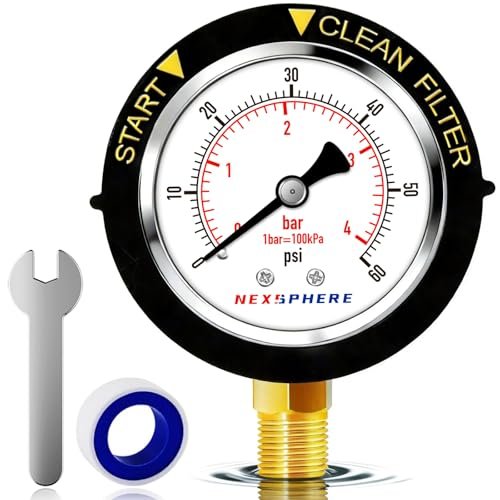 NexSphere Pool Filter Pressure Gauge, 0–60 PSI, 2 in Dial
Replacement back-mount gauge so you can read filter pressure and know when to backwash. View on Amazon →
NexSphere Pool Filter Pressure Gauge, 0–60 PSI, 2 in Dial
Replacement back-mount gauge so you can read filter pressure and know when to backwash. View on Amazon →
 50 ft Flexible Metal Garden Hose (Kink-Free)
Durable hose for filling, priming, and rinsing equipment. View on Amazon →
50 ft Flexible Metal Garden Hose (Kink-Free)
Durable hose for filling, priming, and rinsing equipment. View on Amazon →
Still need help? Ask a Pool & Spa Expert AD
Get a personalized answer from PoolGuy810 — 30 years owning a pool and spa repair company. Describe your issue and get step-by-step help.
Related Pool Guides
Need More Help?
Try our free pool calculators and tools to help diagnose and fix your pool problems.
Browse Pool ToolsSLAM calculator, pH calculator, salt dosing & more