
Can You Shock a Pool During the Day? Complete Guide

Is shocking my pool during the day wasting money on chemicals?
Read full question
Around midnight my pool water went from crystal clear to that nasty cloudy green mess, and the pool store insists I have to wait until evening to shock it. I've been shocking my pool during the day when I have time, but it seems like I'm going through way more chemicals than I should be.
Is there a better time to shock that would make my chemicals last longer? I'm trying to cut down on pool maintenance costs and do more of this myself instead of paying the pool guys every month.
Quick Answer
You can shock your pool during the day, but it's less effective due to UV rays breaking down chlorine. Evening shocking after sunset provides better results and longer-lasting sanitization. UV rays rapidly break down free chlorine, reducing effectiveness. Cyanuric acid (CYA) acts as a sunscreen for chlorine, but even with proper levels, some loss occurs. Daytime shocking is necessary in emergencies, but expect to use more chemicals. Indoor pools can be shocked anytime.
Why Daytime Shocking Is Less Effective
The sun's ultraviolet rays are chlorine's biggest enemy. When you add liquid chlorine or calcium hypochlorite during peak sunlight hours, the UV radiation immediately begins breaking down the free chlorine molecules you just added. This process, called photodegradation, can destroy much of your free chlorine within hours on a sunny day when CYACyanuric Acid (stabilizer) — Sunscreen for your chlorine — it keeps sunlight from burning it off. The catch: the more you have, the more chlorine you need to keep. learn more → is too low.
This is exactly why cyanuric acid (CYA) exists as a pool chemical. CYA acts as a sunscreen for chlorine, protecting it from UV breakdown. However, even with proper CYA levels of 30-50 ppm for regular pools or 70-80 ppm for salt water generators, some chlorine loss still occurs during intense sunlight.
When Daytime Shocking Makes Sense
Emergency Situations
Sometimes you must shock during the day, regardless of reduced effectiveness. If your pool turns green overnight or you discover contamination from wildlife, waiting until evening could worsen the problem. In these cases, proceed with daytime shocking but expect to use more chemicals and possibly repeat the treatment.
Cloudy Water Before a Pool Party
If guests are arriving and your water is cloudy, a daytime shock combined with proper filtration can help clear things up quickly. The immediate oxidation of contaminants may provide enough improvement for safe swimming, even if some chlorine dissipates.
Indoor Pools
Indoor pools without direct sunlight exposure can be shocked anytime without UV-related chlorine loss. The timing becomes irrelevant when UV rays aren't a factor.
Optimal Shocking Schedule
Best Times to Shock
- Evening (8-10 PM): Allows 8-12 hours of darkness for chlorine to work effectively
- Early morning (5-7 AM): Provides several hours before intense UV exposure
- Overcast days: Reduced UV intensity makes midday shocking more viable
Frequency Guidelines
Most pools don't need routine weekly shocking. If you keep free chlorine in the proper range for your CYA, you only need to shock to fix a problem — visible algae, cloudy water, high combined chlorine, or after heavy bather load, rain, or contamination. Heavy use, rainstorms, or high temperatures may require more frequent treatments.
Step-by-Step Daytime Shocking Process
- Test water chemistry using a quality test kit like the Taylor K-2006. Record current free chlorine, pH, total alkalinity, and cyanuric acid levels.
- Calculate shock dosage based on your cyanuric acid level using the all-in-one pool calculator. For CYA of 50 ppm, target shock level is 20 ppm free chlorine.
- Adjust pH if necessary. The usual target range is 7.4-7.6, mainly for comfort and to protect surfaces. Use muriatic acid to lower or sodium carbonate to raise pH.
- Choose your shock type. Liquid chlorine (sodium hypochlorite) works best and adds only chlorine. Avoid calcium hypochlorite in hard water areas.
- Add chemicals with pump running. Pour liquid chlorine slowly around the pool perimeter, never in one spot. For a 20,000-gallon pool, expect to use approximately 3 to 3.3 gallons of 12.5% liquid chlorine to reach 20 ppm from zero.
- Brush pool surfaces to distribute chemicals and prevent dead spots where algae can hide.
- Run filtration continuously for at least 8 hours, preferably 24 hours for severe contamination.
- Retest in 2-4 hours and add more chlorine if levels have dropped significantly due to UV exposure.
Maximizing Daytime Shock Effectiveness
Increase Dosage
When shocking during peak sun hours, consider using 25-50% more chlorine than you would for evening treatment. The extra chlorine compensates for UV losses while still providing adequate sanitization.
Multiple Applications
Instead of one large dose, try splitting your shock treatment into 2-3 smaller applications throughout the day. Add chlorine every 2-3 hours to maintain higher levels despite sun degradation.
Optimize CYA Levels
Ensure your cyanuric acid is in the proper range. Too low (under 30 ppm) provides insufficient UV protection. Too high (over 100 ppm) reduces chlorine effectiveness, making shocking less effective regardless of timing.
Safety Considerations for Daytime Shocking
Avoid swimming right after shocking. Wait until free chlorine is back under 10 ppm (per CDC), typically a few hours. High chlorine levels can cause skin and eye irritation, regardless of shocking time. Per the CDC pool code (Model Aquatic Health Code), free chlorine should not exceed 10 ppm while anyone is in the water, so wait until it is below 10 ppm to swim. The same code also calls for the water to be clear enough to see the bottom and pH held at 7.0-7.8. You can vacuum at any FCFree Chlorine — The chlorine actively sanitizing your water right now. This is the number you keep an eye on. how much you need →.
Store liquid chlorine in cool, shaded areas and handle with protective equipment. Splashing concentrated chlorine solutions can damage pool surfaces and landscaping.
Cost Implications
Daytime shocking typically costs 30-50% more than evening treatments due to increased chemical usage. A pool requiring 2 gallons of liquid chlorine in the evening might need 3 gallons during peak sunlight. Over a swimming season, this adds up to significant extra expense.
Common Mistakes to Avoid
- Using stabilized shock products repeatedly: This raises CYA levels too high, over-stabilizing the water (chlorine becomes much less effective)
- Shocking in direct sunlight without adequate CYA: Wastes chemicals and money
- Not retesting chlorine levels: Assuming shock worked without verification
- Adding shock to one area: Creates chemical hot spots that can damage surfaces
While you absolutely can shock your pool during the day, understanding the limitations helps you make informed decisions about timing and dosage. For routine maintenance, stick to evening shocking for maximum effectiveness and cost savings. Reserve daytime treatments for emergencies when water quality can't wait for sunset.
For the full breakdown of safe chlorine levels by CYA level, see our pool water chemistry guide.
 Taylor K-2006C Complete FAS-DPD Pool & Spa Test Kit
The FAS-DPD kit pool pros trust — reads chlorine accurately even at shock/SLAM levels, plus pH, alkalinity, calcium hardness and CYA. View on Amazon →
Taylor K-2006C Complete FAS-DPD Pool & Spa Test Kit
The FAS-DPD kit pool pros trust — reads chlorine accurately even at shock/SLAM levels, plus pH, alkalinity, calcium hardness and CYA. View on Amazon →
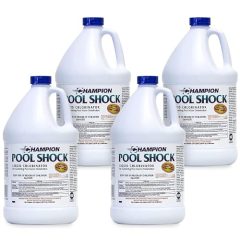 Liquid Chlorine / Sodium Hypochlorite (12.5%)
Everyday sanitizer — the B in BBB View on Amazon →
Liquid Chlorine / Sodium Hypochlorite (12.5%)
Everyday sanitizer — the B in BBB View on Amazon →
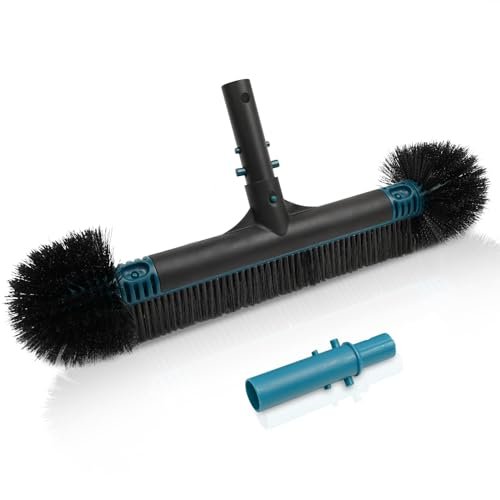 Poolvio 20" 2-in-1 Pool Brush Head (Walls & Floor)
Sturdy 20-inch brush head that clips onto any standard telescopic pole. View on Amazon →
Poolvio 20" 2-in-1 Pool Brush Head (Walls & Floor)
Sturdy 20-inch brush head that clips onto any standard telescopic pole. View on Amazon →
Still need help? Ask a Pool & Spa Expert AD
Get a personalized answer from PoolGuy810 — 30 years owning a pool and spa repair company. Describe your issue and get step-by-step help.
Need More Help?
Try our free pool calculators and tools to help diagnose and fix your pool problems.
Browse Pool ToolsSLAM calculator, pH calculator, salt dosing & more