
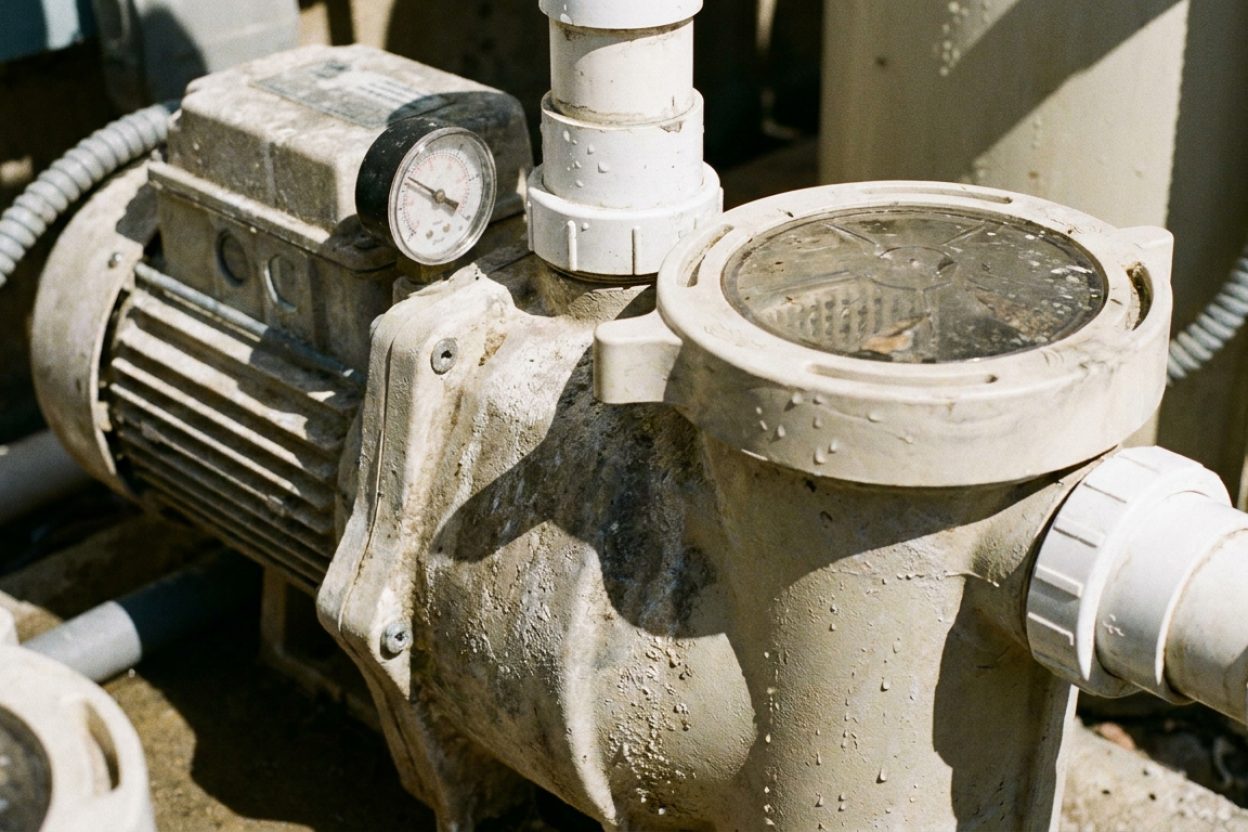
Can I Run My Pool Pump At Night? Complete Setup Guide

Running pool pump at night - worth it?
Read full question
Planning my pump schedule and getting totally different advice — my pool guy says daytime only, my neighbor insists on nighttime, and online forums are completely split. Will this actually save money on electric bills? Also wondering if there are any downsides to running it while we're sleeping vs during the day.
Current setup runs 8 hours during peak hours. Electricity rates are way cheaper after 9pm. Just want to make sure I won't mess anything up with water chemistry or circulation.
Quick Answer
Yes, you can absolutely run your pool pump at night. In fact, nighttime operation often saves money through off-peak electricity rates. (Note: pump timing does not reduce UV chlorine loss — chlorine is consumed by daytime sun regardless of when the pump runs; adequate CYA is what protects it.)
Step-by-Step Guide to Running Your Pool Pump at Night
1. Verify Your Electrical Setup
- Check that your pump is connected to a GFCI-protected circuit as required by electrical codes
- Ensure all electrical connections are weatherproof and properly sealed
- Confirm your pump motor is rated for outdoor use and can handle moisture from nighttime dew
- Test the GFCI outlet monthly by pressing the test and reset buttons
2. Install or Program Your Timer System
- Purchase a mechanical or digital pool timer rated for your pump's amperage (typically 20-30 amps for most residential pumps which draw 15-25 amps)
- Install the timer according to manufacturer instructions and local electrical codes, or hire a licensed electrician if you're uncomfortable with electrical work or if permits are required
- Program the timer to start your pump after sunset and run for the required duration based on your pool size
- For a 20,000-gallon pool, plan on running the pump 8-10 hours during summer months (assuming a pump flow rate of 40-50 GPM for complete daily turnover)
- Adjust runtime seasonally - you can reduce to 4-6 hours during cooler months when bather load and algae growth potential are lower
3. Optimize Your Chemical Schedule
- Add liquid chlorine in the evening before the pump starts its nighttime cycle
- Test and adjust pH to the 7.4-7.6 range before adding chlorine for comfort and balance (lower pH actually makes chlorine slightly more active)
- Maintain CYACyanuric Acid (stabilizer) — Sunscreen for your chlorine — it keeps sunlight from burning it off. The catch: the more you have, the more chlorine you need to keep. learn more → (cyanuric acid) levels at 30-50 ppm for traditional chlorine systems, or 70-80 ppm for salt water generators
- CYA (cyanuric acid) is what protects chlorine from UV; pump timing doesn't change daytime UV losses, so maintain CYA in range rather than relying on night running to save chemicals
- Test water chemistry every 2-3 days initially to understand how nighttime operation affects your chemical balance
4. Monitor and Adjust Performance
- Check your electricity bill after the first full month to confirm cost savings
- Monitor water clarity and chemical levels to ensure adequate circulation
- Adjust timer settings based on seasonal changes - longer runtimes in summer, shorter in winter
- Consider split scheduling if needed - run pump 4 hours at night and 2-4 hours during peak swimming times
Benefits of Nighttime Pump Operation
Cost Savings Through Off-Peak Electricity Rates
Many utility companies offer time-of-use rates with significantly lower costs during nighttime hours, typically from 9 PM to 7 AM. Pool pumps are among the highest electricity consumers in most homes, so this timing shift can reduce your monthly electric bill by 30-50% in areas with substantial rate differences.
Improved Chlorine Efficiency
UV rays from sunlight break down free chlorine rapidly, reducing its sanitizing effectiveness. Adding liquid chlorine in the evening lets it distribute fully before any swim use. Be aware, though, that the chlorine sitting in your water is still consumed by UV the next day no matter when the pump runs — CYA, not pump timing, is what limits that loss, so keep CYA in range and expect a daily FCFree Chlorine — The chlorine actively sanitizing your water right now. This is the number you keep an eye on. how much you need → swing.
Enhanced Chemical Distribution
Nighttime operation allows chemicals added in the evening to circulate thoroughly without immediate UV degradation or bather interference. This creates more consistent chemical levels throughout the pool and reduces the formation of dead zones where algae might develop.
Important Considerations and Safety Measures
Noise Considerations
Before switching to nighttime operation, consider your neighbors and local noise ordinances. Most modern pool pumps operate quietly, but older single-speed pumps can be noisy. If noise is a concern, consider upgrading to a variable-speed pump, which operates much more quietly and efficiently.
Maintenance Accessibility
Ensure you can safely access your pump equipment at night if issues arise. Install adequate lighting around your pool equipment area and keep a flashlight handy. Never attempt electrical repairs in wet conditions or without proper lighting.
Emergency Situations
Program your system so you can manually override the timer if needed. During algae blooms or after heavy pool usage, you may need additional daytime circulation. Consider installing a manual switch alongside your timer for these situations.
Seasonal Adjustments for Optimal Performance
During peak summer months, you may benefit from split operation - running the pump 6 hours at night for cost savings and chemical efficiency, plus 2-4 hours during peak swimming times for optimal water circulation when the pool is in use.
In winter months, reduce nighttime operation to 4-6 hours total, as chemical demand decreases significantly with lower temperatures and reduced bather loads.
Troubleshooting Common Issues
If you notice decreased water quality after switching to nighttime operation, first verify that your total daily runtime is adequate for your pool size and usage. The general rule is to turn over your entire pool volume once daily. Calculate runtime by dividing pool volume (gallons) by pump flow rate (GPM) ÷ 60 to determine hours needed for complete turnover. For a quick estimate, use our all-in-one pool calculator.
If algae development increases, ensure you're maintaining proper FC (free chlorine) levels according to your CYA level using the FC/CYAFC/CYA chart — The chart that sets your chlorine target from your stabilizer (CYA) level — the two go together. see the chart → relationship — our all-in-one pool calculator estimates the free chlorine target for your CYA. You may need to perform a SLAMShock Level And Maintain — raise free chlorine to a target based on your CYA and hold it there until the algae is gone. It's a process, not a one-time dose. the SLAM walkthrough → (Shock Level And Maintain) process if algae has already established.
For the full breakdown of safe chlorine levels by CYA level, see our pool water chemistry guide.

Still need help? Ask a Pool & Spa Expert AD
Get a personalized answer from PoolGuy810 — 30 years owning a pool and spa repair company. Describe your issue and get step-by-step help.
Related Pool Guides
Need More Help?
Try our free pool calculators and tools to help diagnose and fix your pool problems.
Browse Pool ToolsSLAM calculator, pH calculator, salt dosing & more