
Can Pool Cover Pumps Be Completely Submerged? Safety Guide

Pool cover pump underwater - safe or will it break?
Read full question
Winter cover is sagging with a foot of rainwater on top and my little cover pump can barely keep up. Worried about just tossing it in the deep end fully submerged to pump faster, but the cord connection doesn't look waterproof. Can these things actually run underwater safely?
Quick Answer
Yes — pool cover pumps are submersible by design and built to operate completely underwater, so a sagging cover or a fully submerged pump won't harm it. (Surface/utility pumps with exposed motors are different and must stay dry, but those aren't cover pumps.) Keep the plug dry and use a GFCI outlet.
Step-by-Step Guide to Safe Pool Cover Pump Submersion
Step 1: Identify Your Pump Type
- Check the manufacturer's label on your pump housing for "submersible" designation
- Check the owner's manual for the rated submersion depth, since most cover pumps specify this rather than an IP rating
- Review your owner's manual for specific submersion guidelines
- A popular dedicated cover pump is the Little Giant APCP-1700; submersible utility pumps such as the Wayne WaterBUG and Superior Pump 91570 are also commonly used to clear cover water
- If you cannot locate documentation, contact the manufacturer directly with your model number
Step 2: Inspect the Pump Before Submersion
- Examine all electrical connections for damage, corrosion, or loose wires
- Check that all seals and gaskets are intact and properly seated
- Verify the power cord has no cuts, nicks, or exposed wiring
- Ensure the intake screen is clean and free of debris
- Test the float switch mechanism by lifting and lowering it manually
- Confirm all housing screws are tight and the motor casing shows no cracks
Step 3: Prepare the Installation Area
- Clear the cover area of leaves, debris, and sharp objects that could damage the pump
- Identify the lowest point on your pool cover where water naturally collects
- Ensure you have a GFCI-protected electrical outlet within reach of the power cord
- Never use extension cords with pool cover pumps as this creates safety hazards
- Position the pump away from pool edges to prevent it from falling into the pool if the cover fails
Step 4: Install the Submersible Pump Safely
- Position the pump on the cover first, then plug it into the GFCI outlet (and unplug before removing it)
- Lower the pump gently into the deepest water area on the cover
- Allow the pump to settle naturally on the cover surface
- Ensure the intake is completely submerged and the discharge hose outlet is positioned to prevent backflow
- Position the float switch so it can move freely without obstruction
- Route the discharge hose away from the pool area to prevent water from flowing back
Step 5: Test the System
- Plug in the pump and verify it starts automatically when the float rises
- Watch for steady water flow through the discharge hose
- Check that the pump shuts off when water level drops and the float falls
- Listen for unusual noises that might indicate problems
- Verify the GFCI outlet is functioning by testing both the test and reset buttons
- Monitor the first few cycles to ensure proper operation
Critical Safety Warnings
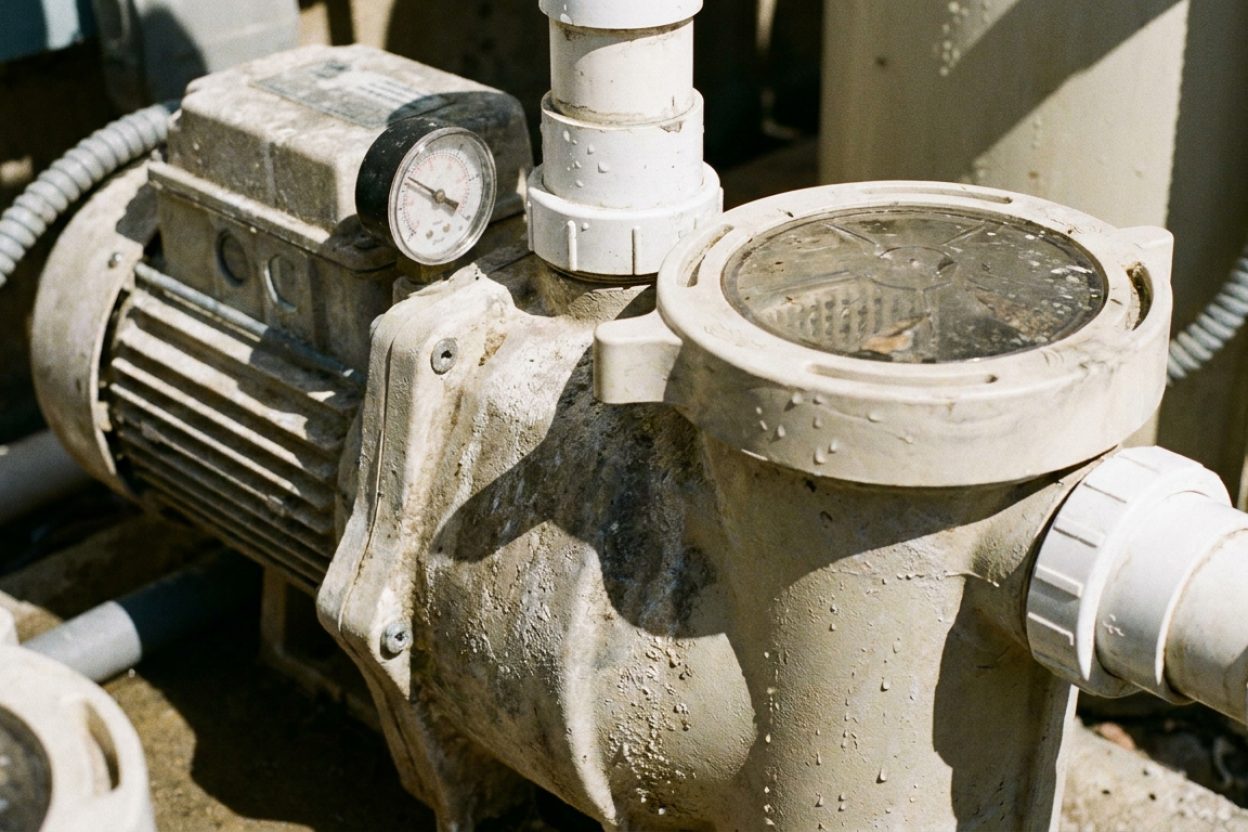
Never attempt to submerge a non-submersible pump. These units have ventilation holes and unsealed electrical components that will cause immediate failure and potential electrocution hazards. Non-submersible pumps are designed to sit on top of solid covers or decks where they can remain completely dry.
Always use GFCI protection when operating any electrical equipment near water. Even submersible pumps can develop seal failures over time, making GFCI protection essential for preventing electrical shock.
Signs Your Pump Should Not Be Submerged
- Ventilation holes or cooling fins on the motor housing
- Electrical connections that are not waterproof
- Labels indicating "not for submersion" or similar warnings
- Suction hose connections rather than direct intake designs
- Open motor housings without sealed enclosures
Maintenance for Submerged Cover Pumps
Submersible pumps require regular maintenance even though they're designed for underwater operation. Remove the pump monthly during heavy use periods to clean the intake screen and inspect seals. Replace worn gaskets immediately, as water intrusion will destroy the motor. Store pumps in a dry location during off-season to extend their lifespan.
Check the float switch regularly, as this is the most common failure point. Debris can jam the float mechanism, causing the pump to run continuously or fail to start. Clean around the float housing and test its movement each time you inspect the pump.
When to Replace Your Cover Pump
Replace submersible cover pumps immediately if you notice water inside the motor housing, unusual electrical odors, or failure to start. Continuing to use a compromised pump creates serious safety risks and may damage your electrical system. Quality submersible cover pumps typically last 3-5 years with proper maintenance.
Still need help? Ask a Pool & Spa Expert AD
Get a personalized answer from PoolGuy810 — 30 years owning a pool and spa repair company. Describe your issue and get step-by-step help.
Related Pool Guides
Need More Help?
Try our free pool calculators and tools to help diagnose and fix your pool problems.
Browse Pool ToolsSLAM calculator, pH calculator, salt dosing & more