
Can Above Ground Pools Be Salt Water? Complete Guide 2026

Converting above ground pool to salt water - what do I need?
Read full question
Tried following my pool manual that says above ground pools can't handle salt water systems, but keep seeing people online who've successfully converted theirs. What equipment do I need and are there any compatibility issues I should know about? Also heard something about different chemical levels for salt pools - is that true?
Quick Answer
Yes, above ground pools can be converted to salt water, but you need to verify liner compatibility, install a properly sized salt water generator, and maintain CYA levels between 70-80 ppm for optimal performance. The article provides detailed steps for assessing compatibility, installing the generator, and maintaining the pool, including the correct CYA dose rate and application method.
Diagnosing Salt Water Compatibility
Before converting to salt water, you need to assess three key areas of your above ground pool setup:
Liner Material Assessment
Most vinyl liners manufactured after 2010 are salt-compatible, but older liners may deteriorate faster in salt water. Check your liner documentation or contact the manufacturer with your model number. Avoid conversion if you have a liner older than 8-10 years as salt can accelerate deterioration of aging vinyl.
Metal Component Inspection
Examine all metal components in your pool system including ladder hardware, skimmer fittings, return jets, and any steel wall components. Stainless steel and properly coated metals handle salt well, but unprotected steel, aluminum, or cheap metal fittings will corrode rapidly. Replace any questionable metal components with salt-compatible alternatives before conversion.
Equipment Compatibility Check
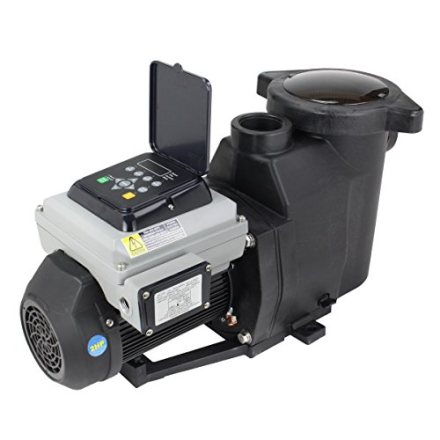
Your pump, filter, heater (if present), and other equipment must be rated for salt water use. Most modern pool equipment handles salt concentrations of 3,000-4,000 ppm without issues, but older equipment may need replacement. Check manufacturer specifications or look for "salt-compatible" markings.
Salt Water Generator Sizing and Selection
Once you've confirmed compatibility, selecting the right salt water generator is crucial for success:
Proper Sizing Guidelines
Size your salt water generator (SWGSalt Water Generator — The "salt cell" that makes chlorine from the salt in a saltwater pool. Same chlorine — it just makes its own. pool terms →) for your exact pool volume, not smaller. For above ground pools, calculate gallons using: rectangular = Length × Width × Average Depth × 7.5; round = Diameter × Diameter × Average Depth × 5.9 (so a 24-foot round, 4-foot-deep pool works out to ~13,500 gallons). A 24-foot round pool that's 4 feet deep holds approximately 13,500 gallons and needs a generator rated for at least 15,000 gallons to handle demand during hot weather and heavy use.
Installation Considerations
Above ground pool SWG systems typically install inline after your filter. Ensure you have adequate space and proper electrical supply (most above-ground salt systems plug into a standard 110-120V GFCI outlet; some dual-voltage units can also be wired to 220V). The cell should be installed horizontally when possible and easily accessible for cleaning every 2-3 months.
Conversion Process and Initial Setup
Converting your above ground pool to salt water requires specific steps and chemical adjustments:
Pre-Conversion Water Balance
Before adding salt, balance your water chemistry completely. Target pH between 7.4-7.6, total alkalinity between 60-80 ppm (lower than traditional chlorine pools), and calcium hardness around 175-225 ppm for vinyl liners. Use a quality test kit like the Taylor K-2006C for accurate readings.
Salt Addition Process
Add pool-grade salt (not table salt) to achieve 2700-3400 ppm. For a 15,000-gallon above ground pool, you'll need approximately 375-400 pounds of salt initially. Add salt with the pump running and brush thoroughly to dissolve. Never add salt directly onto the liner - always broadcast it around the pool perimeter.
Stabilizer Requirements
Salt water generators require higher CYACyanuric Acid (stabilizer) — Sunscreen for your chlorine — it keeps sunlight from burning it off. The catch: the more you have, the more chlorine you need to keep. learn more → (cyanuric acid) levels than traditional chlorine systems. Target 70-80 ppm CYA to protect the generated chlorine from UV degradation. Use our all-in-one pool calculator for a quick dosing estimate. Pre-dissolve the CYA in a bucket of hot water and pour it in slowly, or use the SOCK method (put the CYA in a sock/nylon in the skimmer basket, or hang it in front of a return, squeezing occasionally). CYA dissolves slowly, so retest after a few days to a week and do not add more until you're sure.
Ongoing Maintenance Requirements
Salt water above ground pools require different maintenance than traditional chlorine systems:
Weekly Testing Protocol
Test salt levels every 2-3 months (target 2700-3400 ppm), but check free chlorine, pH, and CYA weekly. Salt systems can cause pH drift upward, so you'll likely need muriatic acid additions every 1-2 weeks to maintain proper pH levels.
Cell Cleaning Schedule
Clean your generator cell every 2-3 months or when the system indicates scaling. Use a 4:1 water-to-muriatic acid solution (5:1 for light buildup) for calcium scale removal, or follow your manufacturer's spec. Always turn off power and follow manufacturer safety procedures when handling the cell.
Seasonal Considerations
In colder climates, remove and store the generator cell indoors during winter months. Salt water can be more corrosive to equipment during freeze-thaw cycles, so proper winterization is critical.
Common Issues and Solutions
Monitor for these typical salt water system problems in above ground pools:
- Low chlorine production: Check salt levels, clean cell, verify CYA isn't too high (over 100 ppm)
- Equipment corrosion: Ensure all components are salt-compatible and properly bonded electrically
- Liner staining: Usually indicates metal contamination - test and treat with metal sequestrant
- High pH drift: Normal for salt systems - add muriatic acid as needed to maintain 7.4-7.6 pH
With proper setup and maintenance, above ground salt water pools provide the same smooth, comfortable swimming experience as their in-ground counterparts while reducing daily chemical handling.
For the full breakdown of safe chlorine levels by CYA level, see our pool water chemistry guide.
 Taylor K-2006C Complete FAS-DPD Pool & Spa Test Kit
The FAS-DPD kit pool pros trust — reads chlorine accurately even at shock/SLAM levels, plus pH, alkalinity, calcium hardness and CYA. View on Amazon →
Taylor K-2006C Complete FAS-DPD Pool & Spa Test Kit
The FAS-DPD kit pool pros trust — reads chlorine accurately even at shock/SLAM levels, plus pH, alkalinity, calcium hardness and CYA. View on Amazon →
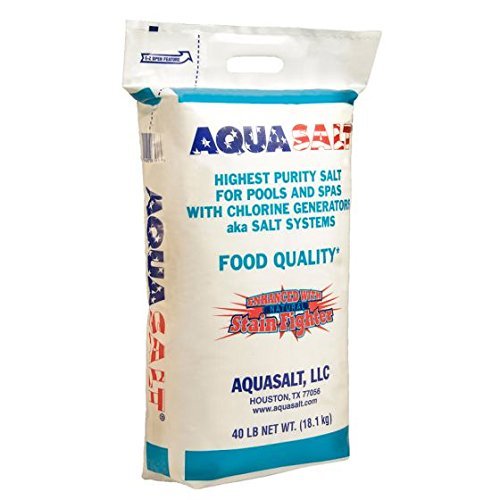 AquaSalt Pool & Spa Salt for Chlorine Generators (2 × 40 lb)
High-purity salt for saltwater chlorine generators. View on Amazon →
AquaSalt Pool & Spa Salt for Chlorine Generators (2 × 40 lb)
High-purity salt for saltwater chlorine generators. View on Amazon →
 Acid Blue - Low Fume Muriatic Acid for Swimming Pools & Spas - Lower's pH, Reduces Alkalinity - 2 Gallon
View on Amazon →
Acid Blue - Low Fume Muriatic Acid for Swimming Pools & Spas - Lower's pH, Reduces Alkalinity - 2 Gallon
View on Amazon →
 Pool Mate 4-Pounds Premium Pool Stabilizer and Conditioner, Concentrated Cyanuric Acid for Pools, Helps Chlorine Last Longer
View on Amazon →
Pool Mate 4-Pounds Premium Pool Stabilizer and Conditioner, Concentrated Cyanuric Acid for Pools, Helps Chlorine Last Longer
View on Amazon →
Still need help? Ask a Pool & Spa Expert AD
Get a personalized answer from PoolGuy810 — 30 years owning a pool and spa repair company. Describe your issue and get step-by-step help.
Related Pool Guides
Need More Help?
Try our free pool calculators and tools to help diagnose and fix your pool problems.
Browse Pool ToolsSLAM calculator, pH calculator, salt dosing & more