

Do You Need to Shock Pool After Filling? Complete Guide

Should I shock my newly filled swimming pool before using it?
Read full question
Staring at my freshly filled pool with a bucket of shock in hand — is it safe to dump this in right away, or could it damage anything? We just finished filling our 18x36 inground pool after having some liner work done this spring. The water came from our well and looks crystal clear, but I'm wondering if I need to shock it before my family starts swimming? A neighbor mentioned something about always shocking after a fresh fill, but I'm not sure if that's necessary since the water looks fine. What's the proper procedure here? I have test strips but haven't checked the chemistry yet - wanted to get some advice first on whether shocking is a must-do step.
Quick Answer
You should test your water chemistry first, then shock only if free chlorine is below the target for your CYA (fresh fill usually has no CYA, so add stabilizer first). Fresh fill water typically needs chemical balancing before shocking. Follow a systematic approach to ensure optimal water chemistry, adjusting total alkalinity and pH before adding chlorine. Use the all-in-one pool calculator to determine the correct shock dosage based on your pool volume and current chlorine levels.
Understanding Fresh Fill Water Chemistry
Shocking your newly filled pool is either a quick 10-minute chemical adjustment or a sign of bigger water quality issues — here's how to tell which situation you're dealing with. While shocking might seem like the logical first step, I'd recommend testing your water chemistry first to understand what you're working with.
Fresh fill water often contains little to no chlorine, especially from well sources, but it may also have balanced pH and alkalinity levels that you don't want to disrupt unnecessarily. The key is determining whether shocking is actually needed based on your specific situation.
When Shocking Is Necessary After Filling
You'll want to shock your newly filled pool in several specific scenarios. If your chlorine testing shows levels below the target for your CYACyanuric Acid (stabilizer) — Sunscreen for your chlorine — it keeps sunlight from burning it off. The catch: the more you have, the more chlorine you need to keep. learn more → level (FCFree Chlorine — The chlorine actively sanitizing your water right now. This is the number you keep an eye on. how much you need → targets scale with CYA per the FC/CYAFC/CYA chart — The chart that sets your chlorine target from your stabilizer (CYA) level — the two go together. see the chart → chart; fresh fill water typically has no CYA yet, so add stabilizer first), a shock treatment will establish proper sanitization levels quickly. This is particularly important if the fill water came from a questionable source or if debris entered during the filling process.
Additionally, if you notice any organic matter, leaves, or dirt that entered during filling, shocking helps eliminate potential contaminants before they become problematic. Some pool owners also prefer to shock as a precautionary measure when they're unsure about their water source quality.
Signs You Should Skip the Shock
If your water tests show free chlorine at or above the target for your CYA level (per the FC/CYA chart) and your pH and total alkalinity are within acceptable ranges, jumping straight to shock treatment could actually create more work for you. Over-chlorination mainly wastes product; its pH effect depends on the product, as cal-hypo shock raises pH while liquid chlorine has little net pH impact.
The Proper Startup Sequence
Rather than automatically reaching for shock, I'd suggest following a systematic approach that ensures optimal water chemistry from the start. Begin by testing your fresh fill water for pH, total alkalinity, calcium hardness, cyanuric acid (CYA), and any existing chlorine levels using a reliable test kit - test strips can work for initial readings, but liquid test kits provide more accurate results.
Start by adjusting your total alkalinity first, as this acts as a buffer for pH stability. Target a range of 80-120 ppm for most pools (verify recommended levels for your specific pool system). Once alkalinity is balanced, adjust your pH to the ideal range of 7.4-7.6. Fresh fill water also typically has no cyanuric acid (CYA), so add stabilizer to roughly 30-50 ppm for a plain-chlorine pool (or about 70-80 ppm for a saltwater/SWG pool) before you set your chlorine target — without CYA, a shock target of '40% of CYA' computes to nearly zero and unstabilized chlorine burns off in hours of summer sun. These foundational chemistry adjustments make any subsequent chlorination much more effective.
Calculating Your Shock Dosage
If testing confirms you need to add chlorine, calculate the proper amount rather than guessing. For a standard shock treatment, you'll typically need to raise your chlorine level to the shock level for your CYA (about 40% of CYA - consult manufacturer guidelines for your specific shock product). The all-in-one pool calculator is a handy reference to estimate how much shock to add based on your pool volume and current chlorine readings. Alternatively, you can do it by hand using the chlorine calculator, but note that the calculator is more accurate and takes into account product concentration.
Remember that calcium hypochlorite shock will raise your pH, while liquid chlorine has less impact on pH levels. Factor this into your chemical balancing strategy.
Special Considerations for Different Water Sources
Well water often requires different treatment than municipal water supplies. Well water may contain metals like iron or copper that can cause staining or discoloration when chlorinated. If you're using well water, consider testing for metals and treating with a metal sequestrant before adding any chlorine-based chemicals.
Some municipal water is treated with chloramines rather than free chlorine; if yours is, it means your initial chlorine demand might be higher as you break down these combined chlorines and establish a proper free chlorine residual.
Avoiding Common Fresh Fill Mistakes
Many pool owners make the mistake of adding all their startup chemicals at once, creating a chemical soup that's difficult to balance. Instead, add chemicals one at a time, allowing several hours between additions for proper circulation and distribution.
Another frequent error is neglecting to run the filtration system continuously during the initial balancing phase. Your pump and filter should run 24/7 for the first few days after filling to ensure proper chemical distribution and filtration of any particles or contaminants.
Finally, don't rush the process. While you're eager to start swimming, taking time to properly balance your water chemistry will save you significant time and money throughout the swimming season. Properly balanced water from the start prevents many common issues like algae growth, cloudy water, and equipment damage.
For comprehensive guidance on maintaining proper water chemistry throughout the season, refer to our detailed water chemistry guide which covers ongoing testing and adjustment procedures.
 Taylor K-2006C Complete FAS-DPD Pool & Spa Test Kit
The FAS-DPD kit pool pros trust — reads chlorine accurately even at shock/SLAM levels, plus pH, alkalinity, calcium hardness and CYA. View on Amazon →
Taylor K-2006C Complete FAS-DPD Pool & Spa Test Kit
The FAS-DPD kit pool pros trust — reads chlorine accurately even at shock/SLAM levels, plus pH, alkalinity, calcium hardness and CYA. View on Amazon →
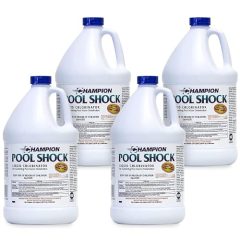 Liquid Chlorine / Sodium Hypochlorite (12.5%)
Everyday sanitizer — the B in BBB View on Amazon →
Liquid Chlorine / Sodium Hypochlorite (12.5%)
Everyday sanitizer — the B in BBB View on Amazon →
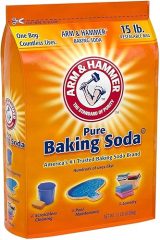 Arm & Hammer Pure Baking Soda (Alkalinity Up)
Raises Total Alkalinity cheaply View on Amazon →
Arm & Hammer Pure Baking Soda (Alkalinity Up)
Raises Total Alkalinity cheaply View on Amazon →
Still need help? Ask a Pool & Spa Expert AD
Get a personalized answer from PoolGuy810 — 30 years owning a pool and spa repair company. Describe your issue and get step-by-step help.
Related Pool Guides
Need More Help?
Try our free pool calculators and tools to help diagnose and fix your pool problems.
Browse Pool ToolsSLAM calculator, pH calculator, salt dosing & more