
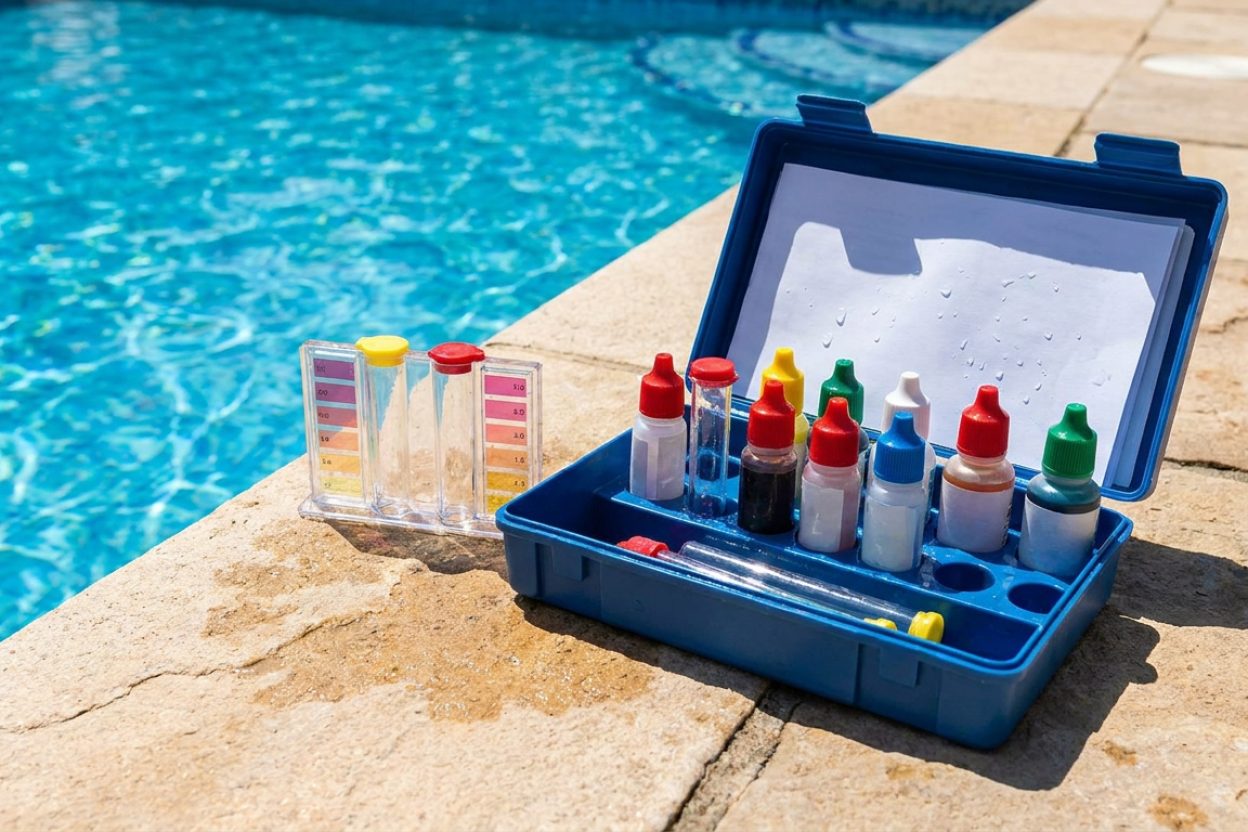
How to Lower Pool pH: Safe Methods & Dosing Guide 2026

What's the safest way to lower my pool's pH levels?
Read full question
I got my pool pH sitting at 8.2-8.4 despite following every YouTube tutorial on lowering it - somehow I'm just making things worse by randomly dumping pH decreaser. I'm worried I'm going to mess something up even worse.
What's the proper way to bring pH down safely? I have a 15,000 gallon pool and I want to do this right for once. Should I use the liquid stuff or the powder? And how much should I actually be adding? I'm done with the guesswork - I need a real plan that actually works.
Quick Answer
To lower pool pH, add muriatic acid (liquid) or sodium bisulfate (dry acid) to your pool water. Use 1 quart of muriatic acid per 10,000 gallons to lower pH by 0.2 units, testing and adjusting gradually.
Understanding High pH Problems
High pH is one of the most common pool-water problems, and over-correcting with random doses of acid is an easy trap to fall into. Here's how to bring it down safely and predictably. This happens naturally over time due to aeration, bather load, and certain sanitizers. When pH gets too high (above 7.8), chlorine becomes less effective, water can become cloudy, and scale formation increases on pool surfaces and equipment.
The ideal pH range for pools is 7.4-7.6, where chlorine works most efficiently and bathers are comfortable. Maintaining proper pH is crucial for effective sanitization and preventing costly equipment damage.
Two Safe Methods to Lower Pool pH
Method 1: Muriatic Acid (Hydrochloric Acid)
Muriatic acid is the most common and cost-effective way to lower pH. It's a liquid acid that works quickly and is readily available at pool supply stores. The typical concentration ranges from 20-31% hydrochloric acid (check your product label for exact concentration).
Dosing Guidelines for Muriatic Acid:
For a quick estimate, our all-in-one pool calculator works out how much to add based on your pool size and current vs. target pH levels, and accounts for product concentration automatically. To do it by hand, use the figures below (note: actual amounts vary with acid concentration, so the calculator is more reliable):
- To lower pH by 0.2 units: Add 1 quart per 10,000 gallons
- To lower pH by 0.4 units: Add 2 quarts per 10,000 gallons (add in two separate 1-quart doses, waiting 4+ hours between applications)
- Never add more than 1 quart per 10,000 gallons at one time
Method 2: Sodium Bisulfate (Dry Acid)
Sodium bisulfate is a granular acid that's safer to handle and store than muriatic acid. Popular brands include pH Down and Leslie's Dry Acid. While more expensive, it's easier for beginners to use safely.
Dosing Guidelines for Sodium Bisulfate:
- To lower pH by 0.2 units: Add about 12-16 ounces per 10,000 gallons (verify against the product label, since dry-acid potency varies by brand)
- To lower pH by 0.4 units: Add about 1.5 lbs (24 oz) per 10,000 gallons, in split doses
- Dissolve in bucket of pool water before adding
Note: amounts vary with product concentration — use the all-in-one pool calculator for a more reliable dose based on your specific product and pool volume.
Step-by-Step Process
- Test Current pH Level: Use a reliable test kit like the Taylor K-2006 to get an accurate pH reading. Digital test kits or quality test strips also work well.
- Size the Dose: Use the calculator above (or the rule-of-thumb guidelines) to estimate how much acid you need for your current and target pH. Always start conservatively.
- Safety Preparation: Wear safety goggles, gloves, and closed-toe shoes. Work in a well-ventilated area and have a water source nearby.
- Add Acid Properly: Turn off heaters and other equipment except the pump. For muriatic acid, pour slowly into the deep end of the pool with the pump running, staying upwind of vapors. For sodium bisulfate, pre-dissolve in a bucket of pool water first.
- Circulate Water: Run your pool pump for at least 2-4 hours to ensure complete mixing and distribution throughout the pool.
- Retest and Adjust: Wait at least 4 hours before retesting pH. If still high, repeat the process with another conservative dose.
Important Safety Considerations
Never mix acids with other chemicals - this can release toxic chlorine gas (acid mixed with chlorine) or other dangerous reactions. Always add acid to water, never water to acid. Store acids in original containers away from other pool chemicals and out of reach of children and pets.
When using muriatic acid, be aware that vapors can be irritating to eyes and lungs. Work upwind and avoid breathing fumes directly. If you have respiratory issues, consider using sodium bisulfate instead.
Preventing Future pH Problems
High pH often correlates with high total alkalinity (TATotal Alkalinity — The buffer that keeps your pH from bouncing around. Get this in range and pH gets a lot easier to manage. learn more →). If your TA is above 120 ppm for regular pools or 80 ppm for salt water pools, you'll likely experience persistent pH rise. Consider lowering total alkalinity first, which will help stabilize pH long-term.
Regular testing and small, frequent adjustments are much easier than dealing with severely imbalanced water. Test pH 2-3 times per week during swimming season, and always after heavy rain, high bather loads, or when adding other chemicals.
When to Call a Professional
If your pH consistently rises despite regular treatment, or if you're uncomfortable handling acids safely, consult a pool professional. Persistent pH problems often indicate underlying issues with equipment, water source, or other chemical imbalances that require expert diagnosis.
For the full breakdown of safe chlorine levels by CYACyanuric Acid (stabilizer) — Sunscreen for your chlorine — it keeps sunlight from burning it off. The catch: the more you have, the more chlorine you need to keep. learn more → level, see our pool water chemistry guide.
 Taylor K-2006C Complete FAS-DPD Pool & Spa Test Kit
The FAS-DPD kit pool pros trust — reads chlorine accurately even at shock/SLAM levels, plus pH, alkalinity, calcium hardness and CYA. View on Amazon →
Taylor K-2006C Complete FAS-DPD Pool & Spa Test Kit
The FAS-DPD kit pool pros trust — reads chlorine accurately even at shock/SLAM levels, plus pH, alkalinity, calcium hardness and CYA. View on Amazon →
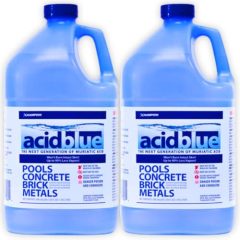 Acid Blue - Low Fume Muriatic Acid for Swimming Pools & Spas - Lower's pH, Reduces Alkalinity - 2 Gallon
View on Amazon →
Acid Blue - Low Fume Muriatic Acid for Swimming Pools & Spas - Lower's pH, Reduces Alkalinity - 2 Gallon
View on Amazon →
Still need help? Ask a Pool & Spa Expert AD
Get a personalized answer from PoolGuy810 — 30 years owning a pool and spa repair company. Describe your issue and get step-by-step help.
Related Pool Guides
Need More Help?
Try our free pool calculators and tools to help diagnose and fix your pool problems.
Browse Pool ToolsSLAM calculator, pH calculator, salt dosing & more