
Does Pool Chlorine Make You Darker? Skin Effects Explained

Will chlorine in the pool make my kids' skin darker?
Read full question
During my latest pool investigation, I've got my detective gear ready to figure out why my kids keep coming home darker after swim days — is chlorine actually changing their skin color? They're in the pool for hours during summer camp, and I want to make sure the chemicals aren't harming their skin or causing any unwanted changes.
Is chlorine known to darken skin, or could there be another explanation? I'm also concerned about whether the pool chemicals might be making their skin more vulnerable to other effects from being outdoors so much.
Quick Answer
Pool chlorine does not make your skin darker. The sun exposure you get while swimming in the pool causes tanning, not the chlorine itself. Chlorine can actually make skin more sensitive to UV rays. Proper pool chemistry, including maintaining the right free chlorine levels (4-8 ppm for a stabilized outdoor pool), pH, and CYA (70-80 ppm for salt water pools), helps minimize skin issues. Use sunscreen and protect your skin to enjoy swimming safely.
Understanding Chlorine's Effect on Skin
Chlorine is a powerful oxidizing agent designed to kill bacteria, viruses, and other contaminants in pool water. When properly maintained at the right level for your CYACyanuric Acid (stabilizer) — Sunscreen for your chlorine — it keeps sunlight from burning it off. The catch: the more you have, the more chlorine you need to keep. learn more → (typically 4-8 ppm for a stabilized outdoor pool) free chlorine, it effectively sanitizes the water without causing significant harm to swimmers. However, chlorine does interact with your skin in several ways:
How Chlorine Affects Your Skin
- Removes natural oils: Chlorine strips away sebum, your skin's natural protective barrier
- Causes dryness: This oil removal can lead to dry, flaky, or irritated skin
- Increases UV sensitivity: Without natural oils, your skin may be more vulnerable to sun damage
- Can cause lightening: In some cases, prolonged exposure to high chlorine levels might actually lighten hair or cause mild skin bleaching
Why People Think Chlorine Causes Darkening
Several factors contribute to this common misconception:
Sun Exposure During Swimming
Most outdoor pools expose swimmers to direct sunlight for extended periods. UV rays reflect off the water surface, creating an intensified tanning environment. A water surface reflects only a small share of UV (roughly 5-10%), so the bigger factor is simply the long stretch of direct sun you get while swimming. This concentrated sun exposure while swimming leads to faster and more noticeable tanning.
Longer Time Outdoors
Pool activities typically involve spending 2-4 hours outdoors, often during peak UV hours (10 AM to 4 PM). This extended exposure time naturally results in more tanning than brief outdoor activities.
Wet Skin and UV Rays
Wet skin can actually intensify UV exposure in some cases. Water droplets on skin can act like tiny lenses, focusing UV rays and potentially increasing sun damage and tanning in localized areas.
Proper Pool Chemistry to Minimize Skin Issues
Maintaining correct water chemistry reduces chlorine-related skin problems and ensures a comfortable swimming experience:
Ideal Chemical Levels
- Free Chlorine (FCFree Chlorine — The chlorine actively sanitizing your water right now. This is the number you keep an eye on. how much you need →): the right level for your CYA (typically 4-8 ppm for a stabilized outdoor pool) for residential pools
- pH Level: 7.4-7.6
- Total Alkalinity (TATotal Alkalinity — The buffer that keeps your pH from bouncing around. Get this in range and pH gets a lot easier to manage. learn more →): 80-120 ppm for regular pools, 60-80 for salt water generators
- Cyanuric Acid (CYA): 30-50 ppm for regular pools, 70-80 for salt water pools
- Calcium Hardness: 250-350 ppm for plaster pools, 150-250 for vinyl/fiberglass
Testing and Maintenance
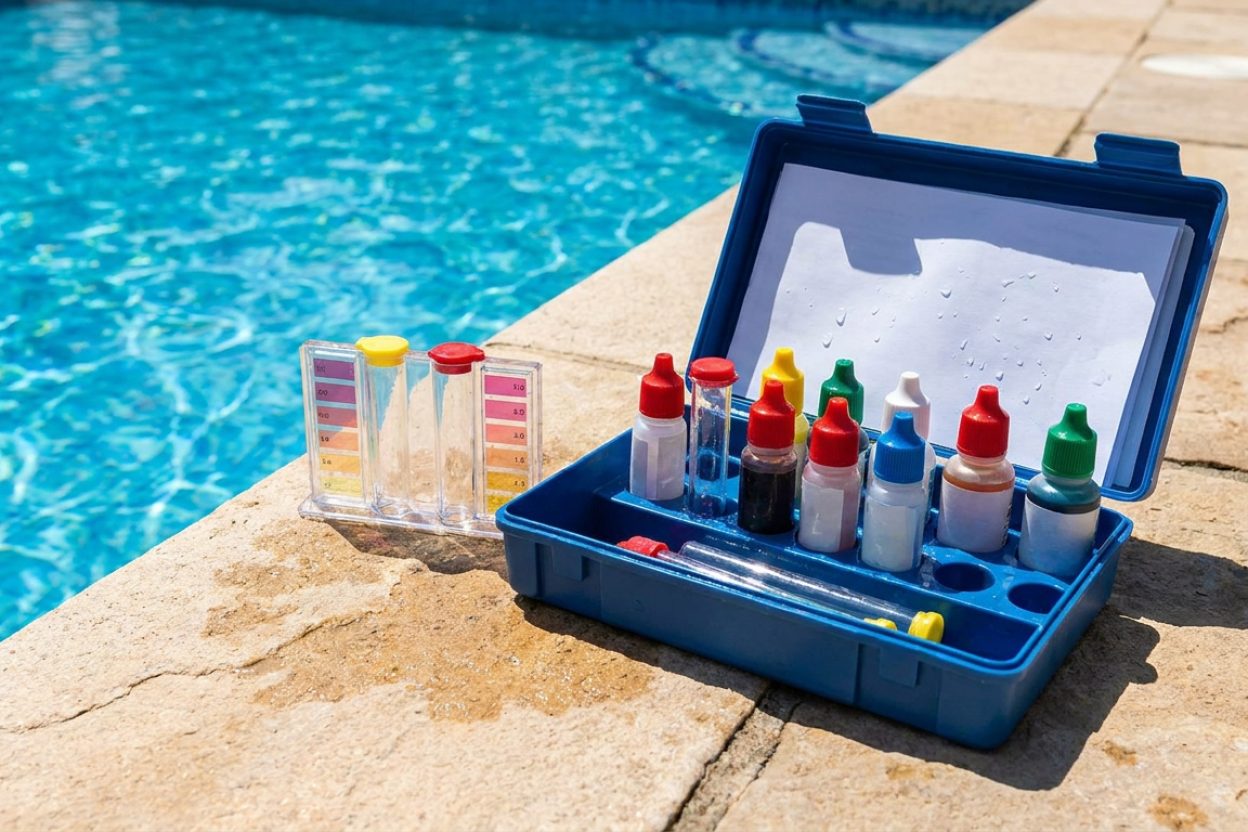
Use a reliable test kit like the Taylor K-2006 to check chemical levels 2-3 times per week. Improper chemistry, particularly persistent combined chlorine (chloramines) or incorrect pH, can cause more noticeable skin irritation and dryness.
Protecting Your Skin While Swimming
Before Swimming
- Apply broad-spectrum SPF 30+ waterproof sunscreen 15-30 minutes before entering the pool
- Consider using a pre-swim lotion or barrier cream to protect against chlorine
- Wet your hair with fresh water to minimize chlorine absorption
During Swimming
- Reapply sunscreen every 2 hours or after toweling off
- Take breaks in shaded areas to reduce UV exposure
- Wear UV-protective swimwear for extended pool sessions
After Swimming
- Rinse immediately with fresh water to remove chlorine residue
- Use a gentle, moisturizing soap or body wash
- Apply a quality moisturizer while skin is still damp
- Consider using products with ingredients like aloe vera or ceramides to restore skin barrier
When Chlorine Levels Are Too High
Genuinely over-chlorinated water (free chlorine well above ~10 ppm) can cause more significant skin issues:
- Severe dryness and itching
- Rashes or chemical burns
- Hair discoloration (particularly in blonde or chemically treated hair)
- Eye and respiratory irritation
If you suspect high chlorine levels, test the water and avoid swimming until levels normalize. Per the CDC pool code (Model Aquatic Health Code), free chlorine should not exceed 10 ppm while anyone is in the water, so wait until it is below 10 ppm to swim. The same code also calls for the water to be clear enough to see the bottom and pH held at 7.2-7.8.
Common Myths About Chlorine and Skin
Myth: Chlorine permanently damages skin
Truth: Properly maintained chlorine levels cause only temporary dryness that resolves with good skincare
Myth: You should avoid pools if you have sensitive skin
Truth: People with sensitive skin can swim safely in properly maintained pools with adequate protection
Myth: Salt water pools don't affect your skin
Truth: Salt water pools still use chlorine (generated from salt) and require the same skin protection measures
Conclusion
Pool chlorine does not make you darker - sun exposure while swimming causes any tanning you experience. Focus on proper sun protection with waterproof sunscreen and appropriate clothing rather than worrying about chlorine causing skin darkening. Maintain proper pool chemistry to minimize skin irritation and always rinse off after swimming to remove chlorine residue. With proper precautions, you can enjoy swimming while protecting your skin from both chlorine effects and harmful UV rays.
For the full breakdown of safe chlorine levels by CYA level, see our pool water chemistry guide or use the FC/CYAFC/CYA chart — The chart that sets your chlorine target from your stabilizer (CYA) level — the two go together. see the chart → relationship — our all-in-one pool calculator estimates the free chlorine target for your CYA.


Still need help? Ask a Pool & Spa Expert AD
Get a personalized answer from PoolGuy810 — 30 years owning a pool and spa repair company. Describe your issue and get step-by-step help.
Related Pool Guides
Need More Help?
Try our free pool calculators and tools to help diagnose and fix your pool problems.
Browse Pool ToolsSLAM calculator, pH calculator, salt dosing & more