
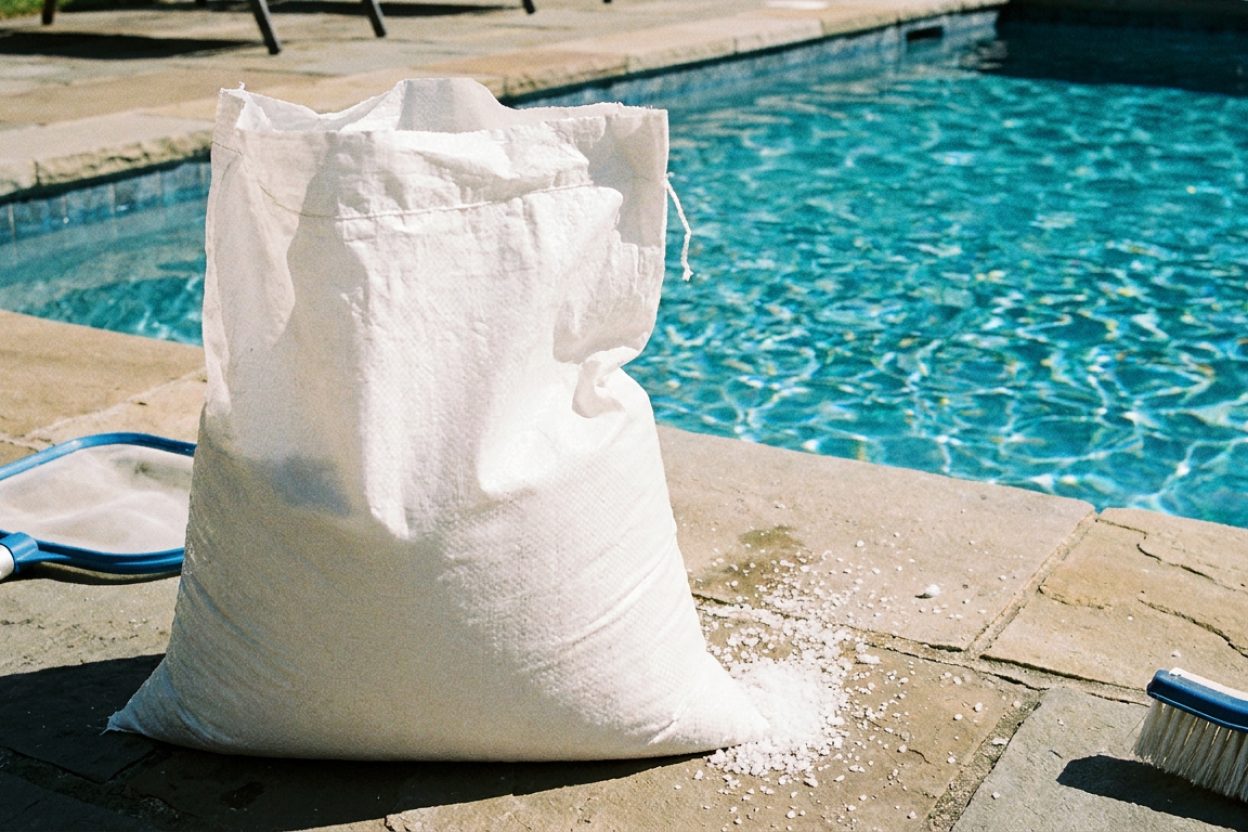
How Salt Water Pool Chlorinators Work - Complete Guide

Can someone explain how salt water chlorinators actually work?
Read full question
Got a 2 AM salt water pool chlorinator failure on my hands — desperately need to understand how this system works before the sun comes up. The pool store told me it's better than traditional chlorine, but I'm honestly confused about how it actually works.
I know there's salt in the water and some kind of cell, but how does that create chlorine? Like, what's actually happening inside that equipment? I want to understand the process so I can better maintain my pool and know what I'm dealing with.
Quick Answer
Salt water chlorinators work by passing pool water containing dissolved salt through an electrolytic cell that uses electrical current to convert salt (sodium chloride) into chlorine gas, which dissolves into the water as hypochlorous acid to sanitize your pool.
The Complete Electrolysis Process
The salt water chlorination process involves several chemical reactions happening simultaneously in the chlorinator cell:
Primary Electrolysis Reaction
At the anode (positive electrode), chloride ions from the dissolved salt lose electrons: 2Cl⁻ → Cl₂ + 2e⁻. This creates chlorine gas. At the cathode (negative electrode), water molecules gain electrons: 2H₂O + 2e⁻ → H₂ + 2OH⁻, producing hydrogen gas and hydroxide ions.
The chlorine gas immediately dissolves into the pool water: Cl₂ + H₂O → HOCl + HCl. This creates hypochlorous acid (HOCl) - the active sanitizer - and hydrochloric acid. In practice, salt chlorinators tend to drive pH upward over time, which is why regular pH monitoring and acid additions are needed.
The Salt Regeneration Cycle
Here's what makes salt water systems efficient: the chlorine doesn't disappear permanently. When hypochlorous acid kills bacteria and algae, it eventually breaks down back into chloride ions, which can be converted into chlorine again. This means the same salt molecules cycle through the system repeatedly, requiring only occasional salt additions to replace losses from backwashing, splash-out, and rain dilution.
Key System Components
Electrolytic Cell
The heart of the system contains multiple titanium plates coated with ruthenium, iridium, or platinum. These precious metal coatings are crucial - they conduct electricity efficiently while resisting corrosion from the harsh electrolytic environment. Quality cells like Pentair IntelliChlor or Hayward AquaRite typically contain 7-15 plates, with more plates generating higher chlorine output.
Control Unit
The electronic control unit regulates electrical current to the cell, determining chlorine production rates. Output is set as a percentage or in a few discrete levels (for example, the IntelliChlor has five settings; the Hayward AquaRite uses a 0–100% dial), allowing fine-tuning based on bather load, weather, and seasonal demands. Advanced models like Pentair IntelliChlor provide cell life tracking and diagnostic capabilities.
Flow Switch
This safety device ensures the cell only operates when water flows through it. Without water flow, the cell would overheat and suffer damage. The flow switch prevents costly cell replacement by shutting off power when your pool pump stops.
Critical Water Chemistry Requirements
Salt water chlorinators require specific water chemistry parameters to function properly and avoid damage:
Salt Level: 2700-3400 PPM
This optimal range provides sufficient conductivity for efficient electrolysis without excessive corrosion. Test salt levels monthly — a reagent kit like the Taylor K-1766 is the most accurate, with salt strips or a digital meter as quicker options. Most systems display current salt readings on the control unit.
Stabilizer (CYA): 70-80 PPM
Salt water systems typically require stabilizer levels of 70-80 PPM. Test CYACyanuric Acid (stabilizer) — Sunscreen for your chlorine — it keeps sunlight from burning it off. The catch: the more you have, the more chlorine you need to keep. learn more → levels every 3 months.
pH: 7.4-7.6
The electrolysis process naturally raises pH due to hydroxide ion production. Monitor pH weekly and add muriatic acid as needed. Add muriatic acid as needed based on pH testing - dosage varies by current pH levels and acid concentration.
Total Alkalinity: 80-120 PPM
Lower alkalinity levels help prevent excessive pH rise. Use muriatic acid to lower both alkalinity and pH simultaneously when needed.
Chlorine Production and Output Control
Most residential systems produce 0.5-2.0 pounds of chlorine per day depending on cell size and output settings. A typical 40,000-gallon pool requires about 1 pound of chlorine daily during peak season. Start with 50% output and adjust based on free chlorine test results.
Test free chlorine levels twice weekly using a Taylor K-2006 test kit. Target free chlorine at 4-8 ppm for a stabilized outdoor pool with CYA 70-80, adjusting the chlorinator output as needed. Remember that chlorine demand increases with higher temperatures, heavy rain, and increased bather loads.
Maintenance Requirements
Cell Cleaning
Calcium scale buildup on cell plates reduces efficiency and eventually damages the cell. Most systems include reverse polarity features that periodically reverse electrical current to minimize scaling. Manual cleaning with a diluted muriatic acid solution (about 1 part acid to 4 parts water - always add acid to water) may be needed every 3-4 months in hard water areas, and only when scale is visible.
Winter Operation
Most salt cells stop generating chlorine below about 50-60°F (check your manufacturer's cutoff), so switch to manual chlorination in cold weather. Cold water reduces conductivity and can damage cell plates. Most systems include temperature sensors that automatically shut off the cell in cold conditions.
Common Misconceptions
Many pool owners mistakenly believe salt water pools don't contain chlorine. In reality, salt water pools maintain the same free chlorine at 4-8 ppm for a stabilized outdoor pool with CYA 70-80 as traditional pools - they simply generate chlorine differently. The salt level (3,000+ PPM) is actually much higher than the chlorine level, giving the water its characteristic soft feel.
Safety Warning: Salt chlorinators generate chlorine that dissolves directly into the water as hypochlorous acid; they do not release dangerous chlorine gas in normal operation. (Indoor pools still need good ventilation to manage humidity and chloramines.)
For the full breakdown of safe chlorine levels by CYA level, see our pool water chemistry guide.
 Taylor K-2006C Complete FAS-DPD Pool & Spa Test Kit
The FAS-DPD kit pool pros trust — reads chlorine accurately even at shock/SLAM levels, plus pH, alkalinity, calcium hardness and CYA. View on Amazon →
Taylor K-2006C Complete FAS-DPD Pool & Spa Test Kit
The FAS-DPD kit pool pros trust — reads chlorine accurately even at shock/SLAM levels, plus pH, alkalinity, calcium hardness and CYA. View on Amazon →
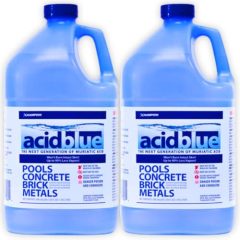 Acid Blue - Low Fume Muriatic Acid for Swimming Pools & Spas - Lower's pH, Reduces Alkalinity - 2 Gallon
View on Amazon →
Acid Blue - Low Fume Muriatic Acid for Swimming Pools & Spas - Lower's pH, Reduces Alkalinity - 2 Gallon
View on Amazon →
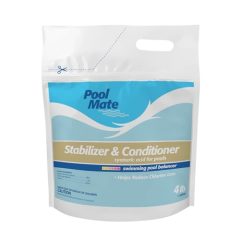 Pool Mate 4-Pounds Premium Pool Stabilizer and Conditioner, Concentrated Cyanuric Acid for Pools, Helps Chlorine Last Longer
View on Amazon →
Pool Mate 4-Pounds Premium Pool Stabilizer and Conditioner, Concentrated Cyanuric Acid for Pools, Helps Chlorine Last Longer
View on Amazon →
Still need help? Ask a Pool & Spa Expert AD
Get a personalized answer from PoolGuy810 — 30 years owning a pool and spa repair company. Describe your issue and get step-by-step help.
Related Pool Guides
Need More Help?
Try our free pool calculators and tools to help diagnose and fix your pool problems.
Browse Pool ToolsSLAM calculator, pH calculator, salt dosing & more