
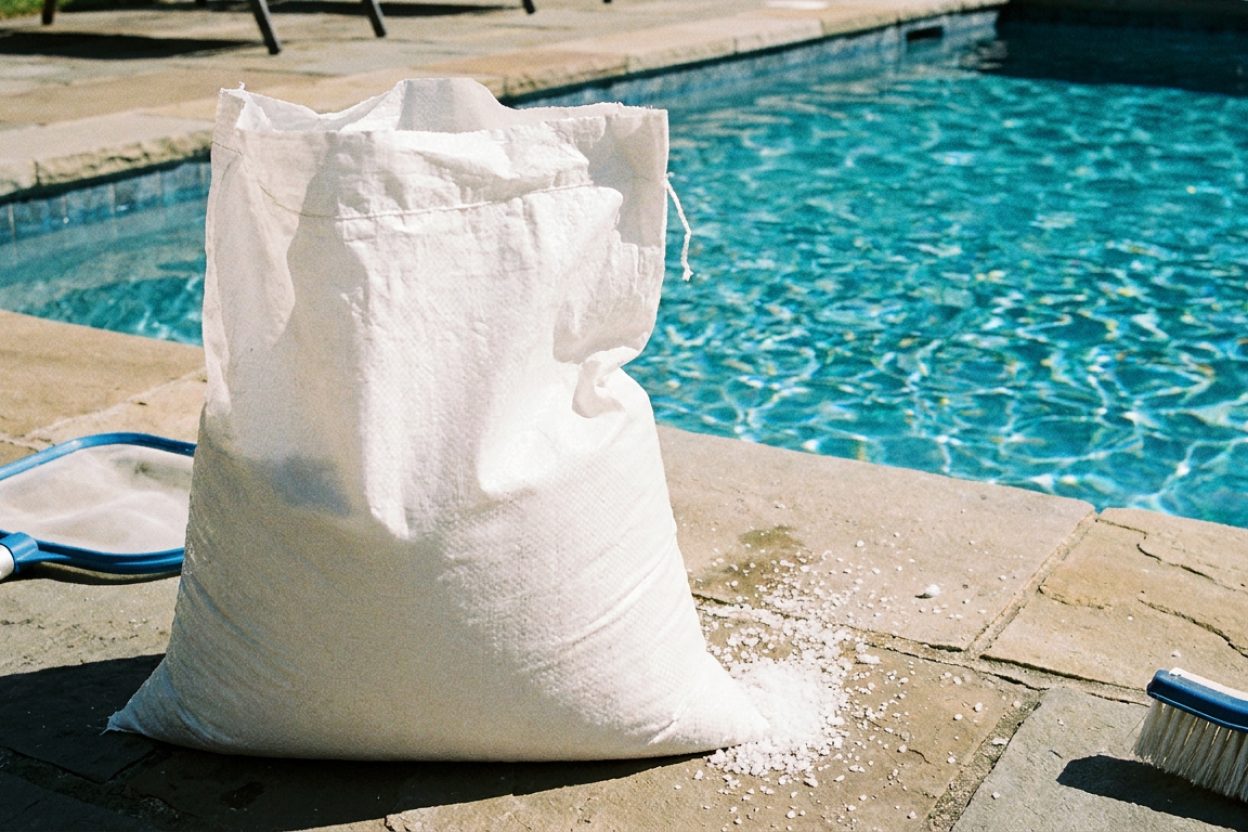
How to Set Up and Maintain a Salt Water Pool - Complete Guide

Complete beginner - how do I set up my new salt water pool?
Read full question
The pool service quote to convert my inherited chlorine pool to saltwater was over $1,200 — is there a DIY way for under $800? The pool store told me it's easier to maintain, but I honestly have no idea where to start or what I'm getting myself into.
What exactly do I need to buy and install? I keep hearing about salt generators and different chemical levels - how much salt am I supposed to add, and do I still need to worry about chlorine and all that other stuff? Any step-by-step guidance would be amazing since I'm pretty overwhelmed right now.
Quick Answer
Salt water pools use a chlorine generator to convert salt into chlorine, requiring 2700-3400 ppm salt, higher CYA levels (70-80 ppm), and regular cell cleaning. Start by installing the salt water chlorine generator, adding pool salt, and maintaining proper water chemistry.
Understanding Salt Water Pool Systems
Salt water pools aren't chlorine-free - they actually produce their own chlorine through electrolysis. The salt water chlorine generator uses an electrolytic cell to convert dissolved salt (sodium chloride) into hypochlorous acid, the same sanitizing agent found in liquid chlorine. This creates a more consistent chlorine level and eliminates the need for regular chlorine additions.
Installation Process
Choosing Your Salt Water Chlorine Generator
Select a SWCG rated for your pool size. Popular brands include Pentair IntelliChlor, Hayward AquaRite, and Jandy AquaPure. Size the unit for 1.5 times your pool volume for optimal performance and longer cell life.
Installation Steps
- Install the electrolytic cell in your return plumbing after the heater and before the return jets
- Mount the control unit near your pool equipment, following manufacturer's spacing requirements
- Connect the power supply according to local electrical codes - this typically requires a licensed electrician
- Install flow switch if required by your model to prevent cell operation without water flow
- Program initial settings according to manufacturer specifications
Initial Salt Addition and Startup
Adding Pool Salt
Use only pure pool-grade salt (99% sodium chloride) - never use table salt or salt with additives. Calculate salt needed: for a 20,000-gallon pool starting from zero, you'll need approximately 500 pounds of salt to reach 3000 ppm. Add salt directly to the pool with the pump running to ensure proper circulation and dissolution.
Startup Sequence
- Balance your water chemistry before adding salt: pH 7.4-7.6, Total Alkalinity 80-120 ppm, and Cyanuric Acid 70-80 ppm for SWCG systems
- Add salt gradually over several hours with pump running continuously
- Wait 24 hours for salt to completely dissolve before testing salt levels
- Test salt level (target 2700-3400 ppm) — a reagent kit like the Taylor K-1766 is most accurate, or a salt strip / digital meter for a quick check
- Start chlorine generator at 50% output initially
- Monitor and adjust output based on chlorine levels after 24-48 hours
Water Chemistry for Salt Water Pools
Critical Differences from Traditional Pools
Salt water pools require specific chemistry targets that differ from traditional chlorine pools:
- Cyanuric Acid (CYACyanuric Acid (stabilizer) — Sunscreen for your chlorine — it keeps sunlight from burning it off. The catch: the more you have, the more chlorine you need to keep. learn more →): Maintain 70-80 ppm to protect generated chlorine from UV degradation
- Free Chlorine: Follow FC/CYAFC/CYA chart — The chart that sets your chlorine target from your stabilizer (CYA) level — the two go together. see the chart → relationship (SWGSalt Water Generator — The "salt cell" that makes chlorine from the salt in a saltwater pool. Same chlorine — it just makes its own. pool terms → minimum ~5% of CYA) - with 70-80 ppm CYA, maintain 6-8 ppm FCFree Chlorine — The chlorine actively sanitizing your water right now. This is the number you keep an eye on. how much you need →
- pH: 7.4-7.6 (salt cells perform best in this range and reduce scaling)
- Total Alkalinity: 80-120 ppm
- Calcium Hardness: 250-350 ppm for plaster pools, 175-225 ppm for vinyl/fiberglass
Managing pH Rise
Salt water generators naturally raise pH due to the electrolytic process. Expect to add muriatic acid weekly to maintain proper pH levels. Monitor pH 2-3 times per week initially to establish your pool's pattern.
Ongoing Maintenance
Daily and Weekly Tasks
- Check salt cell for debris or buildup (weekly visual inspection)
- Test and adjust pH 2-3 times weekly using muriatic acid
- Test free chlorine levels and adjust generator output as needed
- Clean skimmer and pump baskets to maintain proper flow
Monthly Maintenance
- Test complete water chemistry including salt levels
- Inspect cell for calcium scale buildup
- Clean cell if white buildup is visible on plates
- Check cell life remaining on control panel if equipped
Cell Cleaning Procedure
When calcium scale appears on cell plates:
- Turn off power to chlorine generator
- Remove cell from plumbing union connections
- Prepare a diluted muriatic acid solution of about 1 part acid to 4 parts water (always add acid to water) in a plastic container
- Submerge scaled end of cell in acid solution for 5-10 minutes
- Rinse thoroughly with garden hose
- Reinstall cell and restore power
Safety Warning: Always wear gloves and eye protection when handling muriatic acid. Add acid to water, never water to acid.
Troubleshooting Common Issues
Low Chlorine Production
- Check salt levels - low salt reduces chlorine generation efficiency
- Inspect cell for scale buildup requiring cleaning
- Verify proper water flow through cell
- Consider cell replacement if over 3-5 years old
High pH Problems
If pH consistently rises rapidly, reduce Total Alkalinity within the 80-120 ppm range and ensure proper cyanuric acid levels (70-80 ppm) to buffer pH changes.
Cost Considerations and Benefits
Initial investment includes the generator system (commonly $800-2500) plus installation. To the under-$800 DIY question: entry-level SWG units do exist below that range, and since most are a straightforward plumb-and-wire install, a budget conversion is feasible if you're comfortable with basic plumbing and adding a dedicated GFCI circuit - just expect lower-end cell quality and a shorter warranty at that price. Operating costs are lower long-term due to reduced chemical purchases, with main expense being periodic cell replacement every 3-5 years. Benefits include more consistent sanitization, softer-feeling water, and reduced chemical handling.
Regular maintenance and proper water balance will maximize your salt water system's performance and longevity while providing crystal-clear, comfortable swimming conditions.
For the full breakdown of safe chlorine levels by CYA level, see our pool water chemistry guide.
 Taylor K-2006C Complete FAS-DPD Pool & Spa Test Kit
The FAS-DPD kit pool pros trust — reads chlorine accurately even at shock/SLAM levels, plus pH, alkalinity, calcium hardness and CYA. View on Amazon →
Taylor K-2006C Complete FAS-DPD Pool & Spa Test Kit
The FAS-DPD kit pool pros trust — reads chlorine accurately even at shock/SLAM levels, plus pH, alkalinity, calcium hardness and CYA. View on Amazon →
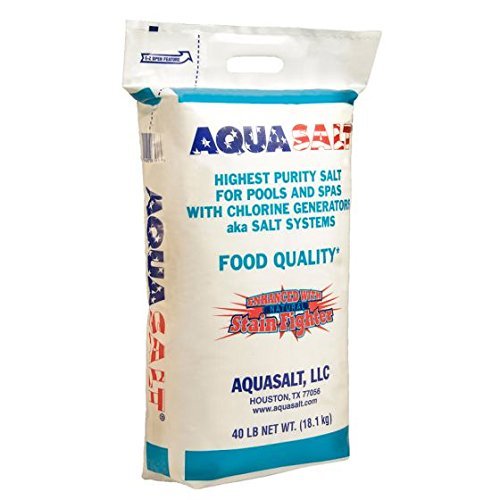 AquaSalt Pool & Spa Salt for Chlorine Generators (2 × 40 lb)
High-purity salt for saltwater chlorine generators. View on Amazon →
AquaSalt Pool & Spa Salt for Chlorine Generators (2 × 40 lb)
High-purity salt for saltwater chlorine generators. View on Amazon →
 Acid Blue - Low Fume Muriatic Acid for Swimming Pools & Spas - Lower's pH, Reduces Alkalinity - 2 Gallon
View on Amazon →
Acid Blue - Low Fume Muriatic Acid for Swimming Pools & Spas - Lower's pH, Reduces Alkalinity - 2 Gallon
View on Amazon →
Still need help? Ask a Pool & Spa Expert AD
Get a personalized answer from PoolGuy810 — 30 years owning a pool and spa repair company. Describe your issue and get step-by-step help.
Related Pool Guides
Need More Help?
Try our free pool calculators and tools to help diagnose and fix your pool problems.
Browse Pool ToolsSLAM calculator, pH calculator, salt dosing & more