

How Salt Water Pools Kill Bacteria - Chlorine Generation Process

Are salt water pools actually safer? How do they sanitize the water?
Read full question
Switched from a chlorine pool to saltwater last year and my pool store says I don't need to worry about bacteria anymore because the salt cell handles everything. That sounds too good to be true. How does a salt water pool actually kill bacteria compared to dumping chlorine tablets in?
Quick Answer
Salt water pools kill bacteria by using electrolysis to convert salt into chlorine gas, which dissolves into hypochlorous acid - the same sanitizer used in traditional chlorine pools.
Diagnosing How Salt Water Sanitization Works
First, let's diagnose the common misconception: many pool owners think salt itself kills bacteria, but that's not accurate. The salt is simply the raw material that gets converted into chlorine through an electrical process. Your salt water pool is actually a chlorine pool that generates its own sanitizer on-site. So they aren't inherently "safer" than a tablet or liquid-chlorine pool — they sanitize with the exact same hypochlorous acid. The advantage is convenience and steadier chlorine, not a different or stronger germ-killer, and you still have to monitor and maintain your chemistry.
The Electrolysis Process
When pool water containing dissolved salt (typically 2700-3400 ppm) passes through the chlorine generator cell, an electrical current flows between titanium plates coated with precious metals like ruthenium or iridium. This electrical energy breaks down the salt molecules (NaCl) into sodium hydroxide and chlorine gas through electrolysis.
The chlorine gas immediately dissolves into the water, forming hypochlorous acid (HOCl) and hypochlorite ions (OCl-). Hypochlorous acid is the active sanitizer that penetrates bacterial cell walls, disrupts cellular processes, and destroys pathogens within seconds of contact.
Step-by-Step Bacteria Elimination Process
- Salt Dissolution: Pool-grade salt dissolves completely in your pool water, creating a mild saline solution that's barely detectable to swimmers
- Water Circulation: Your pool pump circulates the salt water through the plumbing system and into the chlorine generator cell
- Electrolytic Conversion: The generator applies electrical current across titanium plates, splitting salt molecules into chlorine gas and sodium hydroxide
- Chlorine Formation: Chlorine gas dissolves instantly, creating hypochlorous acid (the bacteria killer) and raising your free chlorine (FCFree Chlorine — The chlorine actively sanitizing your water right now. This is the number you keep an eye on. how much you need →) level
- Sanitization: Hypochlorous acid penetrates bacterial cell membranes, oxidizes cellular components, and destroys harmful microorganisms
- Salt Regeneration: After sanitizing contaminants, the chlorine is consumed through oxidation while the salt remains in the pool, allowing continuous chlorine generation through electrolysis
Optimizing Bacterial Kill Rates
Maintaining Proper Chemistry Levels
For maximum bacteria-killing effectiveness, maintain these chemistry parameters:
- Free Chlorine (FC): the right level for your CYACyanuric Acid (stabilizer) — Sunscreen for your chlorine — it keeps sunlight from burning it off. The catch: the more you have, the more chlorine you need to keep. learn more → (typically 6-8 ppm for a salt water pool with CYA 70-80 ppm) for normal operation, following the FC/CYAFC/CYA chart — The chart that sets your chlorine target from your stabilizer (CYA) level — the two go together. see the chart → relationship — our all-in-one pool calculator estimates the free chlorine target for your CYA.
- Cyanuric Acid (CYA): 70-80 ppm for salt water pools
- pH Level: 7.4-7.6 - the active sanitizer (HOCl) share falls steadily as pH rises (about half your chlorine is HOCl at 7.5, and only about a third by 7.8), so keeping pH lower keeps more of it in the effective form
- Salt Level: 2700-3400 ppm as recommended by your generator manufacturer
- Total Alkalinity: 60-80 ppm
Generator Output Adjustment
Most salt water chlorine generators allow you to adjust output from 0-100%. Start at 50% and test your FC levels after 24-48 hours. Increase output by 10% if FC is below target, or decrease by 10% if FC climbs above the target range for your CYA.
Troubleshooting Poor Sanitization
If you're experiencing algae growth or cloudy water despite running your salt system, diagnose these common issues:
Low Chlorine Production
- Dirty Cell: Calcium buildup on plates reduces efficiency - inspect the cell about every 3 months and acid-clean only when visible scale is present (frequent acid washing wears the coating and shortens cell life)
- Low Salt Level: Test salt concentration with digital meter; add pool-grade salt if below 2700 ppm
- Worn Cell: Cells typically last 3-7 years; replace if amperage is low despite clean plates
- pH Too High: Test pH weekly; add muriatic acid to lower pH below 7.6 for optimal sanitization
Chemical Imbalance Solutions
When sanitization fails, implement these corrective measures:
- Test Water Chemistry: Use a reagent kit like the Taylor K-2006 for accurate FC, pH, and CYA. The K-2006 does not measure salt — check salt separately with a Taylor K-1766 salt test (the most accurate home option), a salt strip, or a digital meter.
- Shock Treatment: If algae is present, perform SLAMShock Level And Maintain — raise free chlorine to a target based on your CYA and hold it there until the algae is gone. It's a process, not a one-time dose. the SLAM walkthrough → (Shock Level And Maintain) process using liquid chlorine to supplement generator output
- Cell Maintenance: Remove and inspect cell plates; clean with 4:1 water-to-muriatic acid solution if calcium deposits are visible
- Flow Rate Check: Ensure pump runs minimum 8-10 hours daily to provide adequate water turnover through generator
Safety Considerations
Warning: Avoid relying on cal-hypo in a salt pool — it raises calcium hardness and can scale the cell; if you must use it, dissolve it first and don't add it through a running cell. Liquid chlorine is the preferred supplement and can be added with the generator running. If cal-hypo is needed, turn off the generator first and follow proper dosing procedures. Liquid chlorine can be safely added without shutting off the generator.
Always handle muriatic acid with proper ventilation, protective equipment, and add acid to water (never water to acid) when making pH adjustments or cleaning generator cells.
Long-term Maintenance for Optimal Sanitization
Test salt levels monthly using a digital salt meter, as salt doesn't evaporate but can be lost through splash-out, backwashing, or heavy rainfall dilution. Clean the generator cell every 3-4 months or when calcium buildup becomes visible on the titanium plates.
Replace the cell every 3-7 years depending on usage and maintenance quality. Signs of a failing cell include inability to maintain adequate chlorine levels despite clean plates and proper water chemistry.
For the full breakdown of safe chlorine levels by CYA level, see our pool water chemistry guide.
 Taylor K-2006C Complete FAS-DPD Pool & Spa Test Kit
The FAS-DPD kit pool pros trust — reads chlorine accurately even at shock/SLAM levels, plus pH, alkalinity, calcium hardness and CYA. View on Amazon →
Taylor K-2006C Complete FAS-DPD Pool & Spa Test Kit
The FAS-DPD kit pool pros trust — reads chlorine accurately even at shock/SLAM levels, plus pH, alkalinity, calcium hardness and CYA. View on Amazon →
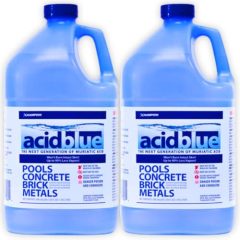 Acid Blue - Low Fume Muriatic Acid for Swimming Pools & Spas - Lower's pH, Reduces Alkalinity - 2 Gallon
View on Amazon →
Acid Blue - Low Fume Muriatic Acid for Swimming Pools & Spas - Lower's pH, Reduces Alkalinity - 2 Gallon
View on Amazon →
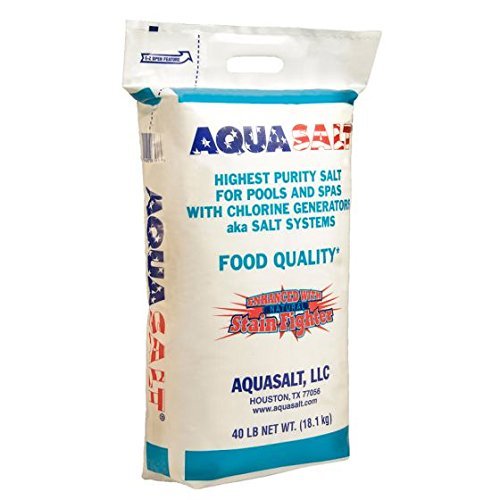 AquaSalt Pool & Spa Salt for Chlorine Generators (2 × 40 lb)
High-purity salt for saltwater chlorine generators. View on Amazon →
AquaSalt Pool & Spa Salt for Chlorine Generators (2 × 40 lb)
High-purity salt for saltwater chlorine generators. View on Amazon →
Still need help? Ask a Pool & Spa Expert AD
Get a personalized answer from PoolGuy810 — 30 years owning a pool and spa repair company. Describe your issue and get step-by-step help.
Related Pool Guides
Need More Help?
Try our free pool calculators and tools to help diagnose and fix your pool problems.
Browse Pool ToolsSLAM calculator, pH calculator, salt dosing & more