
How Long After Pool Shock Can You Swim? Safety Guide

When is it safe for kids to swim after shocking the pool?
Read full question
Turned my pool into a crystal-clear paradise with shock treatment and now I'm armed with test strips, ready to master the perfect timing for safe swimming. I'm worried about letting them swim too soon and want to make sure the chemical levels are completely safe.
How long should I wait before it's okay for them to swim again? I have a test kit but I'm not sure what the chlorine levels should be at before I give them the green light. I'd rather be overly cautious when it comes to their safety.
Quick Answer
You can typically swim 8-24 hours after shocking your pool, but the exact time depends on free chlorine dropping to your pool's normal target — about 3-5 ppm for a stabilized pool (CYA 30-50) or 6-9 ppm for a salt/SWG pool (CYA 70-80), and always below the 10 ppm safe-swim ceiling. Always test your water before swimming.
Understanding Pool Shock and Swimming Safety
Pool shock treatment involves adding a concentrated dose of chlorine to eliminate contaminants, bacteria, and organic waste. The high chlorine concentration temporarily makes your pool unsafe for swimming, which is why proper timing is crucial for swimmer safety.
The type of shock you use significantly affects wait times. Calcium hypochlorite (cal-hypo) shock typically needs 8-24 hours for free chlorine to fall back under 10 ppm - the same range whether you used cal-hypo or liquid chlorine (heavy or granular doses take longer; low CYACyanuric Acid (stabilizer) — Sunscreen for your chlorine — it keeps sunlight from burning it off. The catch: the more you have, the more chlorine you need to keep. learn more → and strong sun speed it up). Potassium monopersulfate (non-chlorine shock) typically requires only 15 minutes of circulation before swimming, but it doesn't sanitize like chlorine-based shocks.
Step-by-Step Process for Safe Swimming After Shocking
- Apply shock treatment properly: Add shock in the evening after sunset to prevent UV degradation. Distribute evenly around the pool perimeter while your pump is running.
- Run your filtration system: Keep your pump running continuously for at least 8 hours after shocking to circulate and filter the water effectively.
- Wait the minimum time period: Allow at least 8 hours (typically 8-24) for chlorine shock to drop under 10 ppm, or follow manufacturer recommendations on your specific product.
- Test your water chemistry: Use a reliable test kit like the Taylor K-2006 to measure free chlorine levels accurately. Test strips can be unreliable for high chlorine readings.
- Verify safe chlorine levels: Ensure free chlorine has dropped below 10 ppm (the CDC limit while swimmers are in the water) before allowing swimming. Free chlorine above 10 ppm can irritate skin and eyes.
- Check pH levels: Shocking often raises pH above 7.6. If pH exceeds 7.8, add muriatic acid to bring it down to the ideal range of 7.4-7.6 before swimming.
- Perform final safety check: Look for any remaining undissolved shock granules, which can cause skin irritation and even chemical burns on direct contact. Brush any visible residue before swimming.
Factors That Affect Wait Time
Type of Shock Treatment
Different shock products have varying active ingredients and concentrations. Calcium hypochlorite typically contains 65-70% available chlorine and requires longer wait times. Sodium hypochlorite (liquid chlorine) dissipates faster, especially in sunlight. Non-chlorine shock (potassium monopersulfate) oxidizes contaminants without adding chlorine, allowing almost immediate swimming.
Pool Size and Circulation
Larger pools take longer to achieve even chemical distribution. Poor circulation from inadequate pump runtime or clogged filters can create pockets of high chlorine concentration. Ensure your pump runs at least 8-10 hours daily, and clean your filter regularly for optimal circulation.
Environmental Conditions
Hot weather and direct sunlight accelerate chlorine breakdown, potentially reducing wait times. However, high bather loads, recent rainfall, or organic debris can consume free chlorine quickly, requiring longer circulation periods. Wind can also affect surface mixing and chemical distribution.
Common Mistakes That Extend Wait Times
Over-Shocking Your Pool
Adding excessive shock creates dangerously high chlorine levels that take much longer to dissipate. Follow dosing instructions carefully: follow manufacturer dosing instructions for routine shocking. Over-shocking wastes chemicals and money while creating safety hazards.
Poor Timing and Application
Shocking during peak sunlight hours wastes chlorine due to UV degradation. Shocking in the evening is best (daytime sun burns off chlorine faster), but daytime is fine when you need it — just expect to use a bit more. Adding shock directly to skimmer baskets or in concentrated areas can damage pool surfaces and create uneven distribution. Add sodium hypochlorite (liquid chlorine) directly to the pool while circulating, but calcium hypochlorite granules may be pre-dissolved if needed before adding to the pool.
Inadequate Circulation
Insufficient pump runtime prevents proper mixing and filtration. Run your pump continuously for at least 8 hours after shocking, or until chlorine levels normalize. Clean or backwash your filter before shocking to ensure maximum circulation efficiency.
Testing and Monitoring Your Pool
Accurate testing is essential for determining safe swimming conditions. Invest in a quality test kit like the Taylor K-2006, which provides precise readings for free chlorine, combined chlorine, and pH. Test strips become unreliable at high chlorine concentrations and shouldn't be used immediately after shocking.
Test your water every 2-4 hours after the initial 8-hour waiting period. Record your readings to track chlorine dissipation patterns, which will help you predict wait times for future shocking sessions. Remember that combined chlorine (chloramines) should remain below 0.5 ppm - higher levels indicate incomplete oxidation and may require additional shock treatment.
Special Considerations and Safety Warnings
The CDC recommends not swimming while free chlorine is above 10 ppm, since higher levels can irritate skin and eyes and are harder on swimwear. Children and people with sensitive skin especially may want to wait until it drops below 10 ppm.
If you're following a SLAMShock Level And Maintain — raise free chlorine to a target based on your CYA and hold it there until the algae is gone. It's a process, not a one-time dose. the SLAM walkthrough → (Shock Level And Maintain) process for algae treatment, maintain shock-level chlorine (determined by your CYA level) until you pass the overnight chlorine loss test. This process can take several days to weeks, during which swimming is not recommended.
Always store shock products in cool, dry locations away from other chemicals. Calcium hypochlorite can explode when mixed with certain substances, so never mix different pool chemicals together. Adding each chemical separately to the pool, never in the same container, and spacing them out by about 10 minutes is safe and effective.
For the full breakdown of safe chlorine levels by CYA level, see our pool water chemistry guide.
 Taylor K-2006C Complete FAS-DPD Pool & Spa Test Kit
The FAS-DPD kit pool pros trust — reads chlorine accurately even at shock/SLAM levels, plus pH, alkalinity, calcium hardness and CYA. View on Amazon →
Taylor K-2006C Complete FAS-DPD Pool & Spa Test Kit
The FAS-DPD kit pool pros trust — reads chlorine accurately even at shock/SLAM levels, plus pH, alkalinity, calcium hardness and CYA. View on Amazon →
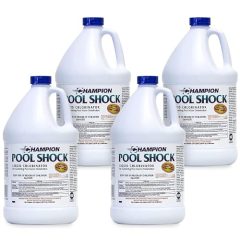 Liquid Chlorine / Sodium Hypochlorite (12.5%)
Everyday sanitizer — the B in BBB View on Amazon →
Liquid Chlorine / Sodium Hypochlorite (12.5%)
Everyday sanitizer — the B in BBB View on Amazon →
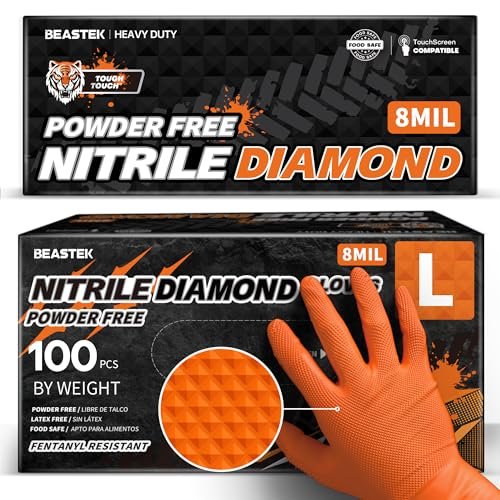 Beastek 8-mil Chemical-Resistant Nitrile Gloves
Disposable nitrile gloves for safe handling of pool chemicals. View on Amazon →
Beastek 8-mil Chemical-Resistant Nitrile Gloves
Disposable nitrile gloves for safe handling of pool chemicals. View on Amazon →
Still need help? Ask a Pool & Spa Expert AD
Get a personalized answer from PoolGuy810 — 30 years owning a pool and spa repair company. Describe your issue and get step-by-step help.
Need More Help?
Try our free pool calculators and tools to help diagnose and fix your pool problems.
Browse Pool ToolsSLAM calculator, pH calculator, salt dosing & more