
Do You Have to Cover a Salt Water Pool? Requirements Guide

Is covering my salt water pool actually necessary?
Read full question
Standing in front of my saltwater pool after following three conflicting YouTube tutorials about covers, I'm now more confused than when I started. I keep hearing mixed opinions - some neighbors swear by covers while others never bother.
I'm mainly wondering if there are any actual requirements I need to follow, and what the real benefits are beyond just keeping leaves out. Also, if I do decide to cover it, is there anything special I need to know about winterizing a salt water system? Don't want to accidentally mess up my salt cell or anything expensive like that!
Quick Answer
Covering a salt water pool is not legally required, but it's highly recommended for reducing chemical loss, preventing debris, and protecting your salt cell. The process involves specific steps for winterization and equipment protection.
Step-by-Step Pool Covering Process
1. Pre-Covering Water Chemistry Balance
- Test your water chemistry using a Taylor K-2006 test kit or equivalent
- Adjust pH to 7.2-7.4 (slightly lower than normal operating range)
- Maintain free chlorine at the right level for your CYACyanuric Acid (stabilizer) — Sunscreen for your chlorine — it keeps sunlight from burning it off. The catch: the more you have, the more chlorine you need to keep. learn more → (with salt-pool CYA around 70-80 ppm, that's roughly 5-9 ppm - use the chart) before covering — our all-in-one pool calculator estimates the free chlorine target for your CYA.
- Set total alkalinity to 80-120 ppm for stability during cover period
- Ensure calcium hardness is between 200-300 ppm to prevent equipment corrosion
- Test cyanuric acid (CYA) levels - aim for about 70-80 ppm for an outdoor salt water generator (salt pools run higher CYA than plain-chlorine pools to protect the cell's steady, low-level chlorine from UV; check your manufacturer's spec)
2. Salt Cell and Equipment Preparation
- Turn off your salt water generator at least 24 hours before covering
- Switch off the breaker powering the salt system, then disconnect the cell's power cord and unscrew the unions on either side of the cell following manufacturer instructions
- Inspect the salt cell plates for calcium buildup or damage
- Clean the cell with about a 4:1 water-to-muriatic acid solution (add acid to water) if scaling is present
- In freeze-prone climates, remove the cell, rinse it, and store it indoors; in its place install the unit's dummy/blank cell or a union plug so the plumbing stays sealed (in non-freezing climates the cell can stay installed)
- Drain water from the cell housing to prevent freeze damage
3. Water Level and Circulation Adjustments
- Lower water level to 4-6 inches below the skimmer opening
- Use a submersible pump or siphon method for water removal
- Add winterizing chemicals: raise free chlorine to shock level for your CYA
- Add algaecide at manufacturer's recommended dosage (typically 16-32 oz per 10,000 gallons)
- Run circulation system for 2-4 hours to distribute chemicals evenly
- Shut down filtration system and drain equipment as needed for your climate
4. Cover Installation Process
- Clean pool surface of all debris using a leaf net and vacuum
- Install air pillows (for above-ground pools) or water bags (for in-ground pools)
- Position the cover evenly across the pool surface
- Secure cover with appropriate fastening system (springs, straps, or water bags)
- Ensure cover has proper drainage to prevent standing water accumulation
- Install safety equipment if using a safety cover
Why Salt Water Pools Benefit More From Covers
Equipment Protection
Salt water generators are a significant investment - a replacement salt cell typically runs about $600-1,100, while replacing a whole system (control board plus cell) can reach $1,200-$2,000. The salt cell, which converts salt to chlorine, contains durable titanium-coated plates that can be damaged by freezing temperatures. Failure to protect this equipment can result in costly repairs that far exceed the price of a quality pool cover.
Chemical Conservation
Outdoor salt water pools typically run higher cyanuric acid than traditional pools - commonly around 70-80 ppm - because the steady, lower-level chlorine a salt cell produces needs more CYA protection from UV degradation. Without a cover, you'll lose stabilizer through splash-out and dilution, requiring frequent additions of cyanuric acid at approximately $3-8 per pound.
Reduced Maintenance Workload
Covered salt water pools generally need noticeably fewer chemical adjustments during the off-season, since the cover cuts evaporation and UV chlorine loss. The cover prevents debris accumulation, reduces evaporation, and maintains more stable water chemistry, making spring startup significantly easier.
Cover Type Recommendations for Salt Water Pools
Winter/Safety Covers
Solid safety covers work best for salt water pools because they completely block sunlight (preventing algae growth) and provide maximum protection for expensive equipment. Mesh safety covers allow some debris penetration but offer excellent safety features.
Solar Covers
During swimming season, solar covers help maintain temperature and reduce chemical loss. For salt water pools, choose a cover rated for chlorine resistance to prevent premature degradation.
Regional Considerations
Cold Climate Requirements
In regions with freezing temperatures, covering becomes essential rather than optional. Failure to winterize and cover salt water equipment can result in:
- Cracked salt cell housings ($300-500 replacement cost)
- Damaged titanium plates ($800-1,200 replacement cost)
- Frozen plumbing lines ($500-2,000 repair cost)
- Controller damage ($400-800 replacement cost)
Warm Climate Benefits
Even in non-freezing climates, covers provide year-round benefits including reduced water evaporation (saving 30-50% annually), decreased chemical usage, and protection from debris accumulation.
Common Covering Mistakes to Avoid
- Covering without proper chemical balance - can lead to spring algae blooms
- Leaving salt cell installed during freeze periods - risks equipment damage
- Insufficient water level reduction - can cause cover damage from ice expansion
- Skipping pre-cover cleaning - debris decomposes and creates water quality issues
- Using inadequate cover fastening - allows debris entry and reduces effectiveness
Safety Warning: Always follow proper procedures when handling muriatic acid for cell cleaning. Use protective equipment including gloves, eye protection, and ensure adequate ventilation.
For the full breakdown of safe chlorine levels by CYA level, see our pool water chemistry guide.
 Taylor K-2006C Complete FAS-DPD Pool & Spa Test Kit
The FAS-DPD kit pool pros trust — reads chlorine accurately even at shock/SLAM levels, plus pH, alkalinity, calcium hardness and CYA. View on Amazon →
Taylor K-2006C Complete FAS-DPD Pool & Spa Test Kit
The FAS-DPD kit pool pros trust — reads chlorine accurately even at shock/SLAM levels, plus pH, alkalinity, calcium hardness and CYA. View on Amazon →
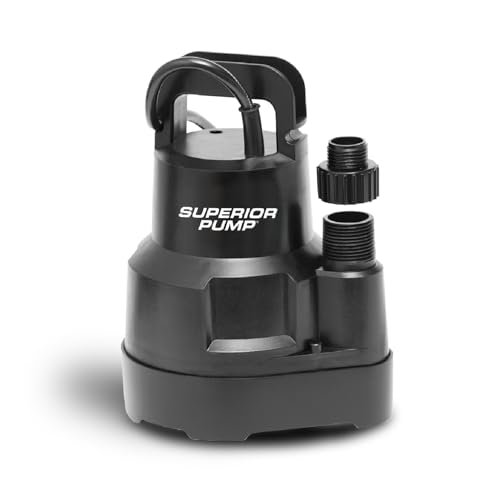 Superior Pump 91014 1/4 HP Submersible Utility Pump
Drains a pool, cover, or equipment pit when you need to lower the water. View on Amazon →
Superior Pump 91014 1/4 HP Submersible Utility Pump
Drains a pool, cover, or equipment pit when you need to lower the water. View on Amazon →
 Acid Blue - Low Fume Muriatic Acid for Swimming Pools & Spas - Lower's pH, Reduces Alkalinity - 2 Gallon
View on Amazon →
Acid Blue - Low Fume Muriatic Acid for Swimming Pools & Spas - Lower's pH, Reduces Alkalinity - 2 Gallon
View on Amazon →
Still need help? Ask a Pool & Spa Expert AD
Get a personalized answer from PoolGuy810 — 30 years owning a pool and spa repair company. Describe your issue and get step-by-step help.
Related Pool Guides
Need More Help?
Try our free pool calculators and tools to help diagnose and fix your pool problems.
Browse Pool ToolsSLAM calculator, pH calculator, salt dosing & more