
Do Saltwater Pools Need Chlorine? The Complete Truth

My saltwater pool is green - do I still need to add chlorine?!
Read full question
About two weeks into this rental with my first saltwater pool and the generator's been running constantly but the water stays green no matter what I do. I've thrown every chemical I can think of at this thing - algaecide, shock, clarifier - and nothing's working.
Do saltwater pools actually need regular chlorine added, or am I missing something else? I thought the whole point was that the salt system makes its own chlorine automatically. My levels seem off but I'm not sure if I should be manually adding chlorine to a saltwater pool or if that defeats the purpose entirely.
Quick Answer
Yes, saltwater pools absolutely need chlorine to sanitize the water. The salt water generator creates chlorine from salt, but you still need to monitor levels and add chlorine manually when needed. Maintain free chlorine (FC) levels between 6-8 ppm for a saltwater pool with CYA levels of 70-80 ppm. Use the FC/CYA relationship — our all-in-one pool calculator estimates the free chlorine target for your CYA. Test your water 2-3 times per week using a quality test kit.
How Saltwater Pools Actually Work
Despite their name, saltwater pools are actually chlorine pools that use a different delivery method. The salt water generator uses a process called electrolysis to convert dissolved salt (sodium chloride) into hypochlorous acid - the same sanitizing compound produced by traditional chlorine.
Here's the process: Pool water with dissolved salt (typically 2,700-3,400 ppm (3,200 ppm ideal)) flows through the generator's electrolytic cell. An electrical current splits the salt molecules, creating chlorine gas that immediately dissolves into hypochlorous acid. This chlorine then sanitizes your pool water just like traditional chlorine would.
The chlorine eventually combines with contaminants and sunlight breaks it down, but since salt doesn't get consumed in this process, the generator can continuously produce fresh chlorine as long as there's adequate salt in the water.
When You Still Need to Add Chlorine Manually
Even with a properly functioning salt water generator, you'll encounter situations requiring manual chlorine addition:
- Heavy bather loads: Pool parties, hot weather, or extended use can overwhelm your generator's capacity
- Algae outbreaks: You'll need to perform a SLAMShock Level And Maintain — raise free chlorine to a target based on your CYA and hold it there until the algae is gone. It's a process, not a one-time dose. the SLAM walkthrough → (Shock Level And Maintain) process using liquid chlorine
- Generator maintenance: During cell cleaning or replacement, you'll need manual chlorination
- Startup periods: New pools or seasonal openings often require chlorine boost before the generator catches up
- Insufficient generation: Cold water, low salt levels, or worn cells reduce chlorine production
Free Salt Pool Calculators
Calculate salt and chlorine levels for your saltwater pool:
Proper Chlorine Management for Salt Water Pools
Target Levels and Testing
Maintain free chlorine (FCFree Chlorine — The chlorine actively sanitizing your water right now. This is the number you keep an eye on. how much you need →) levels between 6-8 ppm for a saltwater pool with CYACyanuric Acid (stabilizer) — Sunscreen for your chlorine — it keeps sunlight from burning it off. The catch: the more you have, the more chlorine you need to keep. learn more → levels of 70-80 ppm. Use the FC/CYAFC/CYA chart — The chart that sets your chlorine target from your stabilizer (CYA) level — the two go together. see the chart → relationship — our all-in-one pool calculator estimates the free chlorine target for your CYA. Test your water 2-3 times per week using a quality test kit like the Taylor K-2006C. Don't rely solely on test strips, as they're less accurate for the precise measurements saltwater pools require.
Manual Chlorine Addition Process
When you need to add chlorine manually:
- Use liquid chlorine (sodium hypochlorite) when you want to avoid adding calcium — cal-hypo adds calcium hardness (not CYA), which is fine when your calcium is low but worth avoiding if it is already high
- Calculate dosage: 1 gallon of liquid chlorine raises FC by approximately 10-13 ppm in 10,000 gallons (depending on concentration - check your product label as concentrations vary from 10-12.5%)
- Add chlorine in the evening to prevent sun degradation
- Pour slowly around the pool perimeter with the pump running
- Retest FC levels after 30 minutes of circulation
- Continue adding until you reach target levels
Supporting Water Chemistry
Saltwater pools require careful attention to other chemical parameters that affect both chlorine effectiveness and generator performance:
pH Control: Maintain 7.4-7.6 pH. Salt water generators naturally drive pH up, so you'll frequently need muriatic acid additions. Test pH twice weekly and adjust as needed.
Total Alkalinity: Keep TATotal Alkalinity — The buffer that keeps your pH from bouncing around. Get this in range and pH gets a lot easier to manage. learn more → between 60-80 ppm for saltwater pools (lower than traditional pools). This range provides adequate buffering while preventing excessive pH rise.
Salt Levels: Maintain manufacturer-recommended salt levels, typically 2700-3400 ppm. Low salt reduces chlorine generation efficiency, while excessive salt can damage pool equipment.
SLAM Process for Saltwater Pools
When dealing with algae or cloudy water, you'll need to perform a SLAM process regardless of your generator. Turn your SWGSalt Water Generator — The "salt cell" that makes chlorine from the salt in a saltwater pool. Same chlorine — it just makes its own. pool terms → to maximum output and add liquid chlorine to achieve shock level FC (about 40% of your CYA level). Maintain this level continuously until combined chlorine (CCCombined Chlorine — "Used-up" chlorine left over from doing its job. Above about 0.5 ppm is the classic sign water needs a shock. learn more →) is 0.5 ppm or less and you pass the overnight chlorine loss test (OCLT), indicating all contaminants are eliminated.
During SLAM, test FC levels every few hours and add liquid chlorine as needed. Your generator alone cannot maintain shock levels, making manual chlorine addition essential.
Common Misconceptions
Many pool owners mistakenly believe saltwater pools are "chlorine-free" or "chemical-free." This misconception leads to neglected water testing and chemical imbalances. Remember that saltwater pools require the same vigilant chemical management as traditional chlorine pools - they just use a different chlorine delivery method.
Tip: Add chemicals separately and allow proper circulation between additions. (Salt itself is inert and poses no reaction hazard with liquid chlorine.)
For the full breakdown of safe chlorine levels by CYA level, see our pool water chemistry guide.
 Taylor K-2006C Complete FAS-DPD Pool & Spa Test Kit
The FAS-DPD kit pool pros trust — reads chlorine accurately even at shock/SLAM levels, plus pH, alkalinity, calcium hardness and CYA. View on Amazon →
Taylor K-2006C Complete FAS-DPD Pool & Spa Test Kit
The FAS-DPD kit pool pros trust — reads chlorine accurately even at shock/SLAM levels, plus pH, alkalinity, calcium hardness and CYA. View on Amazon →
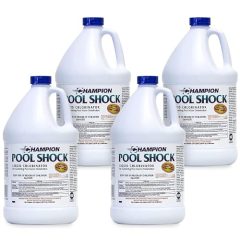 Liquid Chlorine / Sodium Hypochlorite (12.5%)
Everyday sanitizer — the B in BBB View on Amazon →
Liquid Chlorine / Sodium Hypochlorite (12.5%)
Everyday sanitizer — the B in BBB View on Amazon →
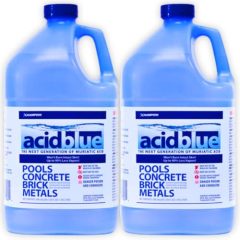 Acid Blue - Low Fume Muriatic Acid for Swimming Pools & Spas - Lower's pH, Reduces Alkalinity - 2 Gallon
View on Amazon →
Acid Blue - Low Fume Muriatic Acid for Swimming Pools & Spas - Lower's pH, Reduces Alkalinity - 2 Gallon
View on Amazon →
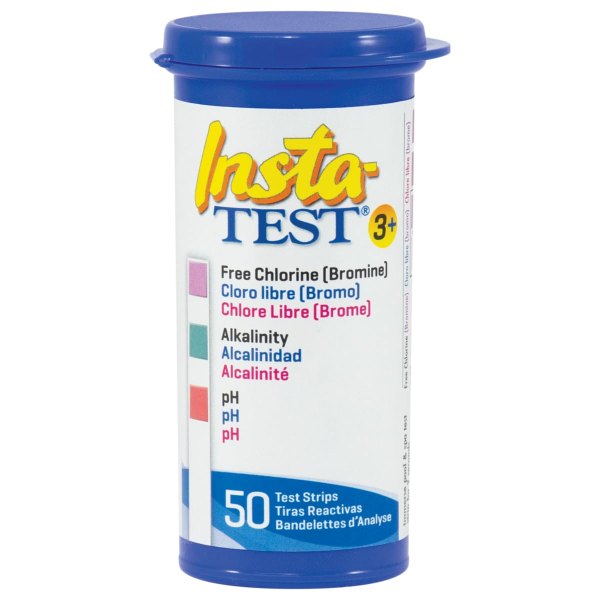 LaMotte Insta-Test 3 Pool Strips (50 ct)
Pro-grade 3-way strips from LaMotte — chlorine, pH & alkalinity, fast and accurate. Top-rated at 4.8★. View on Amazon →
LaMotte Insta-Test 3 Pool Strips (50 ct)
Pro-grade 3-way strips from LaMotte — chlorine, pH & alkalinity, fast and accurate. Top-rated at 4.8★. View on Amazon →
Still need help? Ask a Pool & Spa Expert AD
Get a personalized answer from PoolGuy810 — 30 years owning a pool and spa repair company. Describe your issue and get step-by-step help.
Related Pool Guides
Need More Help?
Try our free pool calculators and tools to help diagnose and fix your pool problems.
Browse Pool ToolsSLAM calculator, pH calculator, salt dosing & more