
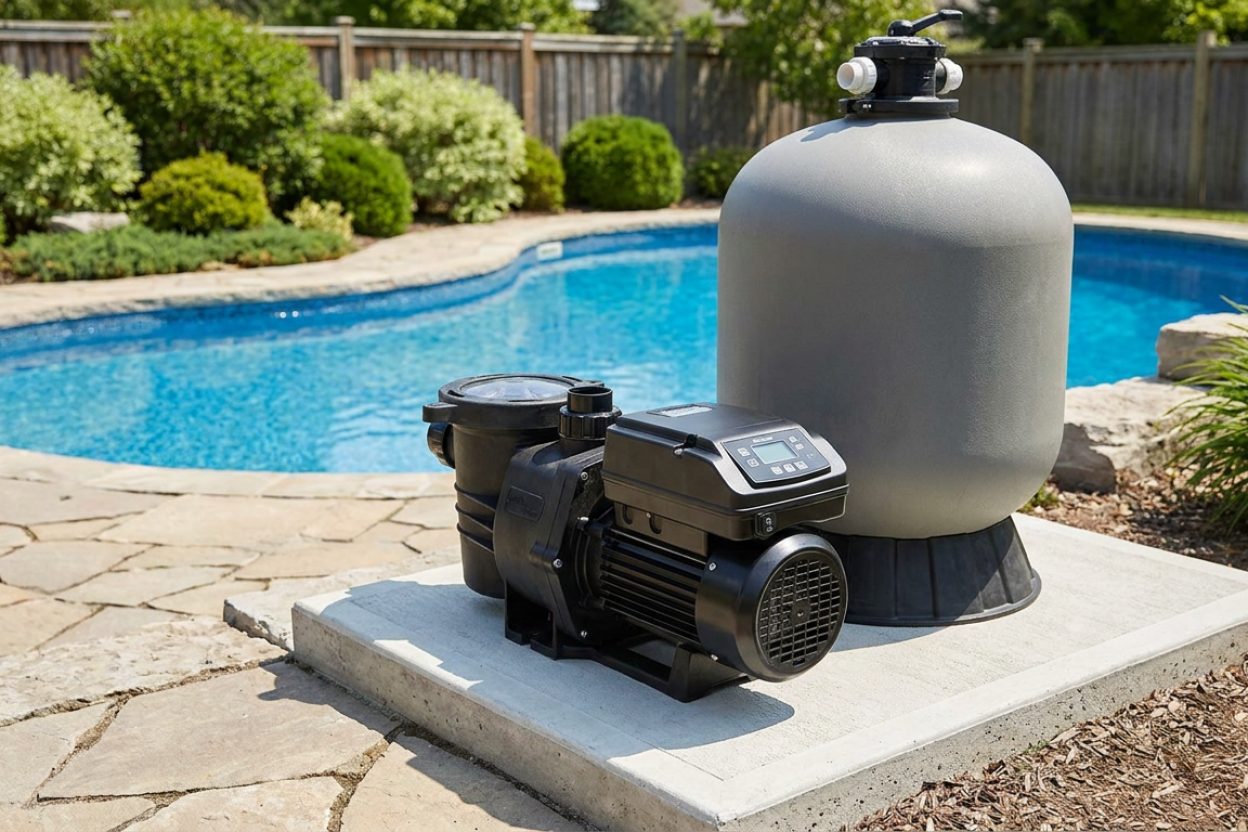
Do I Need a Pool Pump and Filter? Essential Equipment Guide

Are pool pumps and filters actually necessary or just upsells?
Read full question
Finally listened to those YouTube "experts" who swore I could run my pool without a pump and filter, and now I'm staring at a green swamp in my backyard. I'm wondering if I actually NEED both a pump AND a filter, or if this is just another way for them to drain my wallet.
I've been trying to maintain my pool on a budget and looking into DIY solutions wherever possible. But before I spend hundreds (or thousands) on this equipment, I want to know - are pumps and filters truly essential for a safe, swimmable pool? Or can I get by without one or both of these expensive pieces of equipment?
Quick Answer
Yes, you absolutely need both a pool pump and filter. The pump circulates water while the filter removes contaminants - together they're essential for maintaining clean, safe, and swimmable pool water.
Why Pool Pumps Are Essential
Your pool pump serves as the heart of your pool's circulation system. Without it, your pool water becomes stagnant, creating the perfect breeding ground for algae, bacteria, and mosquitoes. The pump pulls water from your pool through the skimmer and main drain, pushes it through the filtration system, and returns clean water back to the pool.
Proper circulation is crucial for several reasons:
- Distributes sanitizing chemicals evenly throughout the pool
- Prevents dead spots where algae and bacteria can flourish
- Moves debris toward skimmers and filters for removal
- Maintains water temperature consistency
- Prevents water from becoming stagnant and developing odors
Most pools require 8-12 hours of daily pump operation to maintain proper turnover rates. Conventional sizing aims to turn over your pool volume about once every 24 hours, but turnover isn't itself a sanitation requirement - TFP's view is that your chemistry (not the number of turnovers) keeps the water clear and sanitized. In practice, run the pump long enough each day to distribute chemicals, skim the surface, and (on a salt pool) generate the chlorine you need.
Why Filtration Systems Are Mandatory
While your pump moves the water, your filter actually cleans it. Without filtration, even with perfect chemical balance, your pool would quickly become cloudy and contaminated with organic matter, oils, lotions, and microscopic debris.
Pool filters remove contaminants through three main types:
Sand Filters
Sand filters use specially graded filter sand to trap particles as water passes through. They're the most common and cost-effective option, requiring backwashing every 2-4 weeks and sand replacement every 5-7 years. Sand filters effectively remove particles down to about 20-40 microns.
Cartridge Filters
Cartridge filters use pleated fabric elements to capture debris and can filter particles down to about 10-20 microns depending on cartridge type. They require regular cleaning every 2-4 weeks and element replacement every 2-5 years. Cartridge systems don't require backwashing, making them water-efficient.
Diatomaceous Earth (DE) Filters
DE filters provide the finest filtration, removing particles as small as 2-5 microns. They use a powder coating on grids inside the filter tank. While they offer superior water clarity, they require more maintenance and periodic DE powder additions.
Legal and Safety Requirements
In most jurisdictions, pools are legally required to have functioning circulation and filtration systems. Health departments typically mandate continuous filtration capabilities to maintain public safety standards. Even for private pools, insurance policies often require proper equipment installation and maintenance.
Safety Warning: Operating a pool without proper filtration lets water quality deteriorate quickly — the water turns cloudy, sanitizer is harder to maintain, and clarity can drop to where the bottom is not visible. Never attempt to maintain a pool solely through chemical treatment without mechanical filtration.
Choosing the Right Equipment Size
Proper sizing ensures effective water treatment and energy efficiency. Your pump should be sized based on your pool's total dynamic head (TDH) and desired flow rate. Generally, aim for a turnover rate where your entire pool volume circulates every 8-12 hours.
For filter sizing, follow these guidelines:
- Sand filters: Generally 1 square foot of filter area per 7,500-10,000 gallons depending on pump flow rate and system design
- Cartridge filters: Follow manufacturer recommendations based on flow rate
- DE filters: 1 square foot of filter area per 7,500-10,000 gallons
Integration with Pool Chemistry
Your pump and filter work hand-in-hand with your chemical program. Proper circulation ensures chemicals like chlorine distribute evenly, while filtration removes organic matter that would otherwise consume sanitizer. Without adequate filtration, you'll struggle with constant chemical demand and poor water quality regardless of your chemical program.
When following the TFP method for pool maintenance, remember that mechanical filtration handles the physical contaminants while your sanitizer (typically liquid chlorine) handles the biological threats. Both systems must work together - you cannot compensate for poor filtration with extra chemicals, nor can mechanical filtration alone maintain safe water without proper sanitization.
Maintenance Requirements
Once installed, your pump and filter require regular maintenance to function properly. Pumps need occasional impeller cleaning and seal replacement, while filters need regular cleaning or media replacement. Neglecting maintenance reduces efficiency and can lead to equipment failure, leaving your pool vulnerable to contamination.
The bottom line: every pool needs both a pump and filter system. These aren't luxury upgrades - they're fundamental requirements for maintaining any swimmable body of water safely and effectively.
Still need help? Ask a Pool & Spa Expert AD
Get a personalized answer from PoolGuy810 — 30 years owning a pool and spa repair company. Describe your issue and get step-by-step help.
Related Pool Guides
Need More Help?
Try our free pool calculators and tools to help diagnose and fix your pool problems.
Browse Pool ToolsSLAM calculator, pH calculator, salt dosing & more