
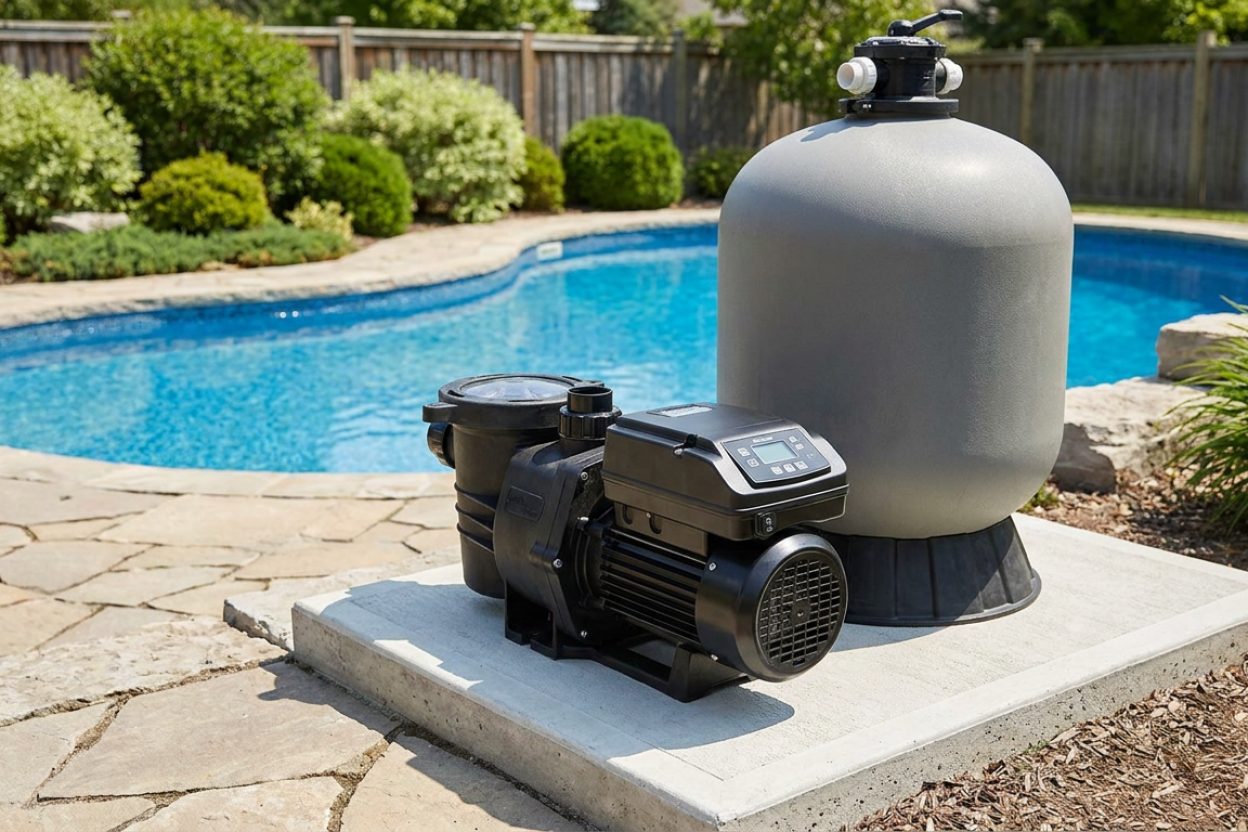
Do I Need a Pool Pump? Essential Pool Circulation Guide

Is a pool pump actually necessary or just recommended?
Read full question
I am setting up my pool and the pump seems expensive, so I am wondering whether I actually need it or if I can skip it or use something cheaper. Can a pool function without a pump at all? And what exactly does the pump do that I could not just handle manually with skimming and adding chemicals?
Quick Answer
Yes, you absolutely need a pool pump. Pool pumps are essential for water circulation, filtration, chemical distribution, and preventing algae growth - your pool cannot function safely without one.
First, Let's Diagnose Why You're Asking This Question
Pool owners typically ask about needing a pump in three situations:
- New pool installation: You're unsure what equipment is essential
- Pump failure: Your current pump died and you're wondering if you can skip replacement
- Cost concerns: You're trying to reduce pool operating expenses
Let me address each scenario and explain why a pump is absolutely critical for pool operation.
Why Pool Pumps Are Essential
Water Circulation and Filtration
The pump moves water through your filtration system, removing debris, dirt, and contaminants. Without circulation, your pool becomes a stagnant pond. Dead zones develop where debris settles and bacteria multiply. Your sand, cartridge, or DE filter cannot clean water that isn't moving through it.
Chemical Distribution
When you add chlorine, pH adjusters, or other chemicals, the pump circulates them throughout the entire pool volume. Without circulation, chemicals create concentrated pockets that can damage pool surfaces or leave areas undertreated. This uneven distribution makes it impossible to maintain proper water balance using TFP (Trouble Free Pool) methods.
Preventing Algae Growth
Stagnant water is algae's best friend. Moving water makes it difficult for algae spores to settle and establish colonies. Without a pump running regularly, you'll face constant algae blooms that require expensive SLAMShock Level And Maintain — raise free chlorine to a target based on your CYA and hold it there until the algae is gone. It's a process, not a one-time dose. the SLAM walkthrough → treatments with liquid chlorine.
Surface Skimming
Your pump creates the suction that pulls debris into skimmer baskets before it sinks to the bottom. Leaves, insects, and other organic matter decompose quickly in warm water, consuming chlorine and creating ammonia.
Troubleshooting Common Pump Concerns
If Your Pump Died and You're Considering Going Without
Don't do it. Here's what happens without a pump:
- Within 24-48 hours: Water clarity decreases, surface debris accumulates
- Within 3-5 days: Algae spores begin establishing, chemical levels become unbalanced
- Within 1 week: Visible algae growth, water turns cloudy or green
- Within 2 weeks: Heavy algae bloom, potential mosquito breeding, water becomes unsafe
The cost of restoring a pool after extended pump failure often exceeds the cost of pump replacement.
If You're Concerned About Operating Costs
Instead of eliminating your pump, optimize its operation:
- Variable speed pumps: Reduce energy costs by 50-80% compared to single-speed models
- Proper run times: Most pools need 8-12 hours daily, but you can split this into two 4-6 hour periods
- Off-peak hours: Run your pump during cheaper electricity rate periods
- Right-sizing: An oversized pump wastes energy and money
Legal and Safety Requirements
Most local health departments require functional circulation systems for pools. Your homeowner's insurance may also require proper pool equipment operation. From a liability standpoint, maintaining a pool without proper circulation creates unsafe conditions that could result in illness or injury.
Choosing the Right Pump
Pump Sizing
Your pump should circulate your entire pool volume in 8 hours (turnover rate). For a 20,000-gallon pool, you need approximately 41.7 GPM flow rate. However, consider your plumbing, filter, and heater when calculating total dynamic head (TDH).
Pump Types
- Single-speed: Least expensive upfront, highest operating costs
- Dual-speed: Moderate costs, good compromise option
- Variable speed: Highest upfront cost, lowest operating costs, often pay for themselves within 2-3 years
When Pumps Might Not Be Required
The only scenarios where you might not need a traditional pump:
- Natural pools: Use biological filtration systems with specialized equipment
- Temporary above-ground pools: Very small pools under 1,000 gallons might use alternative circulation methods
- Decorative water features: Non-swimming applications may have different requirements
For any swimmable pool, regardless of size or type, you need a pump.
Maintaining Pool Water Without Compromise
Your pump enables proper TFP water maintenance methods:
- Free chlorine distribution: Ensures even FCFree Chlorine — The chlorine actively sanitizing your water right now. This is the number you keep an eye on. how much you need → levels throughout the pool
- Chemical testing accuracy: Circulated water provides representative test samples
- pH and alkalinity balance: Even chemical distribution prevents hot spots and surface damage
- CYACyanuric Acid (stabilizer) — Sunscreen for your chlorine — it keeps sunlight from burning it off. The catch: the more you have, the more chlorine you need to keep. learn more → effectiveness: Stabilizer must be circulated to protect chlorine pool-wide
Safety Warning: Never enter a pool that has been without circulation for more than 24 hours without first testing the water, raising FC to the proper SLAM level for your CYA, and confirming chemical levels are balanced.
Bottom Line
A pool pump isn't optional equipment - it's as essential as chlorine or a filter. Attempting to operate a pool without proper circulation will result in unsafe water conditions, expensive restoration costs, and potential health risks. If cost is a concern, invest in an energy-efficient variable speed pump rather than eliminating circulation entirely.

Still need help? Ask a Pool & Spa Expert AD
Get a personalized answer from PoolGuy810 — 30 years owning a pool and spa repair company. Describe your issue and get step-by-step help.
Related Pool Guides
Need More Help?
Try our free pool calculators and tools to help diagnose and fix your pool problems.
Browse Pool ToolsSLAM calculator, pH calculator, salt dosing & more