
Do Cartridge Pool Filters Need DE? Complete Guide

Should I add diatomaceous earth to my cartridge filter system?
Read full question
During pool season, is it dangerous that I'm getting conflicting advice about using DE powder with my cartridge filters when I've got kids swimming daily? My pool store said it might help with clarity, but I'm reading mixed reviews online. I've been cleaning my cartridges regularly and they seem fine, but my water isn't crystal clear like I want it. Some people swear by adding DE to cartridge systems while others say it's pointless or even harmful. What's the real story here? Will DE actually help my filtration or am I just wasting money and potentially creating problems?
Quick Answer
Cartridge filters don't need DE powder and it's generally not recommended. While some people add DE to cartridge systems, it can clog the pleats and reduce effectiveness. Common clarity issues are often due to water chemistry imbalances, not filtration. Verify your chlorine levels (4-8 ppm for a stabilized pool), pH (7.2-7.6), and total alkalinity (80-120 ppm).
The Short Answer on DE and Cartridge Filters
Most people don't realize that adding diatomaceous earth to cartridge pool filters—a common "hack" shared online—actually damages the filter and reduces its effectiveness. While you'll find pool owners who swear by this practice, the engineering behind cartridge filtration doesn't benefit from DE the way dedicated DE filter systems do.
Why DE Doesn't Play Well with Cartridges
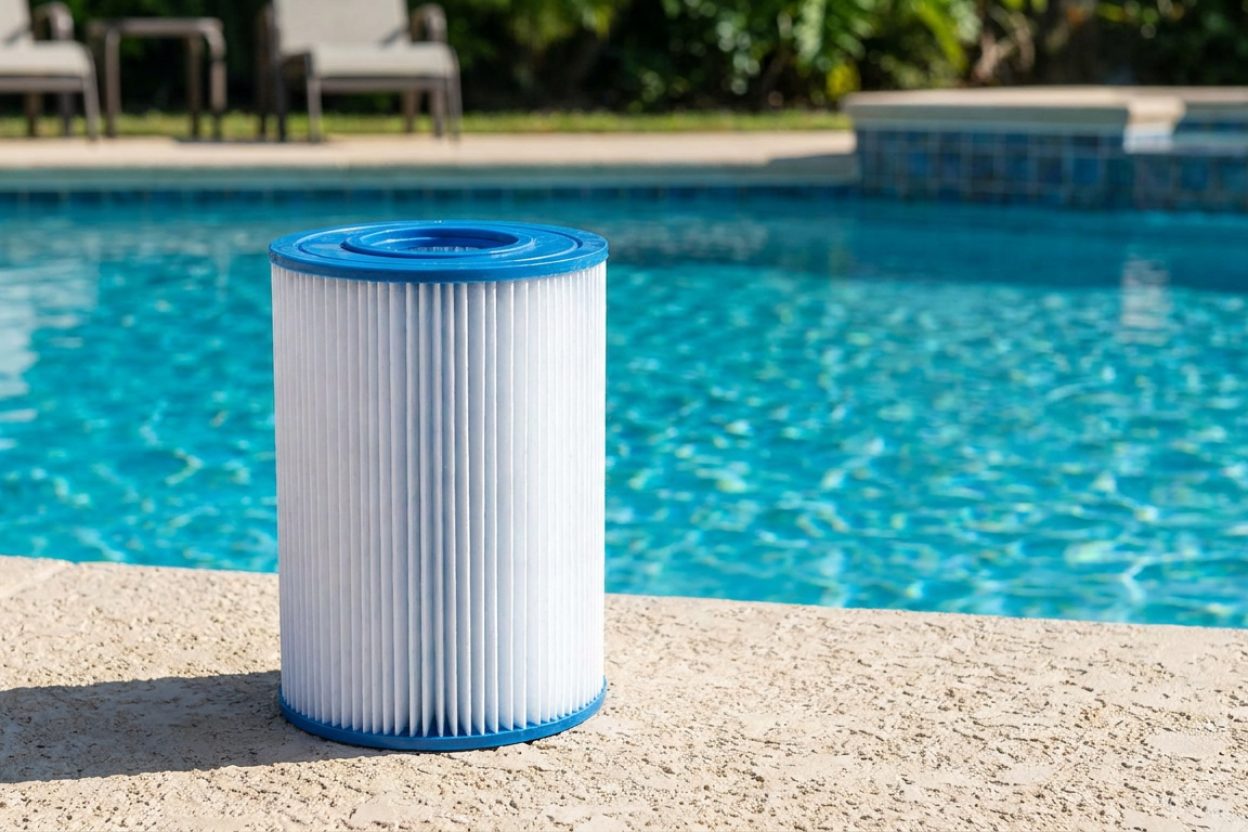
Cartridge filters rely on pleated fabric media to trap particles. The pleats create surface area and allow water to flow through while catching debris. When you add DE powder to this system, several issues commonly arise:
- Premature clogging: DE fills the spaces between pleats, reducing water flow much faster than normal operation
- Uneven distribution: Unlike purpose-built DE grids, cartridge pleats don't distribute DE powder evenly, creating hot spots of restriction
- Cleaning difficulties: DE mixed with oils and debris creates a paste-like coating that's much harder to clean from cartridge pleats
- Reduced filter life: The aggressive cleaning needed to remove caked-on DE can damage the delicate cartridge fabric
I'd recommend understanding that each filter type has its optimal operating method, and cartridges work best when used as designed by the manufacturer.
What's Really Causing Your Clarity Issues
If your water isn't crystal clear despite regular cartridge maintenance, the problem usually lies elsewhere. Many pool owners assume filtration is the culprit when water chemistry imbalances are actually to blame.
The most common clarity killers include:
- Chlorine levels too low: Insufficient sanitization allows organic contaminants to cloud water
- Poor circulation: Dead spots in your pool allow particles to settle rather than reaching the filter
- Cartridge rotation schedule: Running the same cartridge too long between cleanings reduces effectiveness
- Undersized filtration: Your cartridge system might not have enough capacity for your pool size and bather load
Testing Your Water Chemistry First
Before adding anything to your filter system, verify your basic chemistry is balanced. Typical target ranges are chlorine at the right level for your CYACyanuric Acid (stabilizer) — Sunscreen for your chlorine — it keeps sunlight from burning it off. The catch: the more you have, the more chlorine you need to keep. learn more → (typically 4-8 ppm for a stabilized outdoor pool), pH between 7.2-7.6, and total alkalinity between 80-120 ppm (verify recommended levels for your specific pool system). If these numbers are off, no amount of filtration tricks will give you the clarity you're seeking.
The complete water chemistry approach typically resolves clarity issues more effectively than filter modifications.
Better Alternatives for Crystal Clear Water
Rather than adding DE to your cartridge system, consider these proven approaches:
Optimize Your Current Setup
Implement a three-cartridge rotation system. While one cartridge runs in your filter, keep one clean cartridge ready and one soaking in cartridge cleaner. This ensures you're always running the most effective filtration possible.
Clean cartridges with a degreaser (TSP or commercial cartridge cleaner) to remove oils first, and only if mineral scale remains, follow with a short dilute acid soak (about 1 part acid to 20 parts water)—never acid-soak before degreasing (following manufacturer guidelines for concentration and safety precautions - always wear protective equipment and ensure proper ventilation when handling acids). This removes oils and scale that simple rinsing can't address.
Upgrade Your Filtration Capacity
If your current cartridge system struggles with your pool's demands, consider adding a larger cartridge housing or supplemental filtration. Some pool owners successfully add small auxiliary cartridge filters to increase total filtration capacity.
Use Clarifiers Properly
Pool clarifiers help your existing cartridge filter catch smaller particles more effectively. Unlike DE powder, clarifiers are designed to work with cartridge media and won't cause clogging issues when used as directed.
When DE Makes Sense
If you're convinced that DE-level filtration is what you need, consider switching to an actual DE filter system rather than trying to modify your cartridge setup. Purpose-built DE filters typically use grids specifically designed to support and distribute DE powder evenly, giving you the ultra-fine filtration you're seeking without the operational headaches.
Many pool owners find that a properly maintained cartridge system provides excellent water clarity without the complexity of DE filtration, but if your specific situation demands that level of filtration, using the right equipment for the job makes more sense than improvising.

Still need help? Ask a Pool & Spa Expert AD
Get a personalized answer from PoolGuy810 — 30 years owning a pool and spa repair company. Describe your issue and get step-by-step help.
Related Pool Guides
Need More Help?
Try our free pool calculators and tools to help diagnose and fix your pool problems.
Browse Pool ToolsSLAM calculator, pH calculator, salt dosing & more