
Do Salt Water Pools Get Algae? Prevention & Treatment Guide

Can my saltwater pool still get algae problems?
Read full question
Converted to salt water two seasons ago and thought algae would be a thing of the past. Woke up last Tuesday to green patches forming on the shallow end walls despite my salt cell running full blast. Starting to wonder if salt pools are really as algae-proof as everyone claims.
Quick Answer
Yes, saltwater pools can definitely get algae just like traditional chlorine pools. The salt cell generates chlorine, but if chlorine levels drop too low or other water chemistry factors are off, algae will still grow. This guide covers key scenarios where algae problems develop and how to address them, including increasing chlorine production, cleaning the salt cell, managing CYA levels, and following the SLAM method for treatment.
The Reality About Salt Pools and Algae
Don't panic — discovering green algae in your saltwater pool doesn't mean your salt system has failed, and clearing it up is usually more straightforward than you think. Your saltwater generator creates chlorine through electrolysis, but it's still chlorine doing the sanitizing work. If that chlorine level drops below effective ranges, algae will grow just as readily as in any traditional pool.
The confusion often stems from marketing that positions salt pools as "chemical-free" or "maintenance-free," but the truth is they still require diligent water chemistry management. Let me walk you through the key scenarios where algae problems develop and how to address each situation.
When Salt Systems Fail to Prevent Algae
Insufficient Chlorine Production
If your salt cell isn't producing enough chlorine, you'll see algae growth regardless of your salt levels. This happens when the cell output is set too low for your pool's demand, especially during hot weather or heavy bather loads. You'll want to test your free chlorine levels daily during problem periods - they should typically stay between 6-9 ppm (verify recommended range for your specific pool type and conditions).
Dirty or Scaled Salt Cell
When calcium builds up on your salt cell plates, chlorine production drops dramatically. Many pool owners don't realize their cell needs regular cleaning, typically every 3 months depending on your calcium hardness levels (consult your manufacturer's recommendations). If you're seeing low chlorine readings despite adequate salt levels, inspect your cell for white, chalky buildup.
Cyanuric Acid (CYA) Issues
This is where many salt pool owners get tripped up. If your CYACyanuric Acid (stabilizer) — Sunscreen for your chlorine — it keeps sunlight from burning it off. The catch: the more you have, the more chlorine you need to keep. learn more → levels climb too high (typically above 80-100 ppm, though verify optimal range for your system), your chlorine becomes less effective even if readings appear normal. Salt pools using stabilized chlorine shock or certain algaecides can gradually build up CYA over time. Our complete water chemistry guide covers the relationship between CYA and chlorine effectiveness in detail.
Diagnosing Your Algae Problem
If You're Seeing Green or Yellow Algae
Start by testing your water chemistry completely - not just chlorine, but pH, alkalinity, CYA, and calcium hardness. If free chlorine is below the minimum for your CYA (especially near or under 1 ppm), that's your primary culprit. Check your salt cell's amp draw against manufacturer specifications (always verify the correct amp rating for your specific model) to verify it's actually producing chlorine.
If Chemistry Looks Normal But Algae Persists
Your filtration system may not be keeping up, or you might have dead spots where circulation is poor. Algae can establish in areas with minimal water movement, even when chlorine levels appear adequate. I'd recommend brushing all surfaces thoroughly and running your pump longer each day.
If This is a Recurring Problem
You're likely dealing with either inadequate chlorine production for your pool's specific demands, or phosphate buildup that's feeding algae growth. Consider having your water professionally tested for phosphates, metals, and total dissolved solids.
Treatment Strategy Based on Severity
Light Algae Growth (Walls Feel Slippery)
Increase your salt cell output by 10-20% and brush the pool thoroughly. Shock with liquid chlorine if your free chlorine is below 6 ppm. Run the pump continuously until water clears, typically 24-48 hours.
Visible Green Algae
You'll need to follow the SLAMShock Level And Maintain — raise free chlorine to a target based on your CYA and hold it there until the algae is gone. It's a process, not a one-time dose. the SLAM walkthrough → method (Shock Level and Maintain) regardless of having a salt system. The SLAM method guide provides detailed instructions, but essentially you'll maintain shock-level chlorine around the clock until algae is completely eliminated. Your salt cell alone won't generate enough chlorine for this process.
Heavy Algae Infestation
Turn your salt cell output to maximum and supplement heavily with liquid chlorine. You might need to add 2-4 gallons of liquid chlorine initially (dosage varies by pool size - verify proper amount for your specific pool volume), then maintain shock levels using our chlorine calculator for proper dosing. Brush twice daily and clean your filter frequently during this process.
Prevention Moving Forward
Once you've cleared the algae, focus on consistent chlorine production by cleaning your salt cell regularly and monitoring actual chlorine output, not just assuming the system is working. Keep CYA levels appropriate for your setup - typically 70-80 ppm for salt pools (verify optimal range for your specific system). Most importantly, test your water 2-3 times per week rather than relying solely on the salt system's automation.
Remember that salt systems are tools for chlorine generation, not magic algae prevention devices. They still require the same attention to water balance and circulation that any pool needs to stay algae-free.
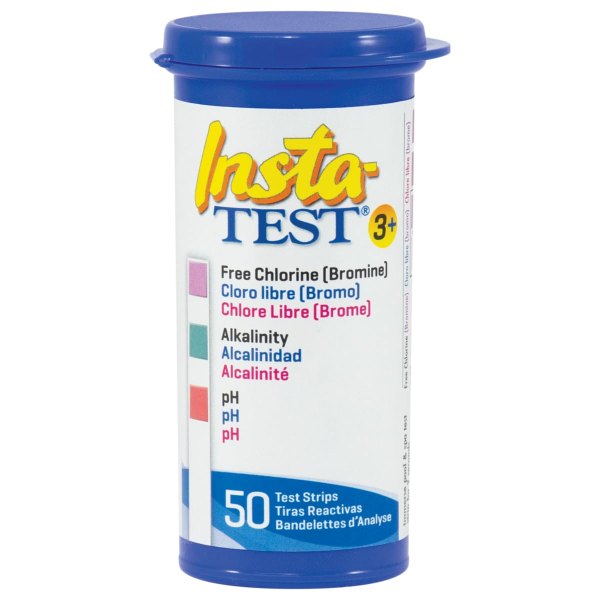 LaMotte Insta-Test 3 Pool Strips (50 ct)
Pro-grade 3-way strips from LaMotte — chlorine, pH & alkalinity, fast and accurate. Top-rated at 4.8★. View on Amazon →
LaMotte Insta-Test 3 Pool Strips (50 ct)
Pro-grade 3-way strips from LaMotte — chlorine, pH & alkalinity, fast and accurate. Top-rated at 4.8★. View on Amazon →
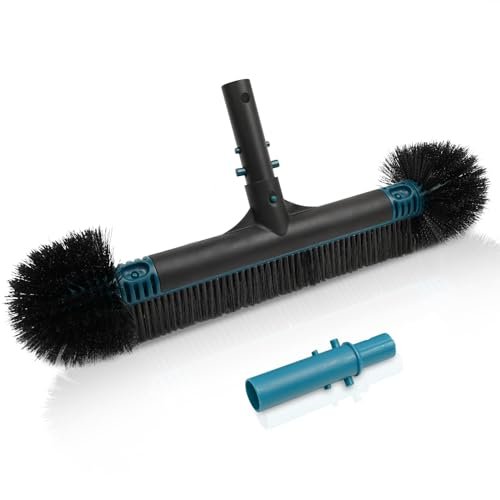 Poolvio 20" 2-in-1 Pool Brush Head (Walls & Floor)
Sturdy 20-inch brush head that clips onto any standard telescopic pole. View on Amazon →
Poolvio 20" 2-in-1 Pool Brush Head (Walls & Floor)
Sturdy 20-inch brush head that clips onto any standard telescopic pole. View on Amazon →
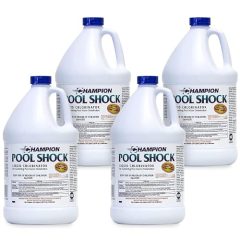 Liquid Chlorine / Sodium Hypochlorite (12.5%)
Everyday sanitizer — the B in BBB View on Amazon →
Liquid Chlorine / Sodium Hypochlorite (12.5%)
Everyday sanitizer — the B in BBB View on Amazon →
Still need help? Ask a Pool & Spa Expert AD
Get a personalized answer from PoolGuy810 — 30 years owning a pool and spa repair company. Describe your issue and get step-by-step help.
Related Pool Guides
Need More Help?
Try our free pool calculators and tools to help diagnose and fix your pool problems.
Browse Pool ToolsSLAM calculator, pH calculator, salt dosing & more