
Can Salt Water Pools Be Heated? Complete Heating Guide

Heating Options for Salt Water Pool Systems - Compatibility Issues?
Read full question
Halfway through summer my salt water pool heater works perfectly when it's below 80 degrees outside, but shuts down completely once temperatures hit the mid-80s. My current setup uses a standard salt water chlorine generator, and I'm concerned about potential interference or operational conflicts when adding a heating system.
Specifically, I need to understand which heating methods work effectively with salt water systems - whether gas, electric, heat pump, or solar options present any technical limitations. Are there material compatibility requirements I should consider, particularly regarding corrosion resistance with the salt water chemistry?
Looking for precise guidance on heating system selection and any modifications needed to ensure reliable operation with my existing salt water generator setup.
Quick Answer
Yes, salt water pools can absolutely be heated using gas heaters, electric heaters, heat pumps, or solar systems. The salt water generator doesn't interfere with heating systems, but you may need corrosion-resistant components.
Diagnosing Your Salt Water Pool Heating Needs
First, let's diagnose what type of heating system will work best for your salt water pool setup. The key factors to evaluate are:
- Your current salt water generator (SWGSalt Water Generator — The "salt cell" that makes chlorine from the salt in a saltwater pool. Same chlorine — it just makes its own. pool terms →) configuration and plumbing layout
- Pool size and typical temperature goals
- Climate and seasonal heating requirements
- Existing electrical and gas infrastructure
- Budget for equipment and ongoing operating costs
The salt content in your pool (typically 3,000-4,000 ppm) is much lower than ocean water but still requires heating equipment designed to handle mild corrosive conditions.
Compatible Heating Options for Salt Water Pools
Gas Pool Heaters
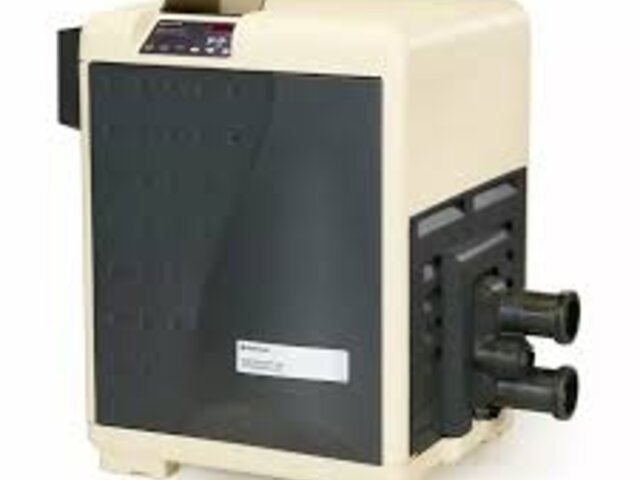
Gas heaters are excellent for salt water pools and provide rapid heating. Look for models specifically rated for salt water use, such as Pentair MasterTemp or Hayward Universal H-Series heaters. These units feature:
- Cupro-nickel heat exchangers that resist salt corrosion
- Stainless steel combustion chambers
- Polymer headers and manifolds
Gas heaters work independently of your salt water generator and can raise pool temperature by 1-2°F per hour. Install the heater downstream from your SWG in the return line.
Heat Pump Pool Heaters
Heat pumps are highly efficient for salt water pools, especially in moderate climates. Recommended models include Pentair UltraTemp and Hayward HeatPro heat pumps with:
- Titanium heat exchangers for superior corrosion resistance
- Coated evaporator coils
- Composite fan grilles and shrouds
Heat pumps operate most efficiently when ambient temperatures are above 50°F and can maintain your target temperature with lower operating costs than gas heaters.
Electric Pool Heaters
Electric resistance heaters work well with salt water pools but have higher operating costs. Units like the Hayward CSPAXI or a Raypak/Coates electric resistance heater feature:
- Incoloy heating elements that resist salt corrosion
- Digital temperature controls
- Compact designs suitable for smaller pools
Electric heaters are ideal for spas or smaller pools where quick heating is needed.
Solar Pool Heating
Solar heating systems are completely compatible with salt water pools and offer the lowest operating costs. Popular options include:
- Unglazed polypropylene collectors (Heliocol, SunGrabber) - the most common, lowest-cost type
- Solar blankets and liquid solar covers
Solar systems work best in sunny climates and can extend your swimming season by 2-3 months.
Installation Considerations for Salt Water Pool Heating
When installing heating equipment on your salt water pool, follow these critical steps:
- Position heater downstream from SWG: Install your heater after the salt water generator in the return line to prevent heating the cell unnecessarily
- Maintain proper flow rates: Ensure your pump provides adequate flow (typically 30-125 GPM depending on heater size)
- Install bypass valves: Add three-way valves to allow heating system maintenance without disrupting SWG operation
- Use appropriate plumbing materials: Install PVC or CPVC plumbing connections rated for heated salt water
- Ground all equipment: Properly bond heating equipment to your pool's electrical grounding system
Chemical Balance Impact on Heated Salt Water Pools
Heating your salt water pool affects water chemistry, requiring closer monitoring:
pH Levels: Heated water tends to raise pH faster. Test pH 2-3 times per week and maintain 7.4-7.6 using muriatic acid as needed. Add 1 pint of muriatic acid per 10,000 gallons to lower pH by approximately 0.1 units.
Total Alkalinity: Keep TATotal Alkalinity — The buffer that keeps your pH from bouncing around. Get this in range and pH gets a lot easier to manage. learn more → between 60-80 ppm for salt water pools. Higher temperatures can cause TA to drift upward, requiring muriatic acid adjustments.
Calcium Hardness: Maintain CH at 250-350 ppm for plaster pools, 175-225 ppm for vinyl/fiberglass. Heated water increases scaling potential if CH is too high.
Salt Cell Maintenance: Higher temperatures increase cell efficiency but also accelerate calcium buildup. Inspect and clean cells monthly during heavy heating periods using about a 4:1 water-to-muriatic acid solution (always add acid to water, never water to acid).
Troubleshooting Common Heating Issues
Heater shuts down when it gets hot outside? A heater that runs fine below 80°F but cuts out in the mid-80s is usually tripping a safety, not failing outright. Common causes: a high-limit/overheat switch tripping (often from low or restricted water flow - check the filter, valves, and pump speed), a faulty thermistor or thermostat misreading temperature, or, on a heat pump, a high-pressure refrigerant cutout in hot weather. Start by cleaning the filter and confirming full flow, then have a tech check the high-limit switch and sensors before assuming the heater is dead.
If your heated salt water pool isn't maintaining temperature:
- Check flow rates: Verify pump is providing adequate flow to both heater and SWG
- Inspect heat exchanger: Look for calcium buildup or corrosion that reduces efficiency
- Test water balance: Improper chemistry can damage heating components
- Verify thermostat calibration: Use an accurate pool thermometer to confirm temperature readings
Safety Warning: Always turn off power to heating equipment before performing maintenance. Salt water conducts electricity more readily than fresh water.
Operating Cost Considerations
Heating costs for salt water pools are similar to traditional pools:
- Gas heaters: $5-10 per hour depending on BTU rating and gas prices
- Heat pumps: $1-3 per hour with 3-6x efficiency advantage
- Electric resistance: $8-15 per hour depending on local electricity rates
- Solar systems: Minimal operating costs after initial investment
Use a pool cover to reduce heat loss by up to 70% and lower operating costs significantly. Consider a timer system to heat your pool during off-peak rate periods.
 Taylor K-2006C Complete FAS-DPD Pool & Spa Test Kit
The FAS-DPD kit pool pros trust — reads chlorine accurately even at shock/SLAM levels, plus pH, alkalinity, calcium hardness and CYA. View on Amazon →
Taylor K-2006C Complete FAS-DPD Pool & Spa Test Kit
The FAS-DPD kit pool pros trust — reads chlorine accurately even at shock/SLAM levels, plus pH, alkalinity, calcium hardness and CYA. View on Amazon →
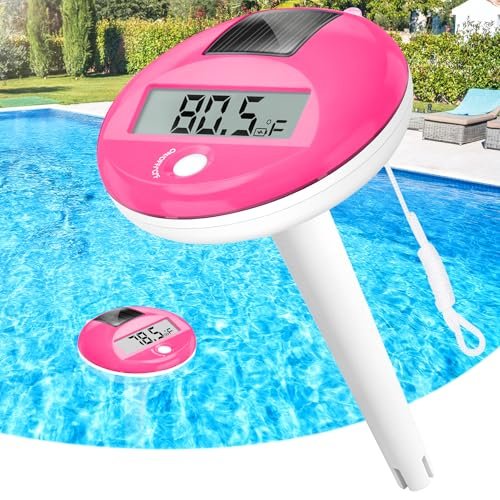 LuxBlue Floating Pool Thermometer, Solar, Large LCD
Easy-read floating thermometer for pool water temperature. View on Amazon →
LuxBlue Floating Pool Thermometer, Solar, Large LCD
Easy-read floating thermometer for pool water temperature. View on Amazon →
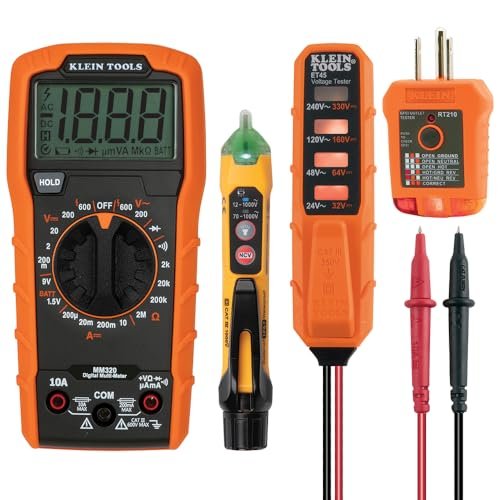 Klein Tools MM320KIT Digital Multimeter Kit
For troubleshooting pump-motor voltage, continuity, and capacitor faults. View on Amazon →
Klein Tools MM320KIT Digital Multimeter Kit
For troubleshooting pump-motor voltage, continuity, and capacitor faults. View on Amazon →
Still need help? Ask a Pool & Spa Expert AD
Get a personalized answer from PoolGuy810 — 30 years owning a pool and spa repair company. Describe your issue and get step-by-step help.
Related Pool Guides
Need More Help?
Try our free pool calculators and tools to help diagnose and fix your pool problems.
Browse Pool ToolsSLAM calculator, pH calculator, salt dosing & more