
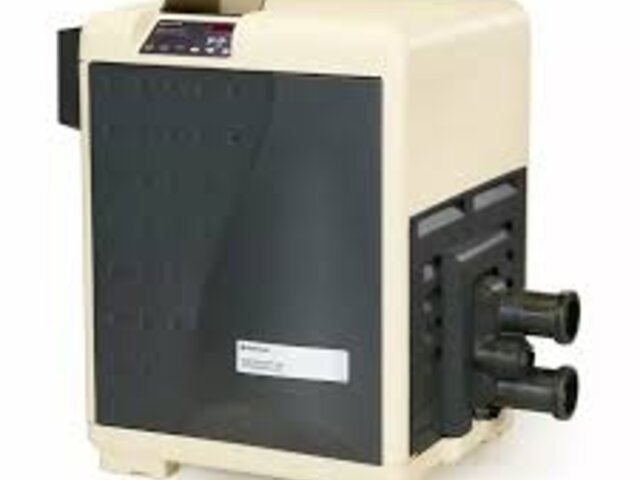
Can Pool Heaters Be Repaired? Complete Repair Guide 2026

Is my pool heater worth repairing or should I replace it?
Read full question
Pulled three quotes ranging from $600-$900 to fix my 8-year-old gas pool heater that won't heat and wondering if I can DIY this myself. The pilot lights but water temp barely rises. Not sure if it's the thermostat, heat exchanger, or something else.
Is it worth getting it repaired at this age? What kind of problems can actually be fixed vs when you should just buy new? Don't want to throw money at repairs if replacement makes more sense.
Quick Answer
Yes, most pool heaters can be repaired depending on the issue and age. Common repairable problems include faulty thermostats, clogged heat exchangers, ignition issues, and circulation problems, though repairs on units over 10-15 years old may not be cost-effective.
Step-by-Step Pool Heater Repair Assessment
- Determine Your Heater Type and Age
Check the manufacturer label for the model number, year of manufacture, and heater type (gas, electric, or heat pump). Units over 10-15 years old may not be worth extensive repairs due to parts availability and efficiency improvements in newer models. - Perform Initial Safety Checks
Turn off power at the breaker and shut off gas supply if applicable. Allow gas heaters to cool for at least 30 minutes before inspection and check for gas leaks. Never attempt repairs on energized equipment or while gas is flowing. - Check Basic Operations First
Verify the pool pump is running properly, as heaters require adequate water flow to operate safely. Check that the filter is clean and water chemistry is balanced - high pH or calcium levels can damage heat exchangers. - Inspect External Components
Look for obvious issues like corroded connections, damaged wiring, blocked vents, or debris around the unit. Check that the thermostat setting is appropriate and that circuit breakers haven't tripped. - Test Water Flow Through the Heater
Ensure water is flowing properly through the heat exchanger. Poor circulation often triggers safety shutoffs and can indicate internal blockages or pump issues. - Document Error Codes or Symptoms
Modern heaters display error codes that help pinpoint problems. Record any codes, unusual sounds, failure to ignite, or irregular heating patterns to help with diagnosis.
Common Repairable Pool Heater Problems
Gas Heater Repairs
If the pilot lights but the water barely warms, the most likely culprits are a scaled or fouled heat exchanger, partially blocked burners, low gas pressure, or weak water flow — not usually the thermostat.
- Ignition Problems: Faulty pilot lights, gas valves, or electronic ignition systems can usually be repaired by replacing specific components like thermocouples or ignition modules
- Heat Exchanger Issues: Scale buildup can be cleaned, though severely corroded exchangers may require replacement of the entire unit
- Thermostat Failures: Temperature sensors and control boards are commonly replaced parts
- Pressure Switch Problems: These safety devices often fail and are relatively inexpensive to replace
Electric Heater Repairs
- Heating Element Replacement: Burned out elements are the most common failure and are easily replaceable
- Control Board Issues: Electronic controls can be repaired or replaced
- Sensor Malfunctions: Temperature and flow sensors are standard repair items
Heat Pump Repairs
- Refrigerant Leaks: Can be repaired if caught early, though major leaks may require replacement
- Compressor Problems: Minor issues are repairable, but compressor replacement approaches the cost of a new unit
- Fan Motor Replacement: A common and cost-effective repair
- Defrost Control Issues: Control boards and sensors can be replaced
Repair vs. Replacement Decision Process
- Calculate Repair Costs
Get quotes for necessary repairs including parts and labor. Factor in potential future repairs for aging components. - Apply the 50% Rule
If repair costs exceed 50% of a new heater's price, replacement is typically more economical, especially for units over 10 years old. - Consider Energy Efficiency
Newer heaters are significantly more efficient. Calculate potential energy savings over 5-10 years to offset replacement costs. - Evaluate Parts Availability
Discontinued models may have limited or expensive replacement parts, making repairs impractical long-term. - Factor in Labor Costs
Complex repairs requiring multiple service calls can quickly become expensive compared to straightforward replacement installation.
When Professional Repair is Required
Gas line work, 240V electrical connections, and refrigerant handling require licensed professionals. For a gas heater that lights but won't heat, the likely repairs (gas valve, burner, heat exchanger, gas pressure) are not safe DIY jobs and should go to a licensed technician. Many areas require permits for heater repairs or replacements. Additionally, warranty coverage often requires professional installation and repair.
Maintenance to Prevent Future Repairs
- Maintain proper water chemistry with pH between 7.2-7.6 and total alkalinity 80-120 ppm
- Clean the heater's heat exchanger annually to prevent scale buildup
- Keep the area around the heater clear of debris and vegetation
- Have annual professional inspections to catch problems early
- Replace filters regularly to maintain proper water flow
Cost Expectations for Common Repairs
Minor repairs like thermostat replacement typically cost $200-400, while major components like heat exchangers can range from $500-2000 including labor, and compressor replacements typically cost $1500-4000+ depending on unit size. Always get multiple quotes for expensive repairs and compare against replacement costs.
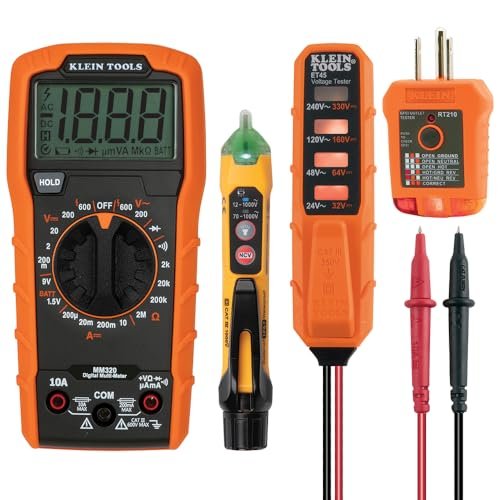 Klein Tools MM320KIT Digital Multimeter Kit
For troubleshooting pump-motor voltage, continuity, and capacitor faults. View on Amazon →
Klein Tools MM320KIT Digital Multimeter Kit
For troubleshooting pump-motor voltage, continuity, and capacitor faults. View on Amazon →
 Taylor K-2006C Complete FAS-DPD Pool & Spa Test Kit
The FAS-DPD kit pool pros trust — reads chlorine accurately even at shock/SLAM levels, plus pH, alkalinity, calcium hardness and CYA. View on Amazon →
Taylor K-2006C Complete FAS-DPD Pool & Spa Test Kit
The FAS-DPD kit pool pros trust — reads chlorine accurately even at shock/SLAM levels, plus pH, alkalinity, calcium hardness and CYA. View on Amazon →
Still need help? Ask a Pool & Spa Expert AD
Get a personalized answer from PoolGuy810 — 30 years owning a pool and spa repair company. Describe your issue and get step-by-step help.
Related Pool Guides
Need More Help?
Try our free pool calculators and tools to help diagnose and fix your pool problems.
Browse Pool ToolsSLAM calculator, pH calculator, salt dosing & more