
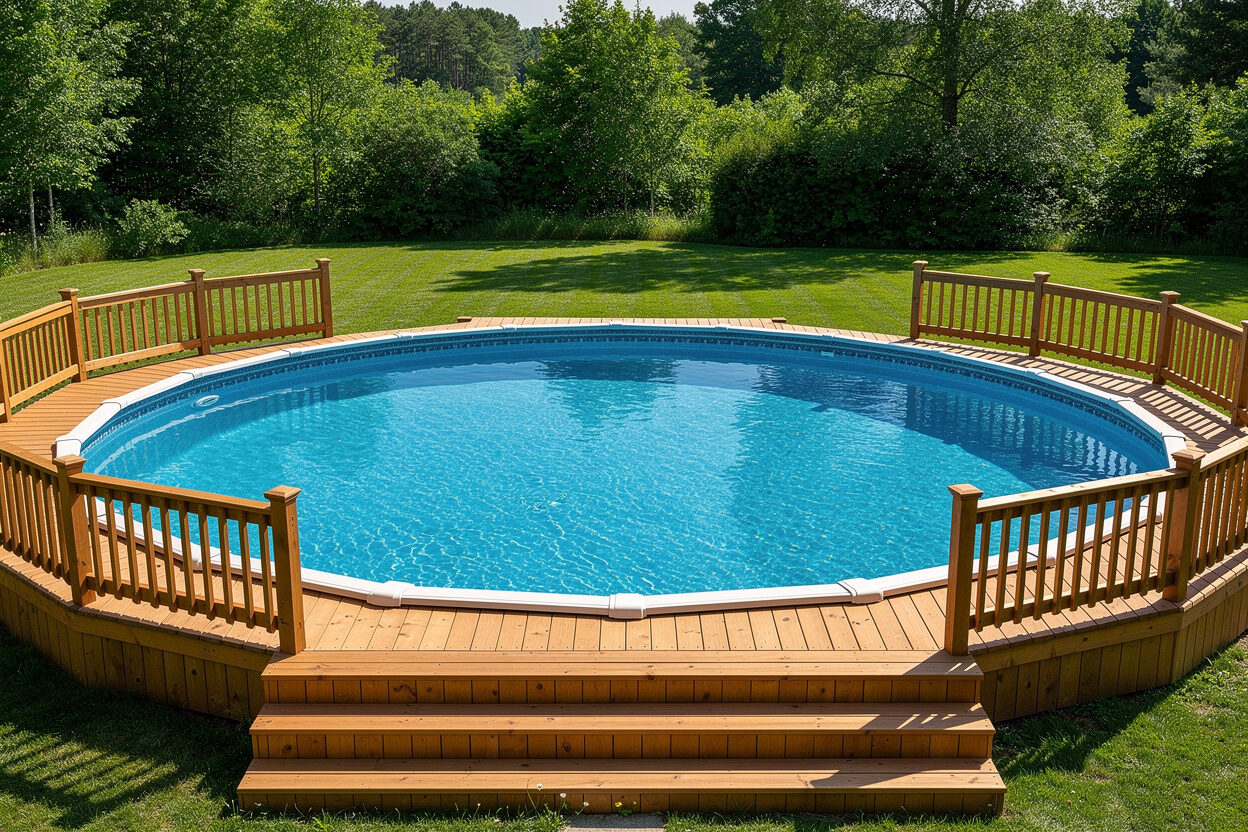
Can You Bury an Above Ground Pool? Complete Safety Guide

Is it safe to bury my above ground pool partially or completely?
Read full question
Nobody can agree on whether I can bury my above ground pool — my neighbor says yes, the pool store says absolutely not, and YouTube shows people doing it.
Some people are telling me I can just dig a hole and drop it right in, while others are warning me about structural issues and safety concerns. I really want to make this work because I can't afford a full inground installation, but I also don't want to create a dangerous situation or waste money on a project that's doomed to fail.
What's the real deal here? Can I safely bury my above ground pool completely, or are there specific limitations I need to know about? I'm willing to do whatever reinforcement work is necessary if it means I can finally have the pool setup I've been wanting.
Quick Answer
You should never fully bury a standard above ground pool as it's not engineered to handle soil pressure and can collapse or fail catastrophically. However, semi-inground installation is possible with proper reinforcement and specific pool models designed for this purpose.
Is it Safe to Bury My Above Ground Pool Partially or Completely?
Why Full Burial Is Dangerous
Above ground pools are designed to hold water pressure from the inside while being supported by external bracing and the pool deck. When you bury them, several critical problems occur:
- Soil pressure - Earth exerts tremendous lateral pressure that can buckle or collapse pool walls
- Drainage issues - Water accumulation around the pool creates hydrostatic pressure
- Corrosion acceleration - Buried metal components corrode much faster
- Structural failure - Pool walls may bow inward or completely fail
- Warranty voiding - Most manufacturers void warranties for improper installation
Step-by-Step Semi-Inground Installation Process
If you want a partially buried look, follow these steps for a safe semi-inground installation:
- Choose the right pool model - Select pools specifically rated for semi-inground use, consulting manufacturer recommendations
- Plan your excavation depth - bury only to the depth your specific model is rated for. Standard above ground pools generally shouldn't go deeper than about 1-2 feet, while purpose-built semi-inground models are often rated by the manufacturer down to the seam below the top rail (commonly around 48 inches). Always follow the manufacturer's specifications
- Excavate properly - Dig the hole 2-3 feet larger than the pool diameter on all sides
- Install drainage system - Place a French drain system around the pool perimeter to manage water drainage and prevent hydrostatic pressure buildup
- Create proper base - Install 2-3 inches minimum of sand base, perfectly level and properly compacted
- Add wall reinforcement - Install additional wall bracing or concrete collar
- Use proper backfill material - Use pea gravel or crushed stone, never dirt or clay
- Install retaining wall - Build a decorative retaining wall around the exposed portion
- Ensure proper grading - Grade soil away from pool to prevent water accumulation
- Add safety features - Install proper fencing and safety equipment as required by local codes
Professional Installation Requirements
Semi-inground installation requires specific expertise and should involve:
- Consultation with a licensed pool installation professional
- Comprehensive soil analysis
- Obtaining necessary building permits
- Professional excavation and structural assessment
Safety Warning
CRITICAL: Never attempt to fully bury a standard above ground pool. The risk of structural failure, injury, or property damage is extremely high. Always consult with qualified pool professionals and obtain proper permits for any non-standard installation.
Still need help? Ask a Pool & Spa Expert AD
Get a personalized answer from PoolGuy810 — 30 years owning a pool and spa repair company. Describe your issue and get step-by-step help.
Related Pool Guides
Need More Help?
Try our free pool calculators and tools to help diagnose and fix your pool problems.
Browse Pool ToolsSLAM calculator, pH calculator, salt dosing & more