
Above Ground Pool Liner Cost & Replacement Guide 2026

How much should I budget for a new above ground pool liner?
Read full question
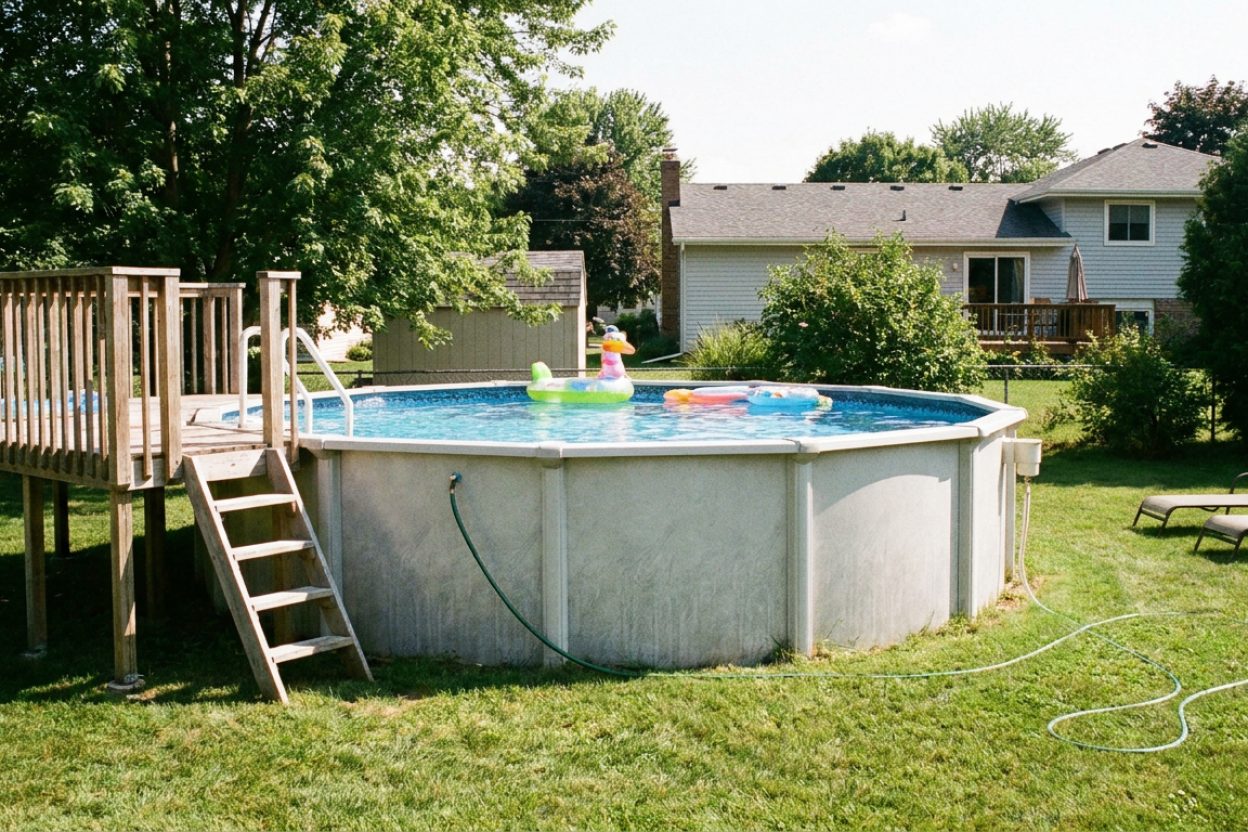
The previous owners left me with an above ground pool liner that's completely trashed with sun damage and tears scattered everywhere. I'm starting to see some wrinkles and fading that's making me think it's time for a replacement.
I'm trying to figure out what I should realistically budget for this project. Should I attempt to tackle the installation myself to save some cash, or is this one of those jobs where it's worth paying the pros? I've got a decent-sized pool but nothing huge, and I'm wondering what the total damage to my wallet might be.
Quick Answer
Above ground pool liners typically cost $500–$2,500 total (materials plus installation) depending on size, shape, thickness, and liner type. Round pools generally run $800–$1,500 all-in, while oval pools can range from $900–$2,500; professional installation adds roughly $200–$500.
First, Let's Diagnose Your Liner Needs
Before determining exact costs, you need to identify what type of replacement liner your pool requires. The three main factors affecting price are:
- Pool size and shape - Round pools are less expensive than oval pools of similar size
- Liner attachment method - Overlap, beaded, or unibead systems have different pricing
- Liner thickness - Measured in gauge (20-gauge standard; 30-gauge or thicker for premium durability)
Measuring Your Pool for Accurate Pricing
To get accurate cost estimates, measure your pool's diameter (for round pools) or length and width (for oval pools). Also measure the wall height - typically 48", 52", or 54". These measurements determine the liner size you'll need to purchase.
Liner Cost Breakdown by Pool Size
Round Pool Liner Costs
- 12' Round: $800–$1,200 all-in (liner + installation)
- 15' Round: $900–$1,300 all-in
- 18' Round: $950–$1,350 all-in
- 21' Round: $1,000–$1,400 all-in
- 24' Round: $1,100–$1,500 all-in
- 27' Round: $1,200–$1,500 all-in
- 30' Round: $1,300–$1,500 all-in
Oval Pool Liner Costs
- 12'x24' Oval: $900–$1,500
- 15'x30' Oval: $1,000–$1,800
- 16'x32' Oval: $1,100–$2,000
- 18'x33' Oval: $1,200–$2,200
- 20'x40' Oval: $1,500–$2,500
Liner Types and Their Cost Impact
Overlap Liners (Most Economical)
Overlap liners drape over the pool wall and are held in place with coping strips. These are typically the least expensive option, running around $150–$600 for materials depending on size. They're easier to install but may not look as finished as other options.
Beaded Liners (Premium)
Beaded liners have a thick bead around the top that snaps into a receiver track. They typically run $300–$900 for materials but provide a cleaner appearance and easier replacement in the future.
Unibead Liners (Most Versatile)
Unibead liners (also called J-hook or V-bead) can work as either overlap or beaded systems. They typically cost about the same as or slightly less than beaded liners while offering installation flexibility and a very secure fit. Premium 30-gauge unibead options commonly run around $200–$400 in materials for common sizes like a 24-ft round.
Installation Cost Considerations
Professional Installation
Professional liner installation typically costs $200-$500 depending on your location and pool size. This includes:
- Draining the existing pool
- Removing the old liner
- Installing the new liner
- Basic refilling assistance
DIY Installation Savings
Installing the liner yourself can save $200-$500, but requires physical effort and careful attention to detail. You'll need basic tools and should plan for a full day of work. Consider professional installation if your pool has complex features or if you're uncomfortable with the process.
Additional Cost Factors
Liner Thickness Impact on Price
20-gauge liners: The standard thickness and most economical option. Good for budget-conscious replacements where UV exposure is moderate.
25-gauge liners: A step up in durability and cost, offering a good balance for most homeowners.
30-gauge and thicker liners: Premium options offering better UV resistance, puncture protection, and longer life. Higher upfront cost but better long-term value. A properly installed liner should last 8–12 years, though heavy UV exposure or frequent mechanical stress may require replacement closer to the ten-year mark.
Pattern and Design Costs
Basic blue or blue wall/blue bottom patterns are least expensive. Tile patterns, stone looks, and designer prints typically add $50-$200 to the base cost.
Money-Saving Solutions
Timing Your Purchase
Pool liner prices are often lowest during fall and winter months when demand is reduced. Planning ahead can save 10-20% compared to emergency spring replacements.
Bulk Buying Considerations
If you have multiple pools or neighbors also need replacements, some suppliers offer discounts on multiple liner purchases.
When to Replace vs. Repair
Replace your liner when you notice:
- Multiple tears or patches
- Significant fading or brittleness
- Liner pulling away from walls
- Constant water loss despite patches
Safety Warning: Never attempt to repair a liner while the pool contains water and electrical equipment is connected. Always turn off power to pool equipment before beginning any liner work.
Long-Term Cost Planning
Factor in that thicker liners cost more upfront but last longer, making them more economical over time. A 30-gauge liner costing around $620 that lasts 10–12 years with proper maintenance provides better value than a standard-gauge liner that may need earlier replacement due to UV damage or punctures. Keeping water chemistry balanced and avoiding undiluted chemicals on the vinyl are the most effective ways to extend liner life.
Still need help? Ask a Pool & Spa Expert AD
Get a personalized answer from PoolGuy810 — 30 years owning a pool and spa repair company. Describe your issue and get step-by-step help.
Related Pool Guides
Need More Help?
Try our free pool calculators and tools to help diagnose and fix your pool problems.
Browse Pool ToolsSLAM calculator, pH calculator, salt dosing & more