
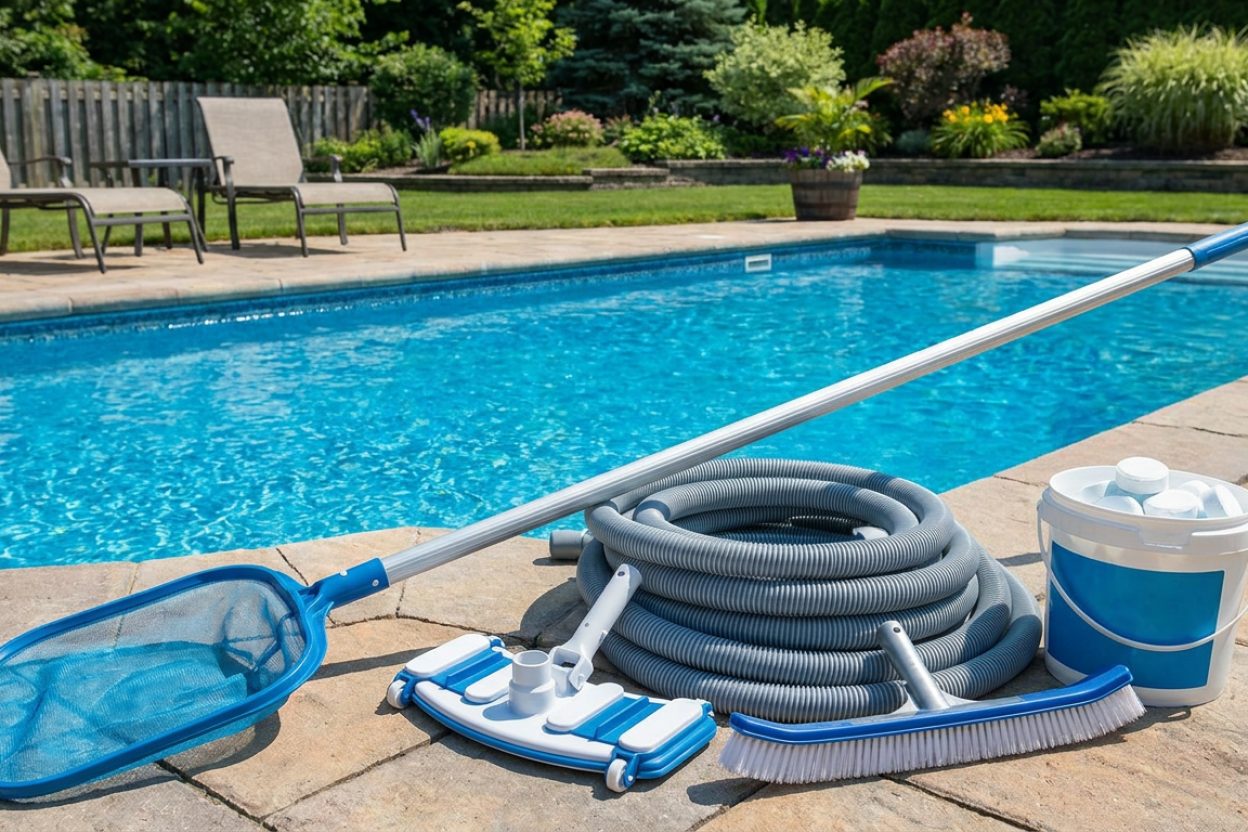
Do I Need to Shock My Pool in Winter? Complete Guide

Winter pool maintenance - how often should I shock during cold months?
Read full question
Between the musty, swamp-like stench seeping through my pool cover and that weird chemical smell hitting me every time I walk by, I'm wondering if I should still be shocking it this winter.
I have a 20,000 gallon inground pool that I keep open year-round here in the Southeast, but I've heard conflicting advice about whether I need to shock as often in winter as I do in summer.
Right now my water temperature is around 55°F and my free chlorine levels have been holding steady at about 2.5 ppm. During summer I was shocking every two weeks religiously, but with the cooler temps and less usage, I'm wondering if I can scale back. Does the type of pool setup (open vs closed for winter) make a difference in shocking frequency? And should I be adjusting based on water temperature or just stick to my summer routine?
Quick Answer
Yes, you may need to shock your pool in winter, but less frequently than summer. Winter shocking depends on your pool type (open vs closed), water temperature, and current chlorine levels. Use the FC/CYA relationship — our all-in-one pool calculator estimates the free chlorine target for your CYA.
Diagnosing Your Winter Shocking Needs
First, let's diagnose your specific situation to determine if winter shocking is necessary. The answer varies significantly based on your pool setup and local climate conditions.
Identify Your Pool Type
- Open pools: Maintained year-round with running equipment
- Winterized pools: Closed for season with lowered water and covered
- Partially winterized: Covered but equipment still operational
Test Your Current Water Chemistry
Use a reliable test kit like the Taylor K-2006 to measure:
- Free Chlorine (FCFree Chlorine — The chlorine actively sanitizing your water right now. This is the number you keep an eye on. how much you need →) levels
- Combined Chlorine (CCCombined Chlorine — "Used-up" chlorine left over from doing its job. Above about 0.5 ppm is the classic sign water needs a shock. learn more →) levels
- pH levels
- Cyanuric Acid (CYACyanuric Acid (stabilizer) — Sunscreen for your chlorine — it keeps sunlight from burning it off. The catch: the more you have, the more chlorine you need to keep. learn more →) levels
If your FC/CYAFC/CYA chart — The chart that sets your chlorine target from your stabilizer (CYA) level — the two go together. see the chart → ratio falls below the recommended chart levels, or if CC exceeds 0.5 ppm, shocking may be warranted.
Winter Shocking Scenarios and Solutions
Scenario 1: Open Pool in Mild Climate
If you're maintaining an open pool through winter in areas like Southern California, Florida, or Arizona, you'll need periodic shocking but less frequently than summer months.
Solution:
- Test water weekly during winter months
- Maintain FC levels according to your CYA level using the FC/CYA chart (e.g., for CYA 50, maintain FC 6-8 ppm (minimum 4))
- Shock when FC drops below minimum or CC rises above 0.5 ppm
- Use liquid chlorine (sodium hypochlorite) rather than calcium hypochlorite to avoid calcium buildup
- Add approximately 10.7 oz of 12.5% liquid chlorine per 10,000 gallons to raise FC by 1 ppm (see manufacturer specs for dosing estimates). For a quick estimate, use our all-in-one pool calculator.
Scenario 2: Covered Pool with Running Equipment
Many pool owners keep equipment running but cover their pools during colder months.
Solution:
- Remove cover safely and test water bi-weekly
- Check for algae growth or cloudy water under the cover
- If water appears green or cloudy, initiate a SLAMShock Level And Maintain — raise free chlorine to a target based on your CYA and hold it there until the algae is gone. It's a process, not a one-time dose. the SLAM walkthrough → (Shock Level And Maintain) process
- For SLAM, raise FC to shock level (determined by CYA level) and maintain until water clears
- Brush pool walls thoroughly before shocking
- Run filtration system continuously during shocking process
Scenario 3: Fully Winterized Pool
Pools that are properly winterized typically don't require mid-winter shocking.
Solution:
- If you properly shocked before winterizing, additional shocking shouldn't be necessary
- Avoid removing winter cover unnecessarily as this introduces contaminants
- If you must check water due to cover damage or unusual circumstances, test and shock only if CC exceeds 0.5 ppm
Special Winter Considerations
Temperature Effects on Chlorine
Cold water affects chlorine behavior significantly. Chlorine works more slowly in cold water, but it also dissipates more slowly. This means:
- Shocking takes longer to be effective
- You may need less frequent shocking
- Allow 24-48 hours between shocking and retesting in cold water
Reduced Bather Load
Winter typically means fewer swimmers, reducing the introduction of contaminants like body oils, sunscreen, and organic matter that typically necessitate shocking.
UV Protection
Reduced sunlight in winter means less chlorine degradation from UV rays, potentially extending the effectiveness of your existing chlorine levels.
Winter Shocking Best Practices
Timing and Frequency
- Shock during evening hours when possible
- Test water 24-48 hours after shocking in cold conditions
- In open pools, shock monthly or when test results indicate need
- In covered pools, shock only when testing reveals problems
Safety Precautions
Important winter safety considerations:
- Be extra cautious around wet, potentially icy pool decks
- Store liquid chlorine in heated areas to prevent freezing
- Keep chlorine away from acids and fuels in storage — mixing them can release toxic gas or cause a fire
- Never add chemicals to frozen water
- Ensure adequate ventilation when adding chemicals in enclosed areas
Product Selection
For winter shocking, liquid chlorine (sodium hypochlorite) remains the preferred choice because:
- It doesn't add calcium to your water
- It's less likely to cause pH spikes
- It works effectively even in cold water
Avoid using trichlor tablets or dichlor shock in winter as these add cyanuric acid, which can accumulate to problematic levels with reduced water turnover.
When NOT to Shock in Winter
Avoid winter shocking if:
- Your pool is properly winterized and covered
- Equipment isn't running to circulate the shock treatment effectively
- Free chlorine levels are adequate for your CYA level
- Combined chlorine is below 0.5 ppm
- You're planning to drain and refill in spring
Remember, unnecessary shocking wastes chemicals and can lead to equipment corrosion or surface damage when water circulation is minimal.
For the full breakdown of safe chlorine levels by CYA level, see our pool water chemistry guide.
 Taylor K-2006C Complete FAS-DPD Pool & Spa Test Kit
The FAS-DPD kit pool pros trust — reads chlorine accurately even at shock/SLAM levels, plus pH, alkalinity, calcium hardness and CYA. View on Amazon →
Taylor K-2006C Complete FAS-DPD Pool & Spa Test Kit
The FAS-DPD kit pool pros trust — reads chlorine accurately even at shock/SLAM levels, plus pH, alkalinity, calcium hardness and CYA. View on Amazon →
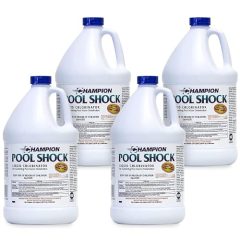 Liquid Chlorine / Sodium Hypochlorite (12.5%)
Everyday sanitizer — the B in BBB View on Amazon →
Liquid Chlorine / Sodium Hypochlorite (12.5%)
Everyday sanitizer — the B in BBB View on Amazon →
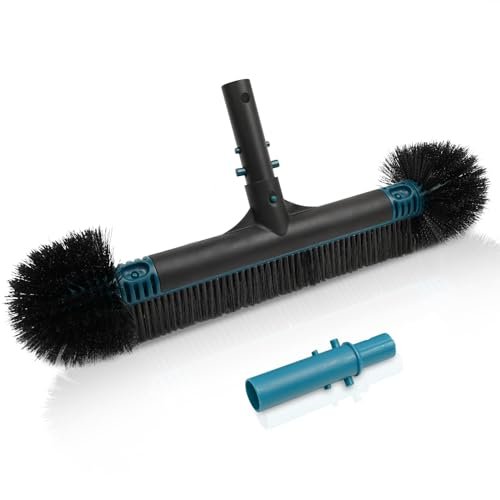 Poolvio 20" 2-in-1 Pool Brush Head (Walls & Floor)
Sturdy 20-inch brush head that clips onto any standard telescopic pole. View on Amazon →
Poolvio 20" 2-in-1 Pool Brush Head (Walls & Floor)
Sturdy 20-inch brush head that clips onto any standard telescopic pole. View on Amazon →
Still need help? Ask a Pool & Spa Expert AD
Get a personalized answer from PoolGuy810 — 30 years owning a pool and spa repair company. Describe your issue and get step-by-step help.
Need More Help?
Try our free pool calculators and tools to help diagnose and fix your pool problems.
Browse Pool ToolsSLAM calculator, pH calculator, salt dosing & more