
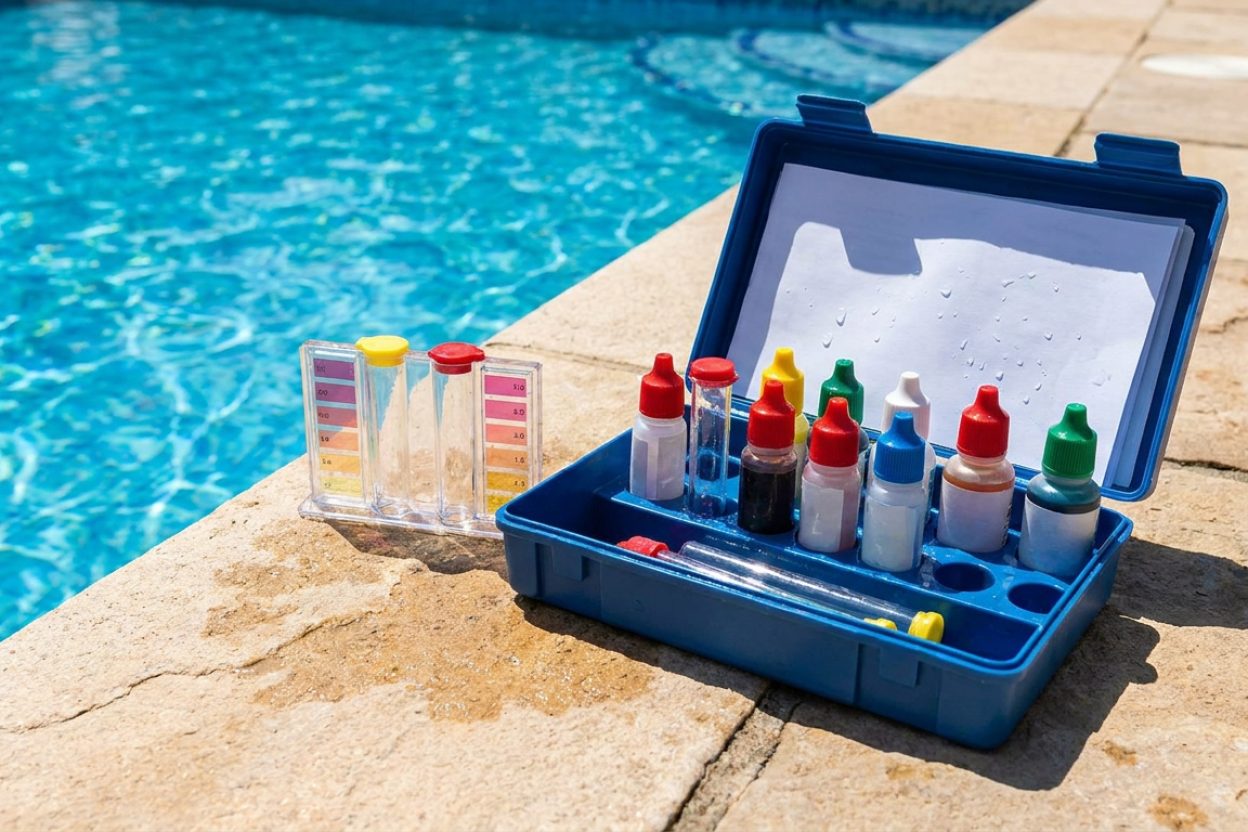
Can You Shock Pool With Liquid Chlorine? Complete Guide

Liquid chlorine for pool shock - does it work?
Read full question
Replaced my pool's chlorine tablets with liquid this season — planning to shock my 10,000 gallon pool Saturday, what supplies do I need ready? Have liquid chlorine on hand but not sure if it's effective for shocking or if I need granular shock instead.
How much liquid chlorine would I need to properly shock? Want to raise chlorine levels by about 10ppm.
Quick Answer
Yes, liquid chlorine (sodium hypochlorite) is excellent for shocking pools and often superior to granular shock. You'll need about 0.8 gallon of 12.5% liquid chlorine per 10,000 gallons to raise free chlorine by 10 ppm (1 gallon raises it ~12.5 ppm). This guide covers diagnosing when to shock, the advantages of liquid chlorine, calculating the dosage, the SLAM method for severe problems, safety precautions, testing and monitoring results, and common troubleshooting issues.
Diagnosing When You Need to Shock
First, let's diagnose whether your pool actually needs shocking and determine the right approach:
- Algae present: Green, yellow, or black discoloration indicates you need a SLAMShock Level And Maintain — raise free chlorine to a target based on your CYA and hold it there until the algae is gone. It's a process, not a one-time dose. the SLAM walkthrough → (Shock Level And Maintain) process
- Cloudy water: May need shocking if combined chlorine levels are high
- Strong chlorine smell: Actually indicates low free chlorine and need for shocking
- Failed overnight chlorine loss test (OCLT): Confirms active contamination requiring shock treatment
Liquid Chlorine vs Other Shock Options
Liquid chlorine offers several advantages over granular shock products:
- No calcium buildup: Unlike cal-hypo shock, liquid chlorine won't raise calcium hardness
- No stabilizer addition: Won't increase cyanuric acid levels like stabilized chlorine
- Instant dissolution: No waiting for granules to dissolve or risk of bleaching
- Roughly pH-neutral: Liquid chlorine has a high pH (~13), so it bumps pH up when first added - but that's offset as the chlorine is used up, so over a full cycle it's close to pH-neutral (unlike cal-hypo, which leaves calcium behind)
Calculating Liquid Chlorine Dosage
To properly shock with liquid chlorine, you need to determine your shock level based on your cyanuric acid (CYACyanuric Acid (stabilizer) — Sunscreen for your chlorine — it keeps sunlight from burning it off. The catch: the more you have, the more chlorine you need to keep. learn more →) level:
- Test your CYA level using a Taylor K-2006 test kit or similar
- Determine SLAM shock level using the FC/CYAFC/CYA chart — The chart that sets your chlorine target from your stabilizer (CYA) level — the two go together. see the chart → relationship — our all-in-one pool calculator estimates the free chlorine target for your CYA. For severe contamination/algae:
- CYA 30ppm = 12ppm FCFree Chlorine — The chlorine actively sanitizing your water right now. This is the number you keep an eye on. how much you need → shock level
- CYA 40ppm = 16ppm FC shock level
- CYA 50ppm = 20ppm FC shock level
- CYA 60ppm = 24ppm FC shock level
- Calculate gallons needed: Each gallon of 12.5% liquid chlorine raises 10,000 gallons by approximately 12.5ppm (note: commercial liquid chlorine varies from 10.5%-12.5%, so adjust calculations based on your product's actual strength). For a quick estimate, use our all-in-one pool calculator.
Step-by-Step Shocking Process
- Test and balance pH first: Keep pH in the 7.2-7.8 range for comfort and to protect surfaces (lower pH actually makes chlorine slightly more active, so don't raise pH to boost sanitizing)
- Calculate total liquid chlorine needed: For a 20,000-gallon pool targeting 20ppm FC, you'd need about 3 gallons of liquid chlorine
- Add chlorine after sunset: UV rays will burn off chlorine quickly during daylight hours
- Pour slowly around pool perimeter: Add liquid chlorine to deep end while pump is running
- Brush pool surfaces: Immediately after adding chlorine to prevent any temporary bleaching
- Run pump continuously: Keep circulation going 24/7 during shock process
SLAM Method for Severe Problems
For green pools or persistent algae, follow the SLAM (Shock Level And Maintain) method:
- Maintain shock level continuously: Test FC every few hours and add liquid chlorine to maintain target level
- Brush twice daily: Morning and evening brushing helps break up biofilms
- Clean filter frequently: For sand/DE filters, backwash when pressure rises 8-10 psi or 20-25% above clean pressure (check manufacturer specifications); for cartridge filters, clean when visibly dirty or flow decreases
- Continue until clear: SLAM is complete when the water is crystal clear, combined chlorine (CCCombined Chlorine — "Used-up" chlorine left over from doing its job. Above about 0.5 ppm is the classic sign water needs a shock. learn more →) is 0.5 ppm or less, and the pool passes the overnight chlorine loss test
Safety Precautions
Important safety warnings when handling liquid chlorine:
- Never mix chemicals: Add liquid chlorine separately from any other pool chemicals
- Store properly: Keep in cool, dry area away from metals and organic materials
- Use within 60 days: Liquid chlorine degrades over time, especially in heat
- Wear protection: Use gloves and eye protection when handling
- Ventilation matters: Only use in well-ventilated areas
Testing and Monitoring Results
Proper testing is crucial for successful shocking:
- Test FC every 2-4 hours initially: Chlorine demand may be high with severe contamination
- Use FAS-DPDFAS-DPD test — A drop-based test that reads chlorine accurately even at high "shock" levels, where test strips give up. see test kits → test method: Taylor K-2006 or similar for accurate high-chlorine readings
- Monitor pH daily: May need adjustment as organic matter is oxidized
- Perform OCLT when clear: Overnight test confirms successful treatment
Common Troubleshooting Issues
If shocking isn't working effectively:
- CYA too high (over 50ppm): Requires higher shock levels or partial water replacement
- pH too high: Above ~7.8, a larger share of chlorine shifts to its weaker form and scaling/cloudiness become more likely (the effect on sanitizing is modest in a stabilized pool)
- Inadequate circulation: Dead spots allow algae and bacteria to persist
- Insufficient dosage: Going halfway with shock treatment often fails completely
Liquid chlorine is not only effective for pool shocking but often the preferred choice of professionals due to its reliability, purity, and ease of use. The key is proper testing, accurate dosing, and maintaining shock levels long enough to complete the oxidation process.
For the full breakdown of safe chlorine levels by CYA level, see our pool water chemistry guide.
 Taylor K-2006C Complete FAS-DPD Pool & Spa Test Kit
The FAS-DPD kit pool pros trust — reads chlorine accurately even at shock/SLAM levels, plus pH, alkalinity, calcium hardness and CYA. View on Amazon →
Taylor K-2006C Complete FAS-DPD Pool & Spa Test Kit
The FAS-DPD kit pool pros trust — reads chlorine accurately even at shock/SLAM levels, plus pH, alkalinity, calcium hardness and CYA. View on Amazon →
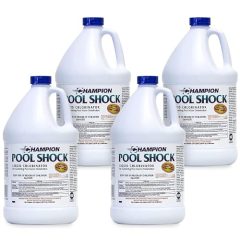 Liquid Chlorine / Sodium Hypochlorite (12.5%)
Everyday sanitizer — the B in BBB View on Amazon →
Liquid Chlorine / Sodium Hypochlorite (12.5%)
Everyday sanitizer — the B in BBB View on Amazon →
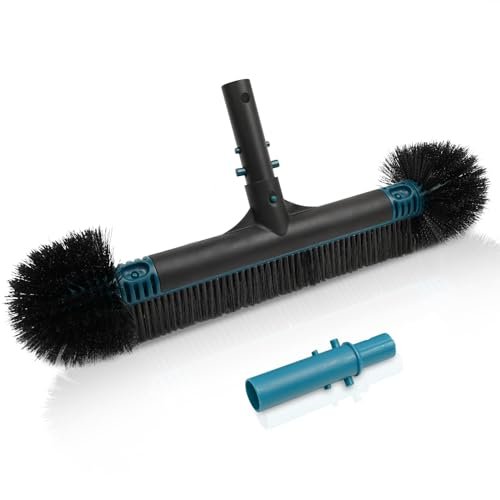 Poolvio 20" 2-in-1 Pool Brush Head (Walls & Floor)
Sturdy 20-inch brush head that clips onto any standard telescopic pole. View on Amazon →
Poolvio 20" 2-in-1 Pool Brush Head (Walls & Floor)
Sturdy 20-inch brush head that clips onto any standard telescopic pole. View on Amazon →
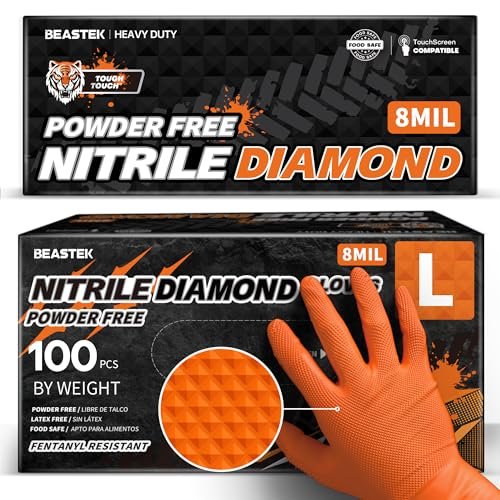 Beastek 8-mil Chemical-Resistant Nitrile Gloves
Disposable nitrile gloves for safe handling of pool chemicals. View on Amazon →
Beastek 8-mil Chemical-Resistant Nitrile Gloves
Disposable nitrile gloves for safe handling of pool chemicals. View on Amazon →
Still need help? Ask a Pool & Spa Expert AD
Get a personalized answer from PoolGuy810 — 30 years owning a pool and spa repair company. Describe your issue and get step-by-step help.
Related Pool Guides
Need More Help?
Try our free pool calculators and tools to help diagnose and fix your pool problems.
Browse Pool ToolsSLAM calculator, pH calculator, salt dosing & more