

Can You Use Pool Chlorine in Your Spa? Safety & Chemistry

Pool chlorine in spa - same chemistry or different requirements?
Read full question
Wondering if I messed up my spa chemistry by adding pool chlorine yesterday to simplify maintenance — the water feels completely different now. The spa gets heavy use and runs at higher temperatures than the pool, so I want to make sure the chemistry requirements are compatible.
Specifically, I need to know if pool chlorine will work effectively in spa conditions, and whether the concentration levels and monitoring frequency need to be adjusted. Are there any safety considerations or chemical balance issues I should be aware of when using pool chlorine in a spa environment?
Quick Answer
Yes, you can use pool chlorine in your spa, but spa chemistry requires different concentration levels and more frequent monitoring due to higher temperatures and bather loads. Use liquid chlorine for best results, maintain FC at 4-6 ppm, and use the all-in-one pool calculator for shock levels and SLAM. Regular testing and proper chemical management are crucial for a safe and enjoyable spa experience.
First, Let's Diagnose Your Spa Chlorination Needs
The short answer is yes, you can use pool chlorine in your spa, but there are critical differences in how you apply and maintain chlorine levels in hot water environments. Before diving into solutions, let's understand why spa chemistry differs from pool chemistry and what this means for your chlorine choice.
Spas operate at higher temperatures (typically 100-104°F vs 78-82°F for pools), have much higher bather loads per gallon, and require more frequent water turnover. These factors dramatically affect chlorine demand, effectiveness, and required maintenance levels.
Chlorine Types and Spa Compatibility
Liquid Chlorine (Sodium Hypochlorite)
This is your best option for spa use. The same liquid chlorine you use in your pool works excellently in spas. Use 12.5% sodium hypochlorite and add approximately 0.1 ounces per 100 gallons to raise free chlorine by 1 ppm. Test and retest every 2-3 hours initially to dial in your spa's specific demand.
Granular Chlorine (Cal-Hypo)
Calcium hypochlorite can be used but adds calcium hardness with each dose. Since spas have limited water volume (typically 300-500 gallons), calcium buildup happens quickly. If you choose cal-hypo, monitor calcium hardness weekly and expect to drain/refill more frequently. Add approximately 0.02 ounces per 100 gallons to raise FCFree Chlorine — The chlorine actively sanitizing your water right now. This is the number you keep an eye on. how much you need → by 1 ppm (verify with manufacturer specs — roughly 1.8–2 oz per 10,000 gallons for 65–73% cal-hypo).
Trichlor Tablets - Avoid These
Never use trichlor tablets in spas. These slowly dissolving tablets are designed for large pool volumes and continuous operation. In a spa's small volume with intermittent use, trichlor creates dangerous chlorine spikes and rapidly builds cyanuric acid (CYACyanuric Acid (stabilizer) — Sunscreen for your chlorine — it keeps sunlight from burning it off. The catch: the more you have, the more chlorine you need to keep. learn more →) to unusable levels.
Critical Chemistry Differences for Spas
Target Chemical Levels
Your spa requires different target ranges than your pool:
- Free Chlorine (FC): 4-6 ppm (higher than pools due to temperature and bather load)
- pH: 7.2-7.4 (slightly lower than pool targets for better sanitizer efficiency)
- Total Alkalinity: 80-120 ppm
- Calcium Hardness: 175-225 ppm (kept lower than pools to reduce scaling at high spa temperatures)
- Cyanuric Acid: up to about 30 ppm (a little stabilizer helps an outdoor spa hold chlorine; indoor or covered spas need little to none)
Testing Frequency
Test your spa water before each use and after heavy bather loads. The small water volume means chemistry changes rapidly. Use a quality test kit like the Taylor K-2006 or comparable strips designed for spa ranges.
Step-by-Step Spa Chlorination Protocol
Initial Setup
- Test current water chemistry using your preferred test method
- Balance pH first - adjust to 7.2-7.4 using muriatic acid or sodium carbonate
- Add liquid chlorine gradually: start with 0.4 ounces per 100 gallons for a 4 ppm target
- Run circulation pump for 30 minutes to distribute chemicals
- Retest free chlorine levels and adjust as needed
Ongoing Maintenance
- Test FC and pH before each spa session
- Add chlorine as needed to maintain 4-6 ppm FC
- After heavy use (more than 2 people or extended sessions), shock with liquid chlorine to the shock level for your CYA (about 40% of CYA). Use our all-in-one pool calculator to determine the shock level.
- Test again 1 hour after shocking - levels should drop to normal range
- If chlorine won't hold or demand is excessive, test for combined chlorine and SLAMShock Level And Maintain — raise free chlorine to a target based on your CYA and hold it there until the algae is gone. It's a process, not a one-time dose. the SLAM walkthrough → by raising FC to the shock level for your CYA and holding until combined chlorine < 0.5 ppm and overnight FC loss < 1 ppm.
Troubleshooting Common Issues
Chlorine Disappears Quickly
High temperatures and organic load create rapid chlorine demand. Solution: Increase base chlorine level to 6 ppm and ensure proper filtration cycles. Run your spa's circulation pump for at least 2 hours daily, even when not in use.
Strong Chlorine Smell
This indicates combined chlorine (chloramines), not excess free chlorine. Test for combined chlorine and SLAM by raising FC to the shock level for your CYA and holding until combined chlorine < 0.5 ppm and overnight FC loss < 1 ppm. Use our all-in-one pool calculator to determine the shock level.
pH Rises Constantly
Hot water and aeration naturally drive pH up. Keep muriatic acid on hand and expect to lower pH 2-3 times per week with regular use. Add acid in small doses (1 ounce per 100 gallons) and retest after 30 minutes.
Safety Considerations
Never mix different chlorine types in your spa. If switching from one chlorine source to another, test levels completely and allow previous chemicals to dissipate before adding new sanitizer.
Store spa chemicals separately from pool chemicals to avoid confusion with dosing amounts. The concentrated nature of spa chemistry makes overdosing much more dangerous than in pools.
Always add chemicals with the pump running and allow circulation before use. The small water volume means chemical stratification can create dangerous hot spots of concentrated sanitizer.
When to Drain and Refill
Unlike pools, spas need complete water changes every 3-4 months with regular use — sooner with heavy use. To estimate an interval for your spa, use our spa water-change calculator.
Signs you need immediate water change: combined chlorine that won't breakpoint, persistent foam, inability to maintain chemistry balance, or total dissolved solids above 1500 ppm over your starting water.
For the full breakdown of safe chlorine levels by CYA level, see our pool water chemistry guide.
 Taylor K-2006C Complete FAS-DPD Pool & Spa Test Kit
The FAS-DPD kit pool pros trust — reads chlorine accurately even at shock/SLAM levels, plus pH, alkalinity, calcium hardness and CYA. View on Amazon →
Taylor K-2006C Complete FAS-DPD Pool & Spa Test Kit
The FAS-DPD kit pool pros trust — reads chlorine accurately even at shock/SLAM levels, plus pH, alkalinity, calcium hardness and CYA. View on Amazon →
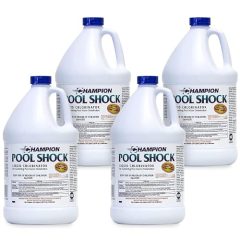 Liquid Chlorine / Sodium Hypochlorite (12.5%)
Everyday sanitizer — the B in BBB View on Amazon →
Liquid Chlorine / Sodium Hypochlorite (12.5%)
Everyday sanitizer — the B in BBB View on Amazon →
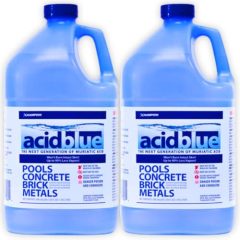 Acid Blue - Low Fume Muriatic Acid for Swimming Pools & Spas - Lower's pH, Reduces Alkalinity - 2 Gallon
View on Amazon →
Acid Blue - Low Fume Muriatic Acid for Swimming Pools & Spas - Lower's pH, Reduces Alkalinity - 2 Gallon
View on Amazon →
Still need help? Ask a Pool & Spa Expert AD
Get a personalized answer from PoolGuy810 — 30 years owning a pool and spa repair company. Describe your issue and get step-by-step help.
Related Pool Guides
Need More Help?
Try our free pool calculators and tools to help diagnose and fix your pool problems.
Browse Pool ToolsSLAM calculator, pH calculator, salt dosing & more