
Can I Leave Pool Filter Outside for Winter? Storage Guide

Do I really need to bring my pool filter inside for winter?
Read full question
This Hayward sand filter is sitting in my backyard and the pool store warned me the housing will crack if I leave it outside this winter. They're saying I absolutely MUST bring my filter inside and store it properly or it'll crack from freezing water. Is this just another upsell, or will my filter actually get damaged if I leave it outside during winter?
I'm in a climate that gets below freezing, and I'm trying to handle as much of the winterization myself as possible. The pool store quoted me $200 just for filter removal and storage! Can I really not just drain it well and leave it in place, or am I risking expensive damage? Looking for honest advice from people who've actually dealt with this.
Quick Answer
What cracks a filter is trapped water freezing, not outdoor exposure itself. Drain it completely - pull the bottom drain plug and pressure gauge and set the multiport valve to 'Winterize.' A drained sand filter is routinely left outdoors all winter, even in hard-freeze climates; indoor storage is optional, not required.
Why Pool Filters Can't Handle Freezing Temperatures
Pool filters contain numerous areas where water can become trapped, even after you think you've drained everything. The main risks include:
- Filter housing cracks: Plastic and fiberglass housings are particularly vulnerable to freeze damage
- Internal manifold damage: DE filters have delicate internal components that crack easily when frozen
- Valve and plumbing connections: Multiport valves, drain plugs, and pressure gauges contain water that expands when frozen
- O-ring deterioration: Freezing temperatures can cause rubber seals to become brittle and fail
Proper Winter Storage for Different Filter Types
Safety Warning: Always turn off electrical power to the pool pump before performing any filter maintenance or winterization procedures.
Sand Filters
Sand filters are the most robust but still require winterization:
- Backwash thoroughly to remove debris
- Set multiport valve to "Waste" or "Backwash" position to allow drainage
- Remove the drain plug from the bottom of the tank
- Remove pressure gauge and any additional drain plugs
- Allow 24-48 hours for complete drainage
- Store drain plugs and pressure gauge indoors to prevent loss
Once completely drained (drain plug out, pressure gauge removed, valve on Winterize), a sand filter can stay outside all winter - there's no need to bring it indoors. If you do move it, handle it gently to avoid damaging the internal laterals.
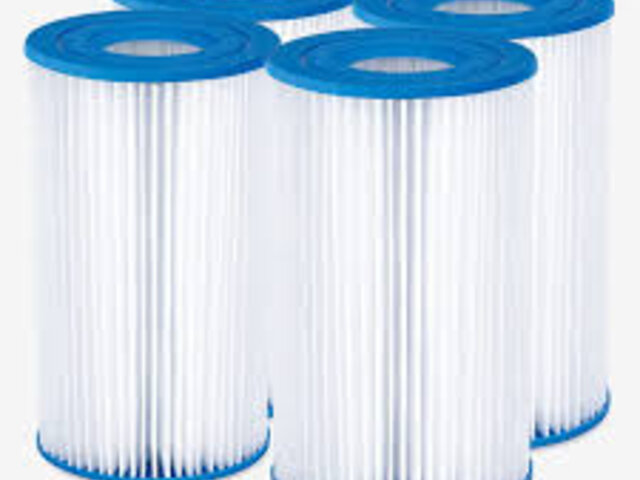
Cartridge Filters
Cartridge filters require more careful winterization:
- Remove all filter cartridges and clean thoroughly
- Drain the tank completely through drain plugs
- Remove lid o-ring and store indoors
- Store cartridges in a dry, indoor location
- Leave tank lid slightly ajar to allow airflow and prevent moisture buildup
Store cleaned cartridges in a garage or basement where they won't freeze but have good ventilation.
DE (Diatomaceous Earth) Filters
DE filters are the most vulnerable and absolutely must be stored properly:
- Backwash to remove all DE powder
- Disassemble the filter and remove all grids or elements
- Clean grids thoroughly and inspect for damage
- Drain tank completely and remove all drain plugs
- Store grids flat in a dry indoor location
- Remove and store manifold assembly indoors if possible
Remove and store the DE grids and manifold indoors; the drained tank itself can stay outside once all water is out and the drain plugs are removed - the complex internal components are extremely expensive to replace.
Climate Considerations
Your local climate determines storage requirements:
- Warm climates (no freezing): Filters can remain outside with proper chemical balance maintenance
- Occasional freezing: Drain completely but outdoor storage may be acceptable
- Extended freezing periods: Indoor storage is essential
- Extreme cold climates: All equipment should be stored in heated spaces when possible
Alternative Winter Protection Methods
If you cannot store your filter indoors, consider these options:
- Insulated covers: Custom-fit insulated covers can provide some protection
- Heat tape: Electrical heat tape can prevent freezing but increases utility costs and requires proper electrical installation with GFCI protection
- Antifreeze: Only use pool-safe propylene glycol antifreeze, never automotive antifreeze
- Partial disassembly: Remove the most vulnerable components for indoor storage
Pre-Season Inspection
Before reinstalling your filter in spring:
- Inspect all housing for hairline cracks
- Test all o-rings and gaskets for flexibility
- Check pressure gauge accuracy
- Verify all drain plugs and fittings
- Replace any questionable components before filling
Common Winter Storage Mistakes
Avoid these costly errors:
- Assuming the tank is empty: Always remove drain plugs and allow extended drainage time
- Forgetting about the multiport valve: These contain water in multiple chambers
- Leaving pressure gauges attached: These freeze and break easily
- Storing dirty cartridges: Clean thoroughly to prevent permanent staining and bacterial growth
- Using automotive antifreeze: This is toxic and will contaminate your pool water
Cost of Freeze Damage
Proper winterization pays for itself by preventing expensive repairs:
- Sand filter tank replacement: $300-800
- DE filter manifold assembly: $150-400
- Cartridge filter housing: $200-600
- Multiport valve replacement: $100-300
The 30 minutes spent properly winterizing your filter can save hundreds in spring repairs.
Still need help? Ask a Pool & Spa Expert AD
Get a personalized answer from PoolGuy810 — 30 years owning a pool and spa repair company. Describe your issue and get step-by-step help.
Related Pool Guides
Need More Help?
Try our free pool calculators and tools to help diagnose and fix your pool problems.
Browse Pool ToolsSLAM calculator, pH calculator, salt dosing & more