
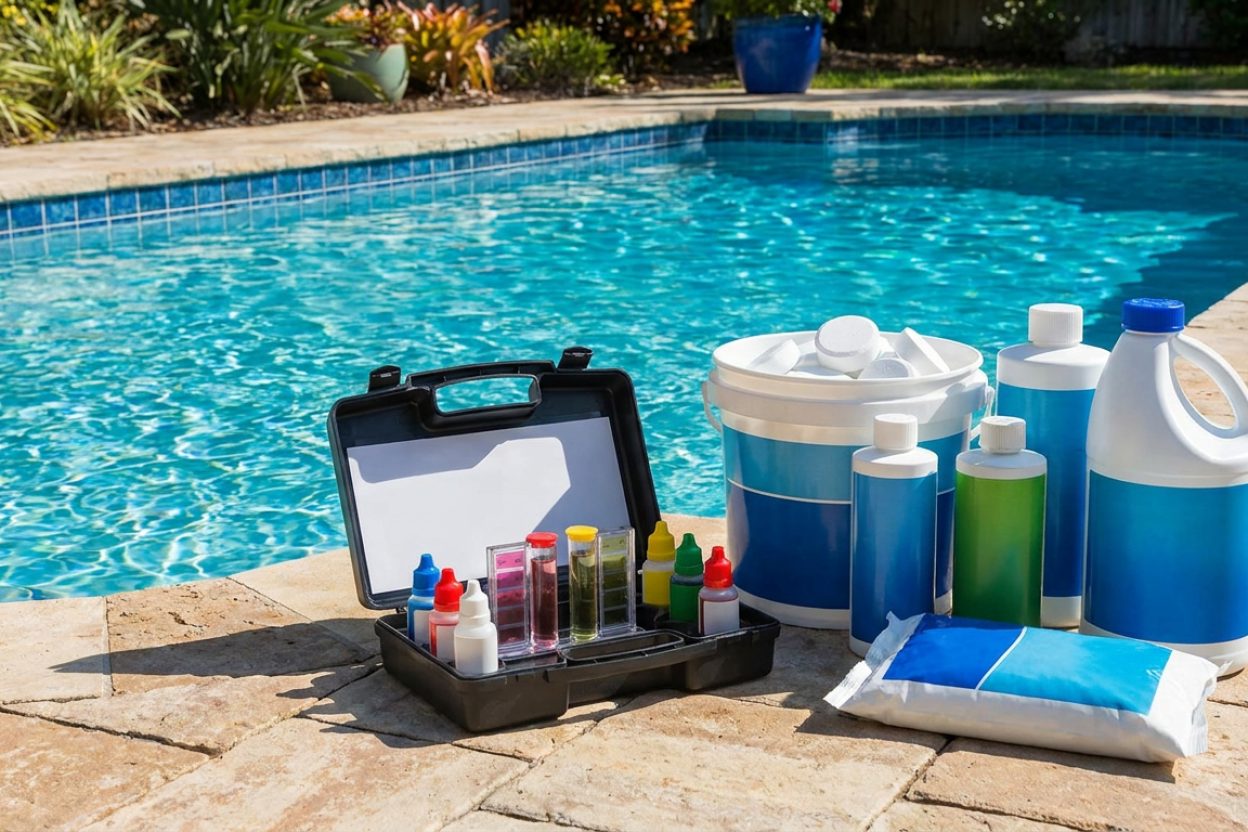
How to Test Pool Stabilizer (CYA) Levels: Complete Guide

What's the best way to test cyanuric acid in my pool?
Read full question
Called three different pool repair companies for advice on my stubborn chlorine levels, followed their suggestions exactly, but somehow made my pool chemistry even worse — now I'm wondering if my cyanuric acid is completely out of whack.
I've never actually tested for stabilizer before - I didn't even know it was something I needed to check regularly! What's the most accurate way to test cyanuric acid levels? Are there different testing methods, and do some work better than others? I want to make sure I'm getting reliable readings before I start messing with chemical adjustments again.
Quick Answer
Test pool stabilizer using a turbidity test kit or test strips. The turbidity method involves adding reagent to a water sample and measuring cloudiness against a scale to determine cyanuric acid levels.
Understanding Pool Stabilizer Testing
Test your pool stabilizer levels now and fix imbalances in 10 minutes — ignore them and you'll face weeks of cloudy water, wasted chemicals, and expensive algae treatments. Testing stabilizer levels accurately ensures your pool maintains proper sanitizer effectiveness and helps you avoid over-stabilization, which buffers chlorine so heavily it takes much more FCFree Chlorine — The chlorine actively sanitizing your water right now. This is the number you keep an eye on. how much you need → to sanitize. The ideal CYACyanuric Acid (stabilizer) — Sunscreen for your chlorine — it keeps sunlight from burning it off. The catch: the more you have, the more chlorine you need to keep. learn more → range is 30-50 ppm for traditional chlorine pools and 70-80 ppm for salt water generator systems.
Testing Methods Available
There are three primary methods for testing pool stabilizer: turbidity test kits, test strips, and professional lab testing. Each method has different accuracy levels and complexity.
Turbidity Test Method (Most Accurate)
The turbidity method is the gold standard for home testing. This method measures how cloudy the water becomes when a reagent reacts with cyanuric acid in your pool sample.
- Fill the turbidity test tube to the fill line specified by your kit (the exact volume varies by kit) with pool water taken from at least 18 inches below the surface, away from return jets
- Add the CYA reagent (usually melamine) according to your test kit instructions - typically one packet or measured scoop
- Cap the tube and shake vigorously for 30 seconds to ensure complete mixing
- Wait 2-3 minutes for the reaction to fully develop and cloudiness to stabilize
- Hold the tube against the printed scale card and look through the sample toward a light source
- Move the tube up and down until the black dot on the scale just disappears from view
- Read the CYA level where the water line intersects the scale
Test Strip Method (Quick but Less Precise)
CYA test strips provide faster results but are generally less accurate than turbidity tests, especially at higher concentrations.
- Dip the test strip into pool water for the time specified on the package (usually 1-5 seconds)
- Remove and shake off excess water immediately
- Wait for the color development time indicated on the bottle
- Compare the CYA pad color to the chart on the bottle label
- Read the closest color match - note that readings between colors should be interpolated
When to Test Stabilizer Levels
Test your pool's stabilizer level at the beginning of each swimming season and monthly throughout the season. You should also test after heavy rainfall, significant water additions, or when experiencing difficulty maintaining chlorine levels. Always test CYA levels before adjusting chlorine dosing, as your target free chlorine level depends directly on your stabilizer concentration.
Interpreting Your Results
CYA levels below 30 ppm mean your chlorine will dissipate quickly in sunlight, requiring more frequent additions and higher costs. Levels above 50 ppm (or 80 ppm for salt water systems) can cause chlorine to become less effective, making it difficult to kill algae and bacteria even with adequate free chlorine readings.
Taking Action Based on Results
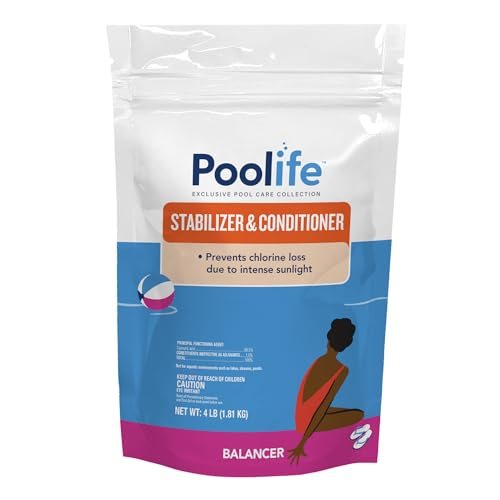
If your CYA is too low, our all-in-one pool calculator gives a quick estimate of the amount of stabilizer to add based on your pool size and current vs. target levels. Add granular stabilizer in a sock in the skimmer/return (or pre-dissolved in a bucket) so it doesn't pile on the floor and stain; it dissolves slowly, so wait several days before retesting. If levels are too high, the main solution is dilution through partial water replacement (or reverse osmosis), as cyanuric acid cannot be removed chemically.
Common Testing Mistakes to Avoid
Avoid testing immediately after adding chemicals, as this can give false readings. Don't use old test reagents, as they lose potency over time and provide inaccurate results. When using turbidity tests, ensure you're viewing the sample in consistent lighting conditions and that the test tube is clean and scratch-free, as any cloudiness will affect accuracy.
Maintaining Accurate Records
Keep a log of your CYA test results along with dates, weather conditions, and any recent chemical additions. This historical data helps you understand your pool's patterns and predict when adjustments might be needed. Remember that stabilizer levels typically increase gradually throughout the season if you're using stabilized chlorine products like trichlor tablets or dichlor shock.
For the full breakdown of safe chlorine levels by CYA level, see our pool water chemistry guide.

Still need help? Ask a Pool & Spa Expert AD
Get a personalized answer from PoolGuy810 — 30 years owning a pool and spa repair company. Describe your issue and get step-by-step help.
Related Pool Guides
Need More Help?
Try our free pool calculators and tools to help diagnose and fix your pool problems.
Browse Pool ToolsSLAM calculator, pH calculator, salt dosing & more