
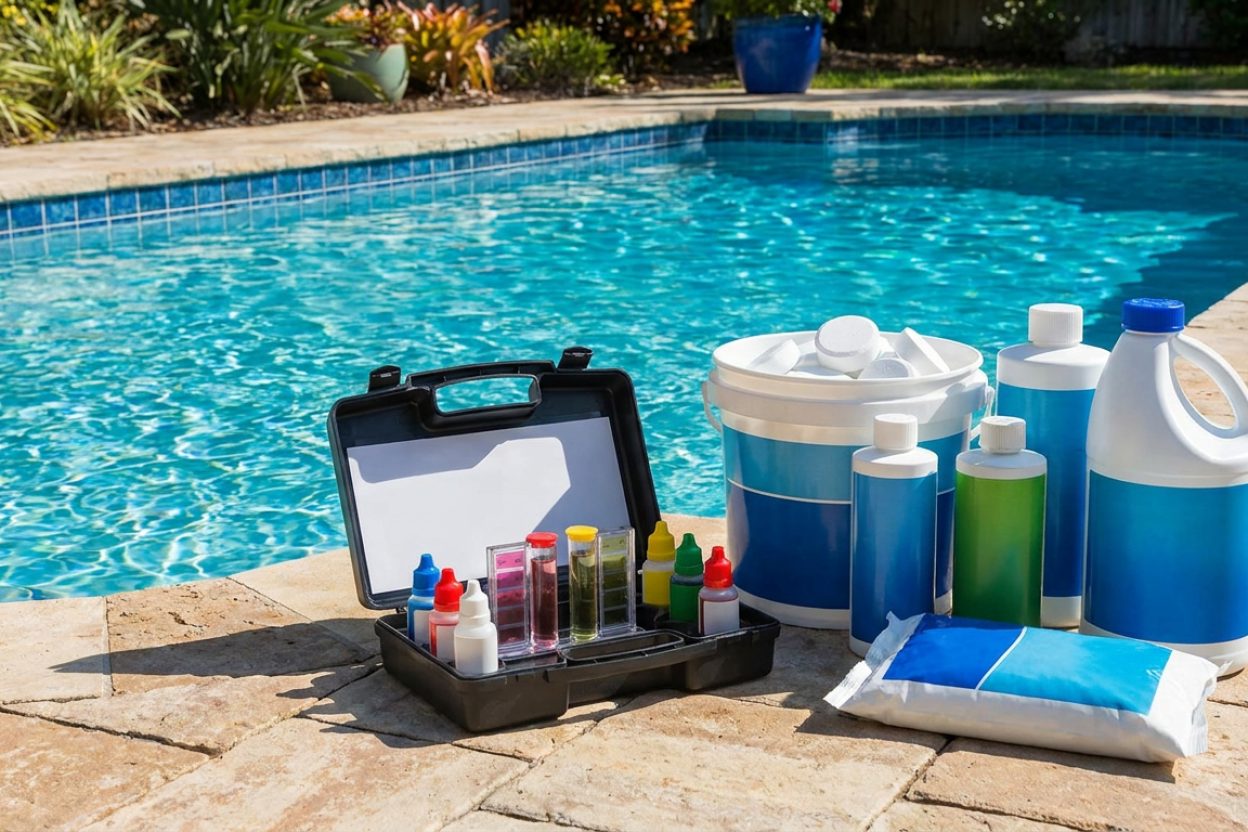
Does Pool Stabilizer Go Away? Understanding CYA Depletion

Do I need to add stabilizer every year?
Read full question
This is the third time this season my cyanuric acid levels have mysteriously dropped after being perfect all spring and I'm done guessing what's happening. Now I'm opening for this year and my CYA is reading lower than where I left it. Do I really need to keep adding stabilizer every year, or did I mess up my test somehow?
I thought once you get your stabilizer levels right, you're basically set for life. But apparently that's not the case? Just want to make sure I'm not throwing money at chemicals I don't actually need.
Quick Answer
Pool stabilizer (cyanuric acid/CYA) does slowly decrease over time through dilution from splash-out, backwashing, and fresh water additions. Most pools lose 10-20 ppm per season and require annual replenishment. To maintain optimal CYA levels, test regularly, document water loss events, and add stabilizer gradually, pre-dissolving it in a bucket of hot water or using the SOCK method. Avoid adding dry stabilizer directly to the pool.
How Pool Stabilizer Depletes: Step-by-Step Understanding
- Test your current CYACyanuric Acid (stabilizer) — Sunscreen for your chlorine — it keeps sunlight from burning it off. The catch: the more you have, the more chlorine you need to keep. learn more → level using a Taylor K-2006 test kit or quality test strips. Target levels are 30-50 ppm for chlorine pools and 60-80 ppm for salt water generators.
- Identify the main loss mechanisms: Backwashing removes 5-10% of pool water each time, taking stabilizer with it. Daily splash-out from swimming removes small amounts continuously. Rain overflow dilutes existing stabilizer concentration.
- Calculate seasonal loss: A typical residential pool loses 15-25% of its water volume annually through these mechanisms. Since stabilizer doesn't evaporate like water does, this represents pure CYA loss.
- Monitor monthly during season: Test CYA levels every 4-6 weeks during active swimming months. Keep detailed records to track your pool's specific depletion rate.
- Plan annual replenishment: Most pools require adding 2-8 pounds of stabilizer each spring to restore optimal levels from the previous season's losses.
What Does and Doesn't Deplete Stabilizer
CYA is genuinely stable against the things that destroy chlorine - but it isn't permanent. Keep these in perspective:
- Direct sunlight (UV): CYA is UV-stable - unlike chlorine, it isn't destroyed by sunlight (that's exactly its job), so direct UV is not a meaningful loss path
- Chemical oxidation: CYA strongly resists breakdown from chlorine and shock; sanitizer oxidizes only a small amount over time, so routine chemicals aren't a major loss path
- Heat: Warm water doesn't evaporate or destroy CYA directly, but it speeds up the slow bacterial breakdown - so expect somewhat faster loss in hot months
- Time: CYA is reasonably persistent, but it still declines slowly through bacterial conversion (plus any water you remove) - expect to lose some over a season even if you never drain
Measuring and Tracking Stabilizer Depletion
- Establish baseline levels: After adding fresh stabilizer, wait 72 hours then test with a Taylor K-2006 test kit for most accurate readings. Turbidometric tests are more reliable than colorimetric methods.
- Create a testing schedule: Test CYA monthly during swimming season, and always test before adding more stabilizer. Over-stabilization above 100 ppm creates serious chlorine efficiency problems.
- Document water loss events: Record backwashing frequency, heavy rain overflow, and any pool draining. Each gallon of pool water removed takes stabilizer with it proportionally.
- Calculate replacement needs: If your pool started at 40 ppm and tests at 25 ppm after several months, you've lost 15 ppm. For a 15,000-gallon pool, you'll need about 1.8 pounds of stabilizer to restore proper levels. Use our all-in-one pool calculator for a good dose estimate.
- Account for fresh water additions: Every time you add fresh water (hose fill-ups, after backwashing), you're diluting the existing stabilizer concentration even if total volume stays the same.
When to Replace Lost Stabilizer
Timing stabilizer replacement correctly prevents chlorine waste and maintains water balance:
- Early season assessment: Test CYA levels when opening your pool each spring. Most pools will need 50-75% of the previous year's stabilizer level restored.
- Mid-season maintenance: If levels drop below 30 ppm (or 60 ppm for salt water pools), add stabilizer promptly. Low stabilizer wastes chlorine and allows algae growth.
- Gradual addition method: Add stabilizer gradually and re-test before dosing again, since it dissolves over several days and is hard to remove if you overshoot. Add only the amount your test shows you need; our all-in-one pool calculator estimates it.
- Dissolution technique: Dissolve granular stabilizer in a bucket of hot water first (it's only sparingly soluble, so pour the slurry in too), or use the SOCK method (place the CYA in a sock/nylon in the skimmer basket, or hang it in front of a return, squeezing occasionally). Never add dry stabilizer directly to the pool.
- Post-addition testing: Wait 72 hours after adding stabilizer before retesting. Incomplete dissolution gives false low readings.
Preventing Excessive Stabilizer Loss
While some CYA depletion is inevitable, you can minimize unnecessary losses:
- Optimize backwashing: Only backwash when pressure gauge indicates need (typically 8-10 psi above clean pressure). Unnecessary backwashing wastes stabilized water.
- Use liquid chlorine for shock treatments: Note that cal-hypo doesn't add stabilizer either - so it's fine for shocking when you don't want more CYA. Dichlor shock does contain stabilizer but may over-stabilize your pool with frequent use. This prevents dilution of your CYA investment.
- Maintain proper water level: Keep water level at pool's designed height to minimize splash-out during normal use.
- Consider stabilizer type: Cyanuric acid granules are more cost-effective than liquid stabilizer for most residential applications.
Safety Warning: Never mix stabilizer with other pool chemicals. Always add chemicals separately with pump running, waiting at least 30 minutes between different chemical additions.
For the full breakdown of safe chlorine levels by CYA level, see our pool water chemistry guide.
 Taylor K-2006C Complete FAS-DPD Pool & Spa Test Kit
The FAS-DPD kit pool pros trust — reads chlorine accurately even at shock/SLAM levels, plus pH, alkalinity, calcium hardness and CYA. View on Amazon →
Taylor K-2006C Complete FAS-DPD Pool & Spa Test Kit
The FAS-DPD kit pool pros trust — reads chlorine accurately even at shock/SLAM levels, plus pH, alkalinity, calcium hardness and CYA. View on Amazon →
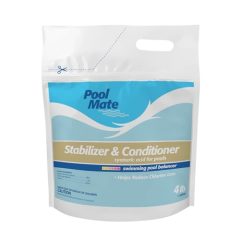 Pool Mate 4-Pounds Premium Pool Stabilizer and Conditioner, Concentrated Cyanuric Acid for Pools, Helps Chlorine Last Longer
View on Amazon →
Pool Mate 4-Pounds Premium Pool Stabilizer and Conditioner, Concentrated Cyanuric Acid for Pools, Helps Chlorine Last Longer
View on Amazon →
Still need help? Ask a Pool & Spa Expert AD
Get a personalized answer from PoolGuy810 — 30 years owning a pool and spa repair company. Describe your issue and get step-by-step help.
Related Pool Guides
Need More Help?
Try our free pool calculators and tools to help diagnose and fix your pool problems.
Browse Pool ToolsSLAM calculator, pH calculator, salt dosing & more