
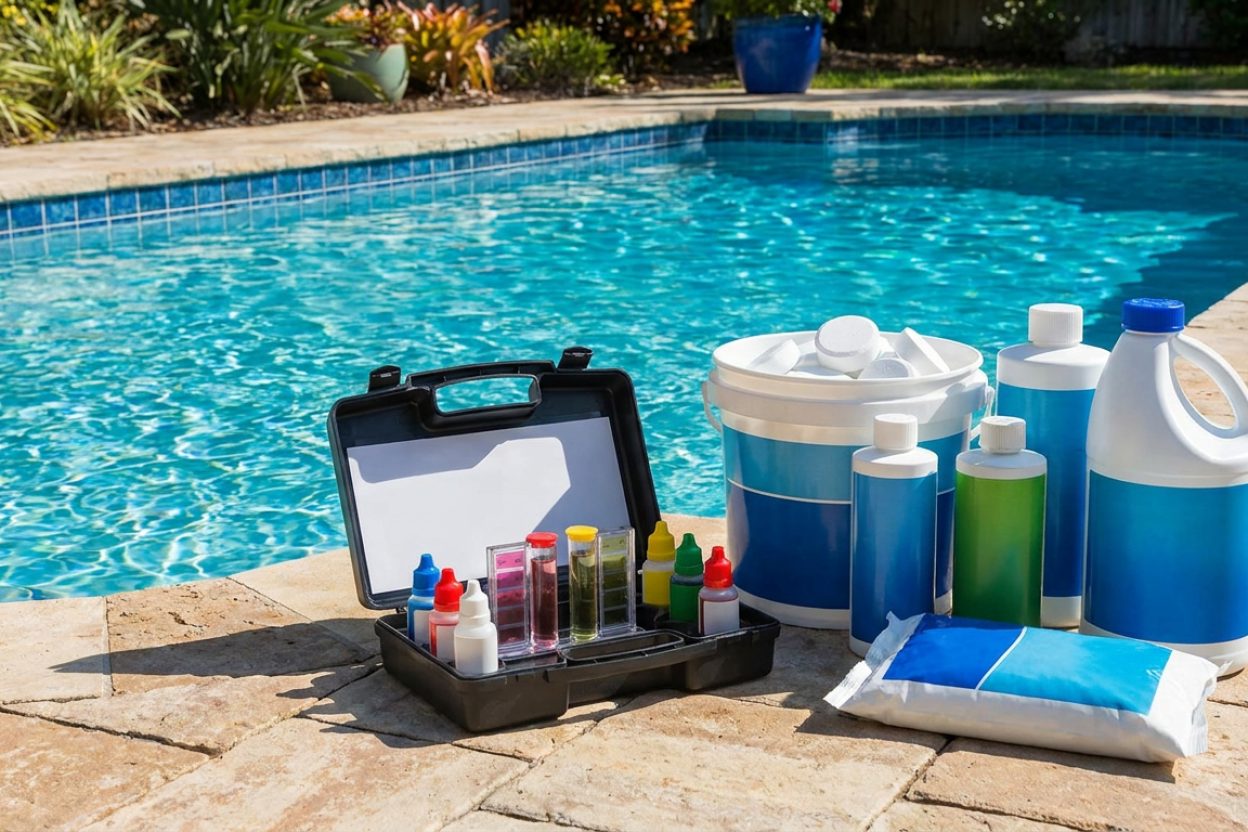
Does My Pool Need Calcium? Complete Hardness Guide

Do I need to maintain calcium levels in my pool?
Read full question
Water test came back saying my calcium hardness is at 120 ppm and the pool store guy looked at me like my plaster was about to dissolve. But the pool looks perfectly fine to me — no etching, no rough spots. Does calcium hardness actually matter that much or is this just a way to sell me more chemicals?
Quick Answer
Whether your pool needs calcium depends on the surface: plaster pools need it (250-350 ppm) to prevent etching, while vinyl and fiberglass pools don't need it for the surface — keep a modest 175-225 ppm mainly for equipment/heater protection and water balance. Test monthly.
Why Your Pool Needs Calcium
Improper calcium hardness is a common cause of etched plaster, scaling, and corroded equipment — though cloudy water more often stems from filtration, sanitizer, or pH issues. Calcium hardness (CH) is a water-balance parameter: in plaster pools it protects the calcium-based surface from etching, in any pool it helps protect metal equipment, and it keeps water from turning corrosive or scaling. (Vinyl and fiberglass surfaces have no calcium to protect, so there it's mainly about equipment and balance.) Without adequate calcium levels, your pool water becomes aggressive and will literally dissolve calcium from whatever surfaces it touches.
Think of calcium hardness as a protective buffer. When water has sufficient dissolved calcium, it won't seek out more calcium from your pool's plaster, tile grout, or equipment components. However, when calcium levels are too low, the water becomes "hungry" for calcium and will extract it from any available source, causing permanent damage.
Proper Calcium Hardness Levels by Pool Type
The ideal calcium hardness range depends on your pool's surface material and your local water conditions:
Plaster and Concrete Pools
Target range: 250-350 ppm. Plaster pools need higher calcium levels because the surface itself is calcium-based. Low calcium hardness will cause etching, roughness, and deterioration of the plaster finish. Many pool professionals recommend staying closer to 300 ppm for optimal protection.
Vinyl and Fiberglass Pools
Target range: 175-225 ppm. These non-porous surfaces don't contain calcium, so they can tolerate lower levels. However, you still need adequate calcium to protect metal components like heat exchangers, pump housings, and ladder hardware.
Saltwater Chlorine Generator Pools
Follow the same ranges as above based on surface type, but monitor more frequently. The electrolytic cell can be sensitive to calcium scaling, so staying in the lower portion of the acceptable range often works better.
How to Test Calcium Hardness
Test your calcium hardness monthly using a reliable test method:
- Taylor K-2006 test kit - Most accurate for home testing
- Digital test strips - Convenient but less precise
- Professional lab testing - Most accurate, recommended quarterly
When testing, collect your water sample from elbow-deep in the pool, away from return jets and skimmers. Allow the water sample to reach room temperature for quick estimates.
Consequences of Improper Calcium Levels
Low Calcium Hardness (Under 150 ppm)
Low calcium creates aggressive water that causes:
- Plaster etching and pitting
- Tile grout dissolution
- Metal corrosion in heaters and pumps
High Calcium Hardness (Over 400 ppm)
Excessive calcium leads to:
- Cloudy water that won't clear
- Scale formation on surfaces and equipment
- Reduced heater efficiency
- Clogged filters and reduced circulation
- Rough, uncomfortable pool surfaces
Adjusting Calcium Hardness
Raising Calcium Hardness
Use calcium chloride (pool calcium increaser) to raise levels:
- Dosing: About 1 to 1.25 pounds of calcium chloride raises CH by approximately 10 ppm per 10,000 gallons
- Dissolve the product in a bucket of pool water before adding
- Add slowly around the pool perimeter with the pump running
- Wait 8-12 hours before retesting to allow complete dissolution and circulation
- Avoid adding more than 20 ppm per day in smaller pools to prevent localized high concentrations
Lowering Calcium Hardness
High calcium is more challenging to correct:
- Partial water replacement - Most effective method
- Reverse osmosis treatment - Professional service option
- Sequestering agents - Temporary solution that requires ongoing maintenance
For water replacement, calculate the percentage needed: If your CH is 500 ppm and you want 300 ppm, replacing approximately 44% of the water (assuming 50 ppm source water) will achieve your target.
Calcium Hardness and Water Balance
Calcium hardness works in conjunction with pH and total alkalinity to maintain proper water balance. The Langelier Saturation Index (LSI) helps determine if your water is balanced:
LSI factors:
- Water temperature
- pH level
- Total alkalinity
- Calcium hardness
- Total dissolved solids
Aim for an LSI between -0.3 and +0.3 for properly balanced water. This prevents both aggressive (negative LSI) and scaling (positive LSI) conditions.
Maintenance Schedule
Establish a regular testing routine:
- Weekly: Test pH and free chlorine
- Monthly: Test calcium hardness, total alkalinity, and cyanuric acid
- Seasonally: Professional water analysis
Keep detailed records of your test results and chemical additions. This helps identify trends and prevents problems before they become expensive repairs.
Remember, maintaining proper calcium hardness is an investment in your pool's longevity. The cost of calcium chloride is minimal compared to replastering a pool or replacing corroded equipment due to aggressive water conditions.
For the full breakdown of safe chlorine levels by CYACyanuric Acid (stabilizer) — Sunscreen for your chlorine — it keeps sunlight from burning it off. The catch: the more you have, the more chlorine you need to keep. learn more → level, see our pool water chemistry guide.
 Taylor K-2006C Complete FAS-DPD Pool & Spa Test Kit
The FAS-DPD kit pool pros trust — reads chlorine accurately even at shock/SLAM levels, plus pH, alkalinity, calcium hardness and CYA. View on Amazon →
Taylor K-2006C Complete FAS-DPD Pool & Spa Test Kit
The FAS-DPD kit pool pros trust — reads chlorine accurately even at shock/SLAM levels, plus pH, alkalinity, calcium hardness and CYA. View on Amazon →
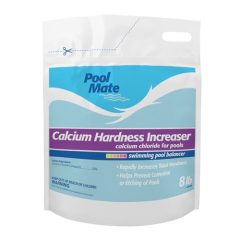 Calcium Chloride — Calcium Hardness Up
Raises calcium hardness (plaster pools) View on Amazon →
Calcium Chloride — Calcium Hardness Up
Raises calcium hardness (plaster pools) View on Amazon →
Still need help? Ask a Pool & Spa Expert AD
Get a personalized answer from PoolGuy810 — 30 years owning a pool and spa repair company. Describe your issue and get step-by-step help.
Related Pool Guides
Need More Help?
Try our free pool calculators and tools to help diagnose and fix your pool problems.
Browse Pool ToolsSLAM calculator, pH calculator, salt dosing & more