
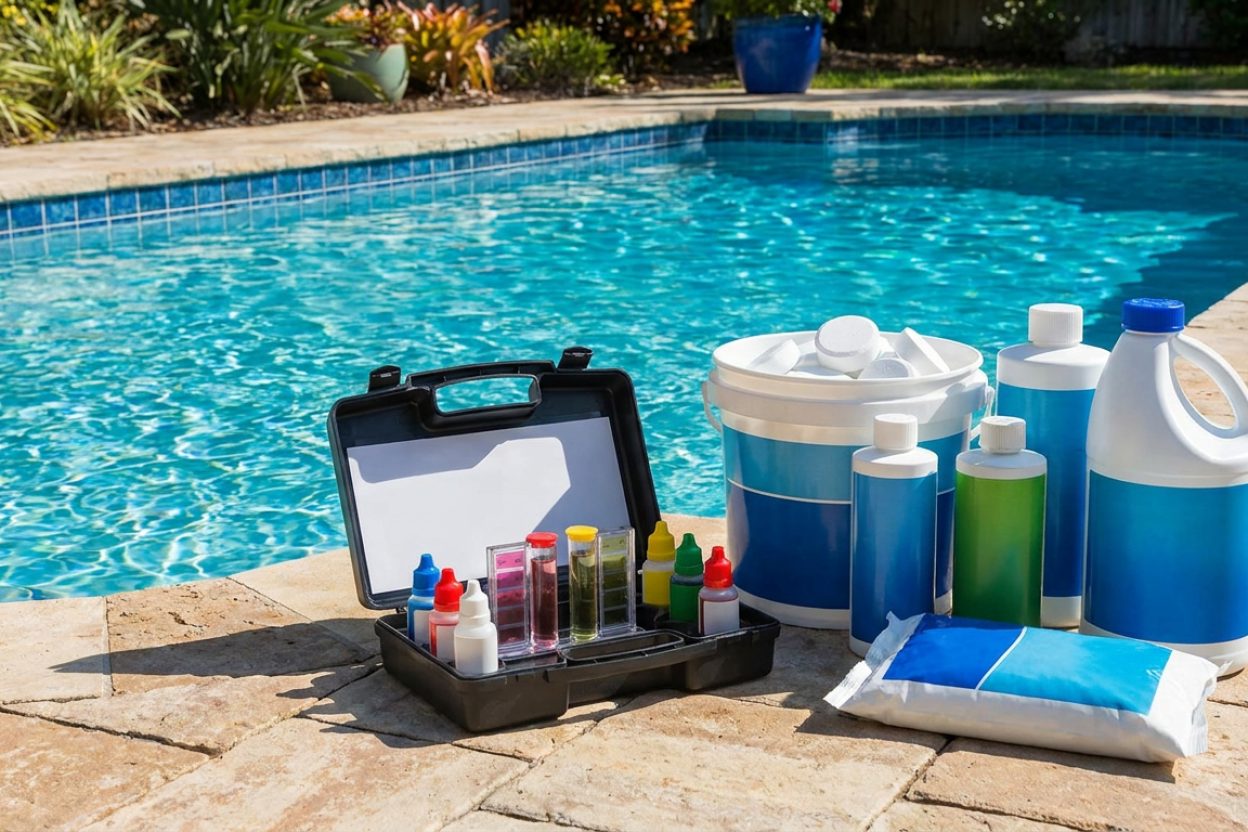
Do Vinyl Pools Need Calcium? Complete CH Guide 2026

Calcium hardness levels for vinyl pools - how much is right?
Read full question
Before our big pool party this Saturday, I'm getting completely contradictory advice about whether my vinyl pool even needs calcium added! I keep reading conflicting info online - some sources say vinyl pools don't need calcium at all, others say they do but at different levels than concrete pools. My test strips show I'm sitting around 100 ppm right now and I'm not sure if that's too low or if I even need to worry about it.
I've been dealing with some metal staining on my vinyl liner and wondering if low calcium could be making it worse by causing corrosion. But I'm also terrified of adding too much and ending up with scaling or that dreaded cloudy water that takes forever to clear up. What's the sweet spot for calcium hardness in vinyl pools, and is it really different from other pool types?
Quick Answer
Vinyl pools don't need calcium to protect the liner — vinyl has no calcium to etch. Keep a modest 150-250 ppm mainly to protect a heater and balance the water, and avoid high levels that scale. It's calcium management (keeping it from getting too high), not calcium addition like a plaster pool.
Diagnosing Your Current Calcium Hardness Situation
First, let's diagnose where your vinyl pool currently stands with calcium hardness. You'll need to test your water using either a Taylor K-2006 test kit (most accurate) or quality test strips that include calcium hardness measurement.
Testing Your Current CH Level
Using a Taylor test kit, follow the R-12 test procedure for calcium hardness. Take your water sample from elbow-deep in the pool, away from return jets and skimmers. If your result shows:
- Below 150 ppm: Harmless to the liner itself, but low for metal equipment and water balance - worth nudging up if you have a heater or metal fittings
- 150-250 ppm: Ideal range for vinyl pools
- 250-400 ppm: Acceptable, but watch for scaling
- Above 400 ppm: Immediate action needed
Why Vinyl Pools Need Different Calcium Levels
Understanding why vinyl pools have different calcium requirements helps you maintain proper water balance. Unlike plaster pools, vinyl liners are non-porous and don't contribute calcium to the water. However, calcium hardness still plays crucial roles:
- Prevents equipment corrosion: Low calcium makes water aggressive toward metal components like heaters, pumps, and ladder hardware
- Maintains water balance: Calcium is part of the Langelier Saturation Index that determines water stability
- Helps prevent etching and scaling: Proper calcium hardness protects surfaces and keeps water balanced
Solutions for Low Calcium Hardness
Low calcium won't harm a vinyl liner, but very soft water is aggressive toward metal equipment and throws off water balance (LSI). If you have a gas heater or metal fittings - or a heater warranty that specifies a minimum - raise CH into the 150-250 range as follows.
Raising Calcium Hardness
For a quick estimate, our all-in-one pool calculator works out how much to add based on your pool size and current vs. target calcium hardness levels. To do it by hand instead, use the formula below (note that amounts vary with product concentration, so the calculator is more reliable):
- Calculate the needed amount: Use approximately 1.35 pounds of calcium chloride per 10,000 gallons to raise CH by 10 ppm
- Choose the right product: Use a pool-grade calcium chloride increaser (calcium chloride dihydrate or anhydrous flake such as Dow Flake). Note the percentage on the label is calcium chloride, not elemental calcium, and purity varies by product - so follow the product's own dosing
- Pre-dissolve the chemical: Mix the calcium chloride in a bucket of pool water before adding to avoid localized high concentrations
- Add slowly with circulation: Pour the dissolved solution around the pool perimeter with the pump running
- Wait and retest: Allow 4-6 hours of circulation before retesting calcium hardness
Solutions for High Calcium Hardness
When calcium hardness climbs above 400 ppm in vinyl pools (consistent with the ranges above), you risk scaling on equipment and potential cloudiness issues.
Lowering Calcium Hardness
- Partial water replacement: This is the most effective method - drain 25-50% of pool water and refill with fresh water
- Test your fill water: Know the calcium content of your source water to calculate the final result
- Balance other chemicals: After dilution, retest and adjust pH, total alkalinity, and chlorine levels
- Consider a sequestering agent: Products containing HEDP can help manage moderately high calcium levels temporarily
Maintaining Proper Calcium Levels
Once you've achieved the proper calcium hardness range, maintaining it requires regular monitoring and understanding of factors that affect CH levels.
Factors That Increase Calcium Hardness
- Calcium hypochlorite shock: Cal-hypo typically adds 0.4-0.7 ppm CH per ppm of chlorine added, depending on product formulation
- Hard fill water: Well water or hard municipal water continuously adds calcium
- Calcium-based pH increasers: Some pH up products contain calcium
- Evaporation: As water evaporates, minerals concentrate
Testing Schedule
Test calcium hardness monthly during swimming season, and whenever you add significant amounts of fresh water. Always test after major chemical additions or equipment repairs.
Common Mistakes to Avoid
Don't ignore calcium hardness: Many vinyl pool owners think they don't need to monitor CH, leading to equipment damage from corrosive water.
Don't use plaster pool ranges: Following calcium hardness advice for plaster pools (250-350 ppm) can cause unnecessary scaling issues in vinyl pools.
Don't add calcium chloride directly to skimmer: This can damage equipment with concentrated solution.
Don't forget to balance LSI: Consider calcium hardness alongside pH, total alkalinity, and temperature for overall water balance.
Seasonal Considerations
During pool opening, always test calcium hardness as part of your startup procedure. Winter covers and chemical treatments can affect CH levels. When closing, proper calcium levels help protect equipment during the off-season.
In summary, vinyl pools do need calcium hardness management, just at different levels than plaster pools. Regular testing and proper adjustments keep your water balanced, equipment protected, and swimming experience optimal.
For the full breakdown of safe chlorine levels by CYACyanuric Acid (stabilizer) — Sunscreen for your chlorine — it keeps sunlight from burning it off. The catch: the more you have, the more chlorine you need to keep. learn more → level, see our pool water chemistry guide.
 Taylor K-2006C Complete FAS-DPD Pool & Spa Test Kit
The FAS-DPD kit pool pros trust — reads chlorine accurately even at shock/SLAM levels, plus pH, alkalinity, calcium hardness and CYA. View on Amazon →
Taylor K-2006C Complete FAS-DPD Pool & Spa Test Kit
The FAS-DPD kit pool pros trust — reads chlorine accurately even at shock/SLAM levels, plus pH, alkalinity, calcium hardness and CYA. View on Amazon →
 Calcium Chloride — Calcium Hardness Up
Raises calcium hardness (plaster pools) View on Amazon →
Calcium Chloride — Calcium Hardness Up
Raises calcium hardness (plaster pools) View on Amazon →
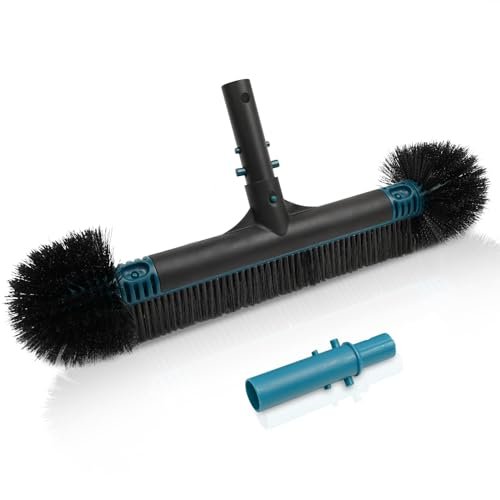 Poolvio 20" 2-in-1 Pool Brush Head (Walls & Floor)
Sturdy 20-inch brush head that clips onto any standard telescopic pole. View on Amazon →
Poolvio 20" 2-in-1 Pool Brush Head (Walls & Floor)
Sturdy 20-inch brush head that clips onto any standard telescopic pole. View on Amazon →
Still need help? Ask a Pool & Spa Expert AD
Get a personalized answer from PoolGuy810 — 30 years owning a pool and spa repair company. Describe your issue and get step-by-step help.
Related Pool Guides
Need More Help?
Try our free pool calculators and tools to help diagnose and fix your pool problems.
Browse Pool ToolsSLAM calculator, pH calculator, salt dosing & more