
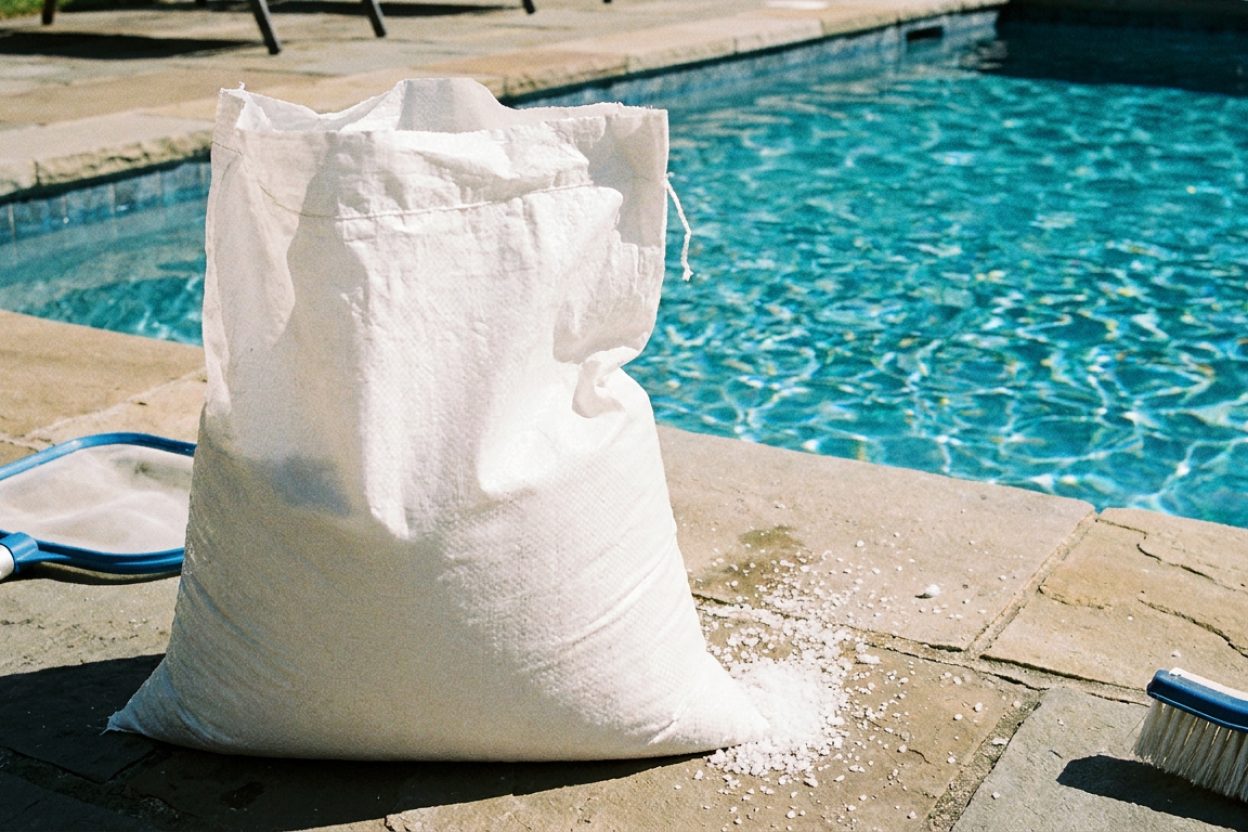
Do Salt Water Pools Have Chlorine? Yes - Here's Why

Salt water pool confusion - does it actually contain chlorine?
Read full question
Already asked my neighbor about her "chlorine-free" saltwater pool, but mine definitely has chlorine — what am I missing here? I have a 20,000 gallon inground pool and I'm considering converting to a salt water system because I thought it meant no more dealing with chlorine chemicals. My neighbor has been telling me that salt water pools are "chlorine-free" and that's why they're gentler on skin and eyes.
But when I was talking to a pool supply store, the guy mentioned something about salt water pools still having chlorine, just generated differently? I'm confused because if there's still chlorine involved, what's the actual difference? I've been manually adding liquid chlorine to my pool for years and my levels typically run around 2-3 ppm, but I'm tired of the constant chemical additions and storage issues.
Can someone explain whether salt water pools actually contain chlorine or not? And if they do, how does that work with the salt system?
Quick Answer
Yes, salt water pools absolutely contain chlorine. The salt water chlorine generator converts salt into chlorine automatically, maintaining sanitizer levels without manually adding chlorine products. Salt water pools should maintain free chlorine (FC) levels of 6-8 ppm for CYA levels of 70-80 ppm. Use the FC/CYA relationship chart to determine the right target. Salt water pools have unique chemical characteristics, including higher stabilizer needs and lower total alkalinity.
Quick Answer: Yes, Salt Water Pools Contain Chlorine
Nine times out of ten, when pool owners switch to saltwater thinking they've escaped chlorine forever, they're shocked to discover their "chlorine-free" pool is actually producing chlorine around the clock. The key difference is HOW the chlorine gets into your pool. Instead of manually adding liquid chlorine or tablets, a salt water chlorine generator (SWGSalt Water Generator — The "salt cell" that makes chlorine from the salt in a saltwater pool. Same chlorine — it just makes its own. pool terms →) automatically produces chlorine from dissolved salt through electrolysis.
The salt cell in your system uses electrolysis to break down water molecules, producing chlorine gas and sodium hydroxide which then react to form sodium hypochlorite - which is pure liquid chlorine. This process happens continuously while your pump runs, maintaining consistent sanitizer levels.
How Salt Water Chlorine Generation Actually Works
Your salt water system contains electrolytic plates inside the generator cell. When salt water flows through these plates, an electrical current causes a chemical reaction that converts salt (NaCl) into sodium hypochlorite (NaOCl), which then forms hypochlorous acid (HOCl) in equilibrium with water. This is the exact same sanitizing compound found in traditional liquid chlorine.
The process is cyclical - after the chlorine does its sanitizing work, it eventually converts back to salt, ready to be converted again. This is why you only need to add salt occasionally, unlike traditional pools that require constant chlorine additions.
Chlorine Levels in Salt Water Pools
Salt water pools follow the same FC/CYAFC/CYA chart — The chart that sets your chlorine target from your stabilizer (CYA) level — the two go together. see the chart → relationship, but because the cell adds chlorine continuously, they can run a lower minimum FCFree Chlorine — The chlorine actively sanitizing your water right now. This is the number you keep an eye on. how much you need → — about 5% of CYACyanuric Acid (stabilizer) — Sunscreen for your chlorine — it keeps sunlight from burning it off. The catch: the more you have, the more chlorine you need to keep. learn more → versus 7.5% for manually dosed pools: the right level for your CYA (typically 4-8 ppm for a stabilized outdoor pool with CYA 70-80 ppm) for basic sanitization. However, most salt water systems work best with higher stabilizer (CYA) levels of 70-80 ppm, compared to 30-50 ppm in traditional pools.
With higher CYA levels, you'll want to maintain FC closer to 6-8 ppm. Use the FC/CYA relationship chart to find your target; the minimum for an SWG pool is about 5% of your CYA level, so with 80 ppm CYA your FC should never drop below ~4 ppm (target a few ppm above that).
Test your salt water pool chemistry weekly using a quality test kit like the Taylor K-2006C. Salt water pools still require the same chemical balancing as traditional pools.
Key Differences in Salt Water Pool Chemistry
While salt water pools contain chlorine, they do have unique chemical characteristics:
- pH tends to rise: The electrolysis process naturally increases pH, requiring more frequent pH adjustment with muriatic acid
- Higher stabilizer needs: Salt cells work more efficiently with 70-80 ppm CYA rather than the 30-50 ppm used in traditional pools
- Lower total alkalinity: Target 60-80 ppm TATotal Alkalinity — The buffer that keeps your pH from bouncing around. Get this in range and pH gets a lot easier to manage. learn more → in salt pools versus 80-120 ppm in traditional pools
- Consistent chlorine production: No peaks and valleys like manual dosing - steady sanitizer levels
Common Misconceptions About Salt Water Pool Chlorine
Many pool owners believe salt water pools are "chlorine-free," but this is completely false. Here are the facts:
Myth: Salt water pools don't use chlorine
Truth: They produce chlorine automatically and continuously
Myth: Salt water is gentler because there's no chlorine
Truth: The gentler feel comes from consistent chlorine levels and lack of chloramines, not absence of chlorine
Myth: You never need to add chlorine to salt pools
Truth: During high bather loads, algae blooms, or equipment issues, you may need to supplement with liquid chlorine
When Salt Water Pools Need Additional Chlorine
Even with a functioning salt cell, you may need to add liquid chlorine in these situations:
- SLAMShock Level And Maintain — raise free chlorine to a target based on your CYA and hold it there until the algae is gone. It's a process, not a one-time dose. the SLAM walkthrough → process: When treating algae or cloudy water, you'll need shock-level chlorine (the SLAM level is about 40% of your CYA — roughly 28–32 ppm at CYA 70–80) that far exceeds your generator's capacity. Use the all-in-one pool calculator to determine the shock level for your CYA.
- High bather loads: Pool parties or heavy usage can overwhelm chlorine production
- Cell maintenance periods: When cleaning or replacing the salt cell
- Cold weather: Salt cells don't operate efficiently below their manufacturer's minimum temperature threshold (typically 50-60°F)
- Low salt levels: Below the manufacturer's minimum salt level (typically 2700-3400 ppm), generators can't produce adequate chlorine
In these cases, add liquid chlorine exactly as you would in a traditional pool. Cal-hypo shock adds calcium hardness, so liquid chlorine is generally preferred for salt pools to avoid raising calcium — but cal-hypo is fine when your calcium is low.
Maintaining Proper Salt Water Pool Chlorine
To ensure adequate chlorine production:
- Maintain proper salt levels: Test monthly and keep between 2700-3400 ppm (check your manufacturer's specifications)
- Clean the salt cell regularly: Every 3 months, inspect for calcium buildup and, only if scale is visible, clean with a diluted solution of about 1 part muriatic acid to 4 parts water (always add acid to water, never the reverse)
- Monitor chlorine output: Most systems have adjustable output settings - increase during summer, decrease in cooler weather
- Test FC weekly: Don't assume the generator is producing adequate chlorine without verification
- Check for chloramines: Test combined chlorine monthly - levels above 0.5 ppm indicate sanitizer demand issues
Remember: Your salt water pool's safety and clarity depend entirely on adequate chlorine levels, just like any other pool.
For the full breakdown of safe chlorine levels by CYA level, see our pool water chemistry guide.
 Taylor K-2006C Complete FAS-DPD Pool & Spa Test Kit
The FAS-DPD kit pool pros trust — reads chlorine accurately even at shock/SLAM levels, plus pH, alkalinity, calcium hardness and CYA. View on Amazon →
Taylor K-2006C Complete FAS-DPD Pool & Spa Test Kit
The FAS-DPD kit pool pros trust — reads chlorine accurately even at shock/SLAM levels, plus pH, alkalinity, calcium hardness and CYA. View on Amazon →
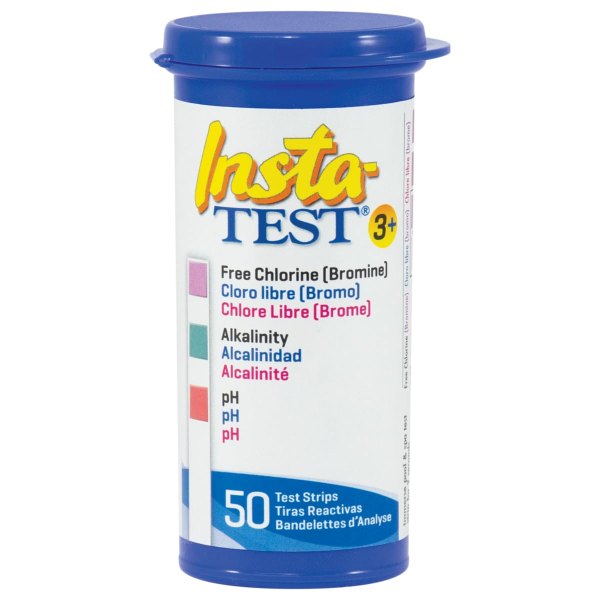 LaMotte Insta-Test 3 Pool Strips (50 ct)
Pro-grade 3-way strips from LaMotte — chlorine, pH & alkalinity, fast and accurate. Top-rated at 4.8★. View on Amazon →
LaMotte Insta-Test 3 Pool Strips (50 ct)
Pro-grade 3-way strips from LaMotte — chlorine, pH & alkalinity, fast and accurate. Top-rated at 4.8★. View on Amazon →
Still need help? Ask a Pool & Spa Expert AD
Get a personalized answer from PoolGuy810 — 30 years owning a pool and spa repair company. Describe your issue and get step-by-step help.
Related Pool Guides
Need More Help?
Try our free pool calculators and tools to help diagnose and fix your pool problems.
Browse Pool ToolsSLAM calculator, pH calculator, salt dosing & more