

Do Salt Water Pools Need Chlorine? Complete Chemistry Guide

Salt water pool newbie - do I still need to add chlorine?
Read full question
This house came with a salt water pool system that the previous owner left in complete disarray, and I'm totally clueless about maintaining it. The pool store told me that salt water pools are "chlorine-free" which is why I made the investment, but now I'm reading conflicting information online.
Do I actually still need to buy and add chlorine to my salt water pool? I thought the salt system was supposed to handle all of that automatically. I'm worried I might be missing something important for keeping the water safe for my kids.
Quick Answer
Salt water pools absolutely need chlorine to stay clean and safe. The salt water chlorine generator produces chlorine from salt, but you still need to maintain proper free chlorine levels and may need to add liquid chlorine when the generator can't keep up. Use the FC/CYA relationship — our all-in-one pool calculator estimates the free chlorine target for your CYA — to target these levels based on your cyanuric acid (CYA).
How Salt Water Pool Chlorination Works
Salt water pools use a process called electrolysis to create chlorine from dissolved salt. Your salt chlorine generator passes pool water over electrolytic cells that convert sodium chloride (salt) into hypochlorous acid - the same sanitizing compound found in liquid chlorine. This process happens continuously as water circulates through your system.
The key advantage is that after the chlorine sanitizes your pool, it reverts back to salt, creating a self-regenerating cycle. However, this doesn't mean your pool is maintenance-free or that you'll never need to add chlorine manually.
Maintaining Proper Chlorine Levels in Salt Water Pools
Target Free Chlorine Levels
Salt water pools need the same free chlorine (FCFree Chlorine — The chlorine actively sanitizing your water right now. This is the number you keep an eye on. how much you need →) levels as traditional pools. Using the FC/CYAFC/CYA chart — The chart that sets your chlorine target from your stabilizer (CYA) level — the two go together. see the chart → relationship — our all-in-one pool calculator estimates the free chlorine target for your CYACyanuric Acid (stabilizer) — Sunscreen for your chlorine — it keeps sunlight from burning it off. The catch: the more you have, the more chlorine you need to keep. learn more → — target these levels based on your cyanuric acid (CYA):
- CYA 70-80 ppm: FC 6-8 ppm (fine to run near 6; never below ~5)
- CYA 60 ppm: FC 5-8 ppm
- CYA 50 ppm: FC 5-7 ppm
Salt water pools typically run higher CYA levels (70-80 ppm) because the generator produces chlorine more efficiently with adequate stabilizer protection.
Testing and Adjusting
Test your free chlorine daily using a reliable test kit like the Taylor K-2006C. If your FC drops below target levels, increase your generator's output percentage. Most generators allow you to adjust production from 10% to 100% or higher.
When You'll Need to Add Liquid Chlorine
Even with a properly functioning salt chlorine generator, several situations require manual chlorine addition:
High Bather Loads
Heavy pool usage can overwhelm your generator's production capacity. After pool parties or extended swimming sessions, test your FC levels and add liquid chlorine if needed. Use our all-in-one pool calculator to size the dose.
Algae Treatment (SLAM Process)
When treating algae, you need to maintain shock-level chlorine continuously until the pool clears. Your generator alone cannot produce enough chlorine for the SLAMShock Level And Maintain — raise free chlorine to a target based on your CYA and hold it there until the algae is gone. It's a process, not a one-time dose. the SLAM walkthrough → (Shock Level And Maintain) process. You'll need to add liquid chlorine to reach and maintain shock levels - typically 28-31 ppm FC depending on your CYA level. Use our all-in-one pool calculator to estimate the shock level for your CYA.
Generator Maintenance Periods
During cell cleaning or replacement, your generator won't produce chlorine. Add liquid chlorine to maintain proper FC levels during these maintenance windows.
Cold Weather Operation
Salt chlorine generators become less efficient below 60°F and may not operate below 50°F. In cooler climates, you'll need liquid chlorine during colder months when your generator can't function effectively.
Salt Water Pool Chemistry Balance
pH Management
Salt chlorine generators naturally raise pH to 7.8-8.2 during operation. Maintain pH between 7.4-7.6 by adding muriatic acid regularly. Test and adjust based on your specific conditions - acid needs vary significantly depending on generator runtime, bather load, and water balance.
Total Alkalinity
Keep total alkalinity (TATotal Alkalinity — The buffer that keeps your pH from bouncing around. Get this in range and pH gets a lot easier to manage. learn more →) between 60-80 ppm for salt water pools - lower than traditional pools. This helps prevent excessive pH rise and scaling on your generator cells.
Salt Level Maintenance
Maintain salt levels between 2700-3400 ppm as recommended by your generator manufacturer. Test salt levels monthly — a reagent kit like the Taylor K-1766 is the most accurate, with salt strips or a digital meter as quicker options. Add pool salt as needed to reach your generator's target range — our all-in-one pool calculator works out how much for your pool.
Common Mistakes to Avoid
Warning: Never assume your salt water pool doesn't need chlorine monitoring. Some pool owners mistakenly believe salt water pools are "chlorine-free" and neglect proper testing and maintenance.
- Don't rely solely on your generator's production - always verify with testing
- Be mindful with calcium hypochlorite (cal-hypo) shock in salt water pools - it adds calcium hardness, and if calcium climbs too high it can scale the generator cell over time; liquid chlorine avoids this, though cal-hypo is fine when calcium is low
- Don't ignore your generator's cell condition - dirty or worn cells produce less chlorine
- Never add salt directly to your skimmer - always broadcast over the pool surface
Free Salt Pool Calculators
Calculate salt and chlorine levels for your saltwater pool:
Troubleshooting Low Chlorine Production
If your salt water pool consistently shows low FC despite high generator output:
- Check salt levels - low salt reduces chlorine production
- Inspect and clean generator cells monthly
- Verify proper water balance (pH, TA, CYA)
- Test for chlorine demand issues (organics, algae)
- Salt cells typically last 3-7 years; test cell output before assuming replacement is needed
Remember to retest FC levels 4-6 hours after any adjustments to verify your chlorine levels are stable and adequate for safe swimming.
For the full breakdown of safe chlorine levels by CYA level, see our pool water chemistry guide.
 Taylor K-2006C Complete FAS-DPD Pool & Spa Test Kit
The FAS-DPD kit pool pros trust — reads chlorine accurately even at shock/SLAM levels, plus pH, alkalinity, calcium hardness and CYA. View on Amazon →
Taylor K-2006C Complete FAS-DPD Pool & Spa Test Kit
The FAS-DPD kit pool pros trust — reads chlorine accurately even at shock/SLAM levels, plus pH, alkalinity, calcium hardness and CYA. View on Amazon →
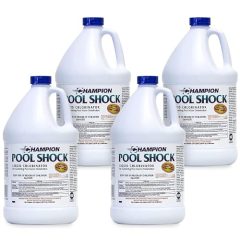 Liquid Chlorine / Sodium Hypochlorite (12.5%)
Everyday sanitizer — the B in BBB View on Amazon →
Liquid Chlorine / Sodium Hypochlorite (12.5%)
Everyday sanitizer — the B in BBB View on Amazon →
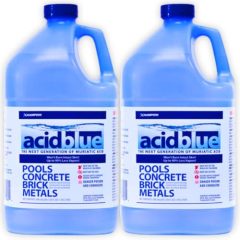 Acid Blue - Low Fume Muriatic Acid for Swimming Pools & Spas - Lower's pH, Reduces Alkalinity - 2 Gallon
View on Amazon →
Acid Blue - Low Fume Muriatic Acid for Swimming Pools & Spas - Lower's pH, Reduces Alkalinity - 2 Gallon
View on Amazon →
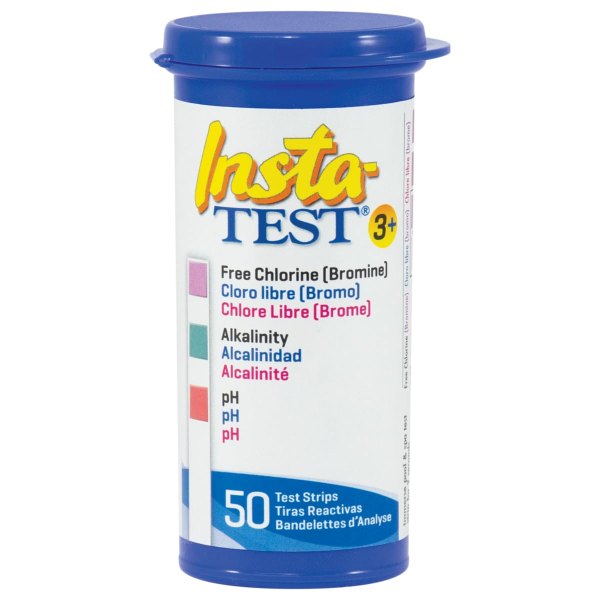 LaMotte Insta-Test 3 Pool Strips (50 ct)
Pro-grade 3-way strips from LaMotte — chlorine, pH & alkalinity, fast and accurate. Top-rated at 4.8★. View on Amazon →
LaMotte Insta-Test 3 Pool Strips (50 ct)
Pro-grade 3-way strips from LaMotte — chlorine, pH & alkalinity, fast and accurate. Top-rated at 4.8★. View on Amazon →
Still need help? Ask a Pool & Spa Expert AD
Get a personalized answer from PoolGuy810 — 30 years owning a pool and spa repair company. Describe your issue and get step-by-step help.
Related Pool Guides
Need More Help?
Try our free pool calculators and tools to help diagnose and fix your pool problems.
Browse Pool ToolsSLAM calculator, pH calculator, salt dosing & more