
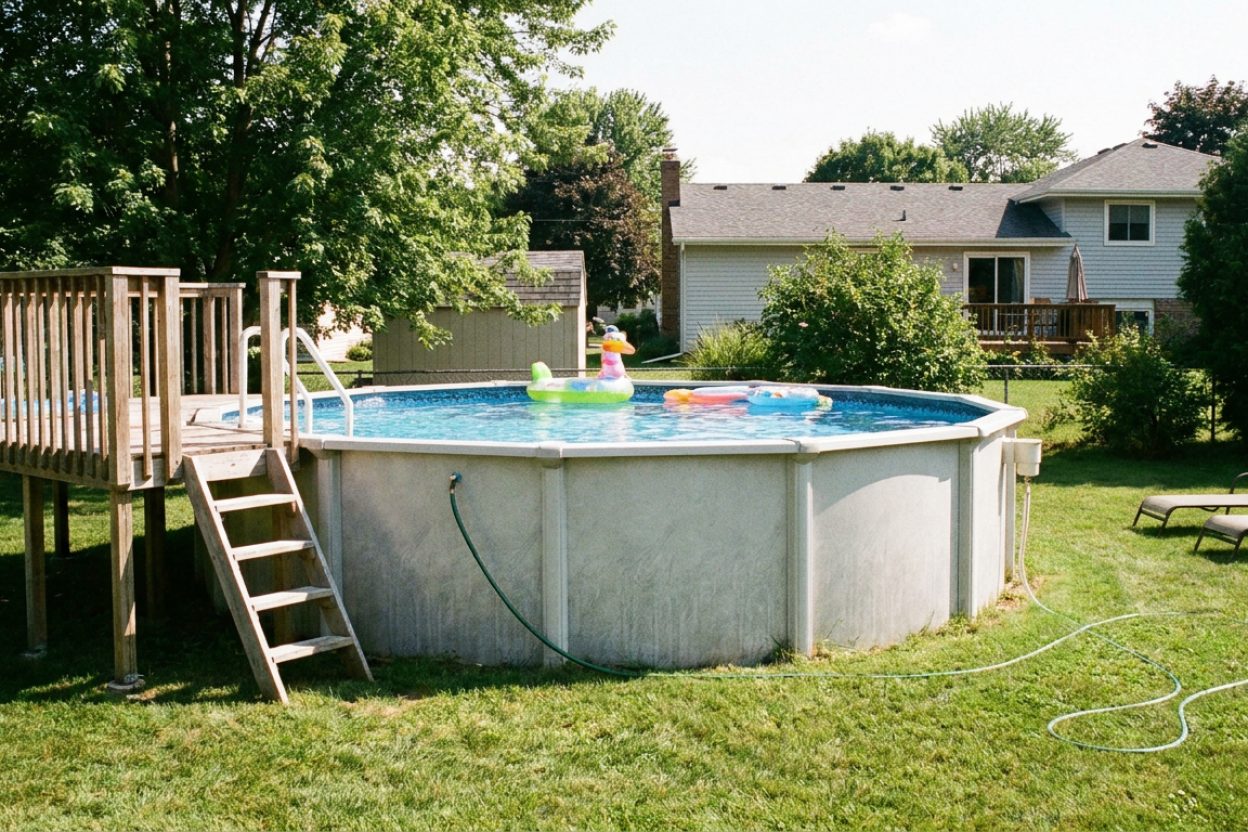
Do Intex Pools Need Chemicals? Complete Chemical Guide

What chemicals do I need for my new 12ft Intex pool?
Read full question
Last summer when I finally set up my first Intex Easy Set (12 feet, about 2,400 gallons), I've been completely lost on what chemicals I actually need. The manual mentions using chemicals but doesn't give much detail about what's actually required.
I've been running the filter pump for a few days now, but I'm starting to see some cloudy water and what might be the beginning of algae growth on the walls. Do Intex pools really need the same chemical treatment as regular in-ground pools? What's the minimum I need to keep the water safe for my kids to swim in? I want to make sure I'm doing this right from the start.
Quick Answer
Yes, Intex pools absolutely need chemicals to maintain safe, clean water. Like any pool, they require chlorine for sanitization, pH adjusters, and stabilizer to protect chlorine from UV degradation and protect swimmers' health. Intex pools often require more careful chemical management due to higher bather load, limited filtration, no automatic systems, and temperature fluctuations.
First, Let's Diagnose the Real Question
Before you spend $300+ replacing your Intex pool liner due to algae damage, learn why skipping chemicals now will cost you far more than the $20 monthly chemical routine. This is a dangerous misconception. Every pool containing water - whether it's a massive in-ground pool or a small Intex Easy Set - requires proper chemical treatment to prevent harmful bacteria, algae growth, and unsafe swimming conditions.
The real question isn't whether you need chemicals, but rather which chemicals are essential and how to use them effectively in your specific Intex pool setup.
Why Intex Pools Actually Need MORE Attention
Intex pools often require more careful chemical management than permanent pools for several reasons:
- Higher bather load ratio: Small pools with multiple swimmers create more contaminant load per gallon
- Limited filtration: Basic Intex filter systems have less capacity than full-size pool equipment
- No automatic systems: You're manually managing everything that automated systems handle in larger pools
- Temperature fluctuations: Above-ground pools heat up faster, accelerating chemical consumption and bacterial growth
Essential Chemicals for Your Intex Pool
Primary Sanitizer: Liquid Chlorine
Your main defense against bacteria and algae is free chlorine (FCFree Chlorine — The chlorine actively sanitizing your water right now. This is the number you keep an eye on. how much you need →). For Intex pools, use liquid chlorine (sodium hypochlorite) rather than tablets or powder shock. Target levels depend on your stabilizer level, but generally maintain the right level for your CYACyanuric Acid (stabilizer) — Sunscreen for your chlorine — it keeps sunlight from burning it off. The catch: the more you have, the more chlorine you need to keep. learn more → (typically 4-8 ppm for a stabilized outdoor pool) FC.
Dosing: a handy way to calculate the amount of liquid chlorine to add is by using our all-in-one pool calculator.
Cyanuric Acid (CYA) - Pool Stabilizer
This protects chlorine from UV degradation. Target 30-50 ppm for Intex pools. a handy way to calculate the amount of stabilizer to add is by using our all-in-one pool calculator. Warning: CYA breaks down only very slowly, so it accumulates — add conservatively and test regularly. Application Method: Pre-dissolve CYA in a bucket of hot water before adding to the pool, or use the SOCK method (place CYA in a sock or nylon and place it in the skimmer basket or hang it in front of a return, squeezing occasionally). CYA dissolves slowly, so retest after a few days to a week and do not add more until you are sure the level has stabilized.
pH Adjusters
Maintain pH between 7.2-7.6 for comfort and balanced water and swimmer comfort:
- pH too high: a handy way to calculate the amount of muriatic acid to add is by using our all-in-one pool calculator.
- pH too low: a handy way to calculate the amount of sodium carbonate (soda ash) to add is by using our all-in-one pool calculator.
Total Alkalinity (TA) Buffer
Target 80-120 ppm to stabilize pH. a handy way to calculate the amount of sodium bicarbonate (baking soda) to add is by using our all-in-one pool calculator.
Step-by-Step Chemical Startup for New Intex Pools
- Fill and circulate: Run your filter system for 24 hours before adding any chemicals
- Test baseline levels: Use a reliable test kit (Taylor K-2006 recommended) to measure pH, FC, and TATotal Alkalinity — The buffer that keeps your pH from bouncing around. Get this in range and pH gets a lot easier to manage. learn more →
- Adjust total alkalinity first: Add sodium bicarbonate if TA is below 80 ppm, wait 4 hours, then retest
- Balance pH: Adjust to 7.2-7.6 range using muriatic acid or soda ash as needed
- Add stabilizer: Pre-dissolve CYA in hot water before adding to prevent clouding. Add slowly over several days
- Establish chlorine level: Add liquid chlorine to reach the target FC for your CYA level (use the FC/CYAFC/CYA chart — The chart that sets your chlorine target from your stabilizer (CYA) level — the two go together. see the chart → chart)
- Run filtration continuously: Keep pump running minimum 6-8 hours daily
Common Intex Pool Chemical Problems
Green Water Solution
If your pool turns green, you need to perform a SLAMShock Level And Maintain — raise free chlorine to a target based on your CYA and hold it there until the algae is gone. It's a process, not a one-time dose. the SLAM walkthrough → (Shock Level And Maintain) process:
- Test CYA level to determine shock FC target (typically 40% of your CYA level)
- Add liquid chlorine to reach shock level
- Run filter continuously and brush pool walls
- Maintain shock level until the water clears, combined chlorine (CCCombined Chlorine — "Used-up" chlorine left over from doing its job. Above about 0.5 ppm is the classic sign water needs a shock. learn more →) is 0.5 ppm or less, and FC loss overnight is less than 1 ppm
- Return to normal FC levels
Cloudy Water Diagnosis
First, identify the cause by testing all parameters. Cloudy water usually indicates:
- Insufficient filtration time (run pump longer)
- Low FC levels (increase chlorine)
- High TA causing pH drift (lower TA gradually)
- Poor circulation (check filter cleanliness)
Testing and Maintenance Schedule
Test water 2-3 times per week during active use:
- Daily: Visual inspection for clarity and algae
- Every other day: Test FC and pH, adjust as needed
- Weekly: Complete test including TA, CYA, and calcium hardness
- Monthly: Deep clean filter cartridge and shock if needed
Safety reminder: Always add chemicals to water, never water to chemicals. Store all pool chemicals in cool, dry locations away from children and pets. Keep chlorine and other oxidizers away from acids and fuels — combining them can release toxic chlorine gas or start a fire.
For the full breakdown of safe chlorine levels by CYA level, see our pool water chemistry guide.
 Taylor K-2006C Complete FAS-DPD Pool & Spa Test Kit
The FAS-DPD kit pool pros trust — reads chlorine accurately even at shock/SLAM levels, plus pH, alkalinity, calcium hardness and CYA. View on Amazon →
Taylor K-2006C Complete FAS-DPD Pool & Spa Test Kit
The FAS-DPD kit pool pros trust — reads chlorine accurately even at shock/SLAM levels, plus pH, alkalinity, calcium hardness and CYA. View on Amazon →
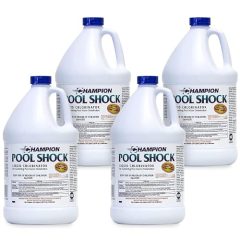 Liquid Chlorine / Sodium Hypochlorite (12.5%)
Everyday sanitizer — the B in BBB View on Amazon →
Liquid Chlorine / Sodium Hypochlorite (12.5%)
Everyday sanitizer — the B in BBB View on Amazon →
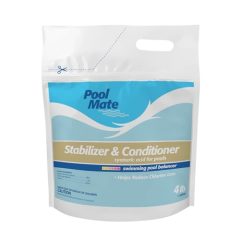 Pool Mate 4-Pounds Premium Pool Stabilizer and Conditioner, Concentrated Cyanuric Acid for Pools, Helps Chlorine Last Longer
View on Amazon →
Pool Mate 4-Pounds Premium Pool Stabilizer and Conditioner, Concentrated Cyanuric Acid for Pools, Helps Chlorine Last Longer
View on Amazon →
Still need help? Ask a Pool & Spa Expert AD
Get a personalized answer from PoolGuy810 — 30 years owning a pool and spa repair company. Describe your issue and get step-by-step help.
Related Pool Guides
Need More Help?
Try our free pool calculators and tools to help diagnose and fix your pool problems.
Browse Pool ToolsSLAM calculator, pH calculator, salt dosing & more