
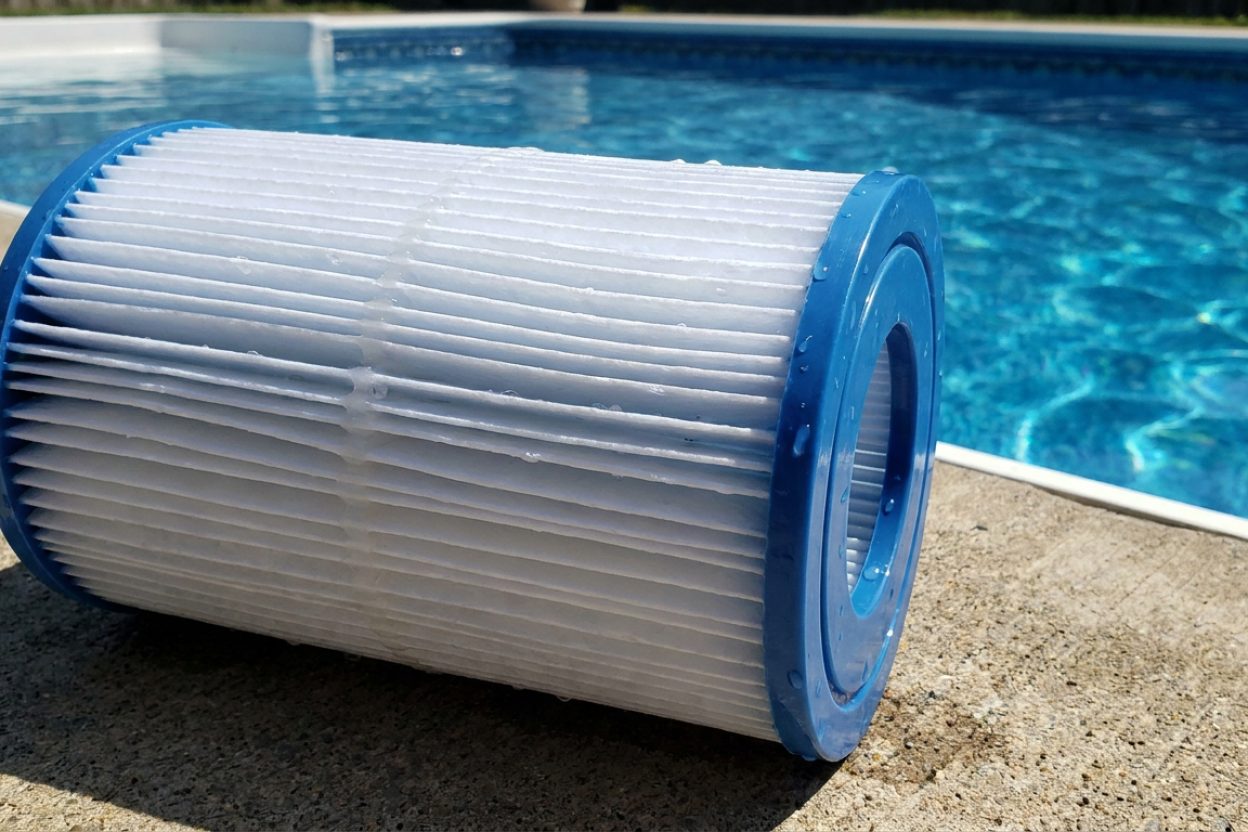
Do I Need a Pool Filter? Essential Guide for Pool Owners

Is a pool filter actually necessary for safe swimming?
Read full question
According to my thermometer, my pool water stays crystal clear below 75°F but turns into a cloudy mess the second we hit 80°F. My kids will be spending a lot of time in the water this summer, and I want to make sure I'm not cutting corners on anything that affects their safety.
I've been told that pool filters are a must-have, but I'm wondering if I can get by with just chemicals to keep the water clean. Are filters actually required, or is this just pool companies trying to sell more equipment? I need to know if skipping the filter would put my children at risk when they're swimming.
Quick Answer
Yes — a filter is an essential part of every pool, working alongside your chemistry to keep water clear and clean. (Filtration is mandated for public pools and is typically part of residential pool building codes.) Pool filters remove debris, contaminants, and particles that chemicals alone cannot eliminate, preventing cloudy water and health hazards.
If Your Water Gets Cloudy as It Warms Up
If your water is clear when it's cooler (under ~75°F) but turns cloudy once it warms into the 80s, that usually isn't a filter problem — it's rising chlorine demand. Warmer water speeds up chlorine consumption and gives algae a foothold, so the free chlorine level that held the water clear in spring is no longer enough. Test your CYACyanuric Acid (stabilizer) — Sunscreen for your chlorine — it keeps sunlight from burning it off. The catch: the more you have, the more chlorine you need to keep. learn more →, then raise free chlorine to the correct level for that CYA reading (use the FC/CYAFC/CYA chart — The chart that sets your chlorine target from your stabilizer (CYA) level — the two go together. see the chart → chart). If the cloudiness has a green or dull tint, treat it as early algae and run a SLAMShock Level And Maintain — raise free chlorine to a target based on your CYA and hold it there until the algae is gone. It's a process, not a one-time dose. the SLAM walkthrough → — hold shock-level chlorine until the water clears and it passes an overnight chlorine loss test — while keeping the filter running continuously.
Why Every Pool Needs a Filter
Pool filters serve as the mechanical backbone of your water treatment system, working alongside your chemical program to maintain crystal-clear, healthy water. Here's why you cannot operate a pool without one:
Health and Safety Requirements
Pool filters physically remove contaminants that pose serious health risks. Bacteria, algae spores, dead skin cells, lotions, and microscopic debris create a perfect breeding ground for harmful microorganisms. While chlorine kills most pathogens, it cannot physically remove dead material - that's the filter's job. Without filtration, swimmers face increased risk of skin infections, eye irritation, and waterborne illnesses.
Legal Compliance
Most local health departments and building codes require pools to have functioning filtration systems. Commercial pools universally require filtration. For residential pools there is no universal turnover requirement — run the pump long enough to keep the water clean and your chemicals distributed. Operating without proper filtration can result in fines and insurance issues.
Chemical Efficiency
Filters dramatically improve your sanitizer's effectiveness. When debris and organic matter accumulate, they consume chlorine through oxidation, creating chloramines that cause that harsh "chlorine smell" and eye irritation. Clean, filtered water requires less chlorine to maintain proper free chlorine (FCFree Chlorine — The chlorine actively sanitizing your water right now. This is the number you keep an eye on. how much you need →) levels, saving money and reducing chemical harshness.
What Happens Without a Filter
Attempting to maintain a pool without filtration creates a cascade of problems that become increasingly expensive and dangerous:
- Algae in dead spots: Without circulation, chlorine can't reach the whole pool, so algae can take hold in stagnant areas even if your overall chlorine reading looks fine
- Cloudy water: Suspended particles make water appear milky or hazy, reducing visibility and creating safety hazards
- Chemical imbalance: Organic load consumes chlorine faster than you can add it, making water chemistry management nearly impossible
- Surface scum: Oils, lotions, and organic matter form a film that harbors bacteria and makes the pool uninviting
- Sediment buildup: Dirt and debris settle on pool surfaces, creating staining and requiring frequent manual cleaning
Types of Pool Filters and Their Benefits
Sand Filters
The most common residential option, sand filters use specially graded silica sand to trap particles. They're reliable, low-maintenance, and handle most residential pools effectively. Sand filters require backwashing weekly and sand replacement every 5-7 years. They filter particles down to about 20-40 microns.
Cartridge Filters
These pleated filters offer superior filtration (10-15 microns) and don't require backwashing, conserving water. Cartridge elements need cleaning every 2-4 weeks and replacement every 2-5 years depending on bather load and water conditions. They're ideal for pools without access to drainage for backwashing.
Diatomaceous Earth (DE) Filters
DE filters provide the finest filtration (2-5 microns), creating sparkling clear water. They require more maintenance, including adding fresh DE powder after backwashing, but produce superior water quality for pools with heavy use or where crystal clarity is paramount.
Essential Filter System Components
A complete filtration system requires more than just the filter itself:
- Pump: Circulates water through the filter; run it long enough to skim the surface and clear debris (turnover targets are not a strict requirement for residential pools)
- Skimmer: Pre-filters surface debris before it reaches the main filter
- Return jets: Direct filtered water back to the pool with proper circulation patterns
- Timer system: Ensures adequate daily filtration hours (minimum 8-10 hours in season)
Filter Sizing and Capacity
Proper filter sizing is crucial for effective water treatment. Undersized filters cannot handle the particle load, leading to frequent cleanings and poor water quality. As a general rule:
- Sand filters: 1 square foot of filter area per 7,500-10,000 gallons of pool water
- Cartridge filters: 1 square foot per 7,500 gallons
- DE filters: 1 square foot per 10,000-12,000 gallons
High-bather load pools, spas, or pools with heavy debris should use larger filters for optimal performance.
Working with Your Chemical Program
Filtration and sanitation work hand-in-hand following TFP (Trouble Free Pool) principles. Maintain proper free chlorine levels based on your cyanuric acid (CYA) stabilizer level — with FC matched to your CYA (about 4-6 ppm at 30 CYA, 6-8 ppm at 50 CYA). Clean filters ensure chlorine can focus on sanitizing rather than oxidizing debris, maintaining the 7.4-7.6 pH range and 80-120 ppm total alkalinity more easily.
When performing a SLAM (Shock Level and Maintain) process for algae elimination, clean filters are essential - dirty filters cannot remove dead algae effectively, prolonging the treatment process and wasting chemicals.
For the full breakdown of safe chlorine levels by CYA level, see our pool water chemistry guide or use our all-in-one pool calculator.

Still need help? Ask a Pool & Spa Expert AD
Get a personalized answer from PoolGuy810 — 30 years owning a pool and spa repair company. Describe your issue and get step-by-step help.
Related Pool Guides
Need More Help?
Try our free pool calculators and tools to help diagnose and fix your pool problems.
Browse Pool ToolsSLAM calculator, pH calculator, salt dosing & more