
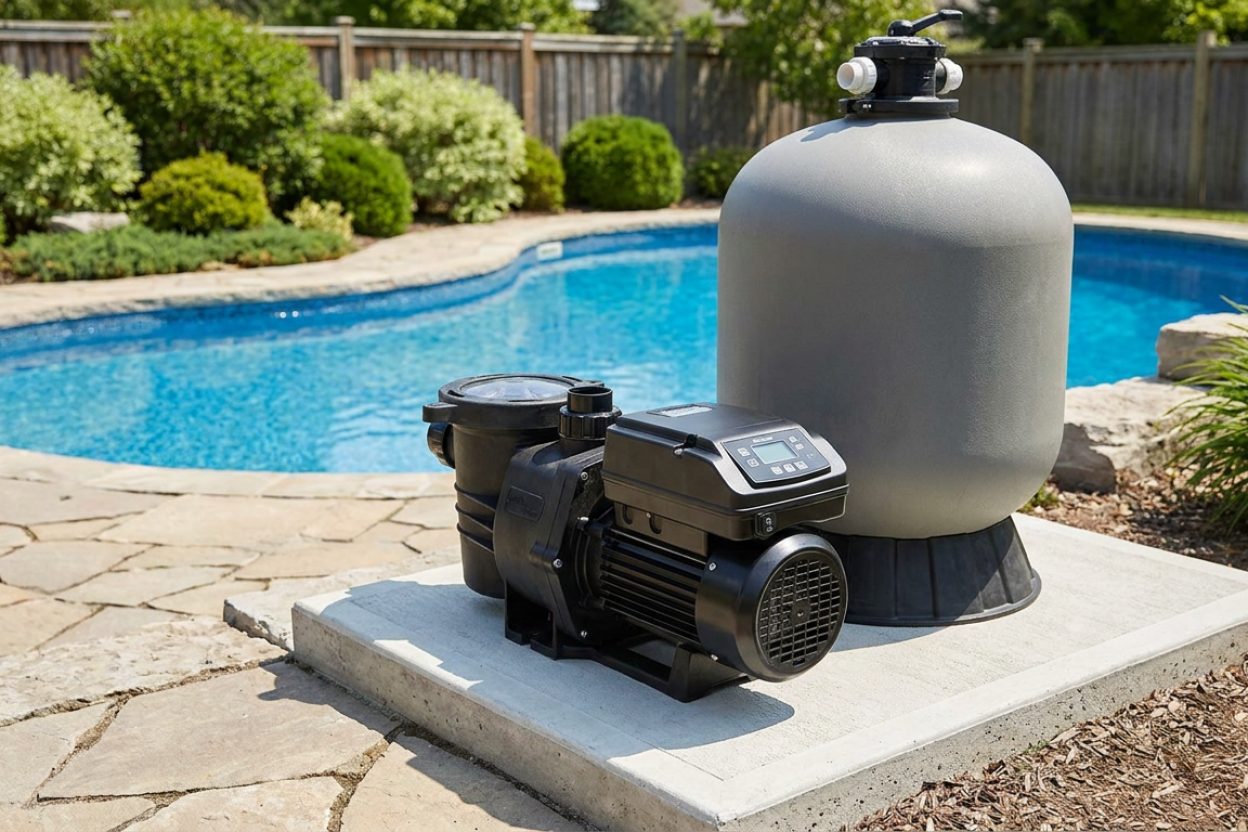
Do I Need a Bigger Pool Pump? Complete Sizing Guide 2026

Is my pool pump too small for safe swimming water?
Read full question
Turned out my husband was right when he said our pool water looks like weak tea despite perfect chemical levels, and now I'm questioning if our pump is actually doing its job. My pool is about 20,000 gallons and I have no idea how long it takes for all the water to cycle through.
I want to make sure the filtration is strong enough to remove bacteria and contaminants effectively. How do I know if I need to upgrade to a more powerful pump? What should I be looking for to ensure the water is turning over frequently enough for safe swimming?
Quick Answer
You need a bigger pool pump if it can't turn over your entire pool volume in 6-8 hours, struggles to maintain proper circulation, or can't effectively run your pool equipment. Calculate your required flow rate based on pool volume and equipment needs.
Quick Assessment: Is Your Pump Too Small?
Here's how to tell whether your pump is too small for your pool. The key indicator is whether it can turn over your entire pool volume in about 6-8 hours while still running all your equipment effectively. If it can't, the signs below will show it.
If Your Water Looks Like Weak Tea
If your chemistry tests perfect but the water still has a faint tea or yellow-brown tint, that's almost never a pump-size problem — and upsizing the pump won't clear it. The usual cause is dissolved metals (iron, manganese, or copper) or organic tannins, often from leaves, pollen, or fill water. Test for metals and, if present, add a metal sequestrant and run the filter; tannins respond to shocking plus filtration. Keep in mind, too, that it's your chlorine — not the filter — that kills bacteria; the filter only removes particulate. So if the water is clear and balanced, a bigger pump isn't the fix.
Understanding Proper Pool Pump Sizing
Pool pump sizing isn't just about horsepower – it's about flow rate measured in gallons per minute (GPM). Your pump must move enough water to ensure proper filtration, chemical distribution, and equipment operation. A properly sized pump should turn over your entire pool volume once every 6-8 hours during normal operation.
Essential Flow Rate Calculations
To determine if you need a bigger pump, start with these calculations:
- Pool Volume: Length × Width × Average Depth × 7.5 = Total Gallons
- Required flow rate: our pump runtime & energy calculator works out the GPM you need to turn the water over in about 6-8 hours.
- Equipment Demand: Add GPM requirements for heaters, chlorinators, and other accessories
For example, a 20,000-gallon pool needs approximately 42-56 GPM minimum flow rate to achieve a 6-8 hour turnover.
Signs You Need a Larger Pump
Circulation Problems
Dead spots in your pool where debris accumulates indicate insufficient circulation. You'll notice leaves and dirt settling in corners or steps that should be swept up by proper water movement. These areas often develop algae problems first because of poor chemical distribution.
Extended Run Times
If your pump runs more than 8 hours daily to maintain clear water, it's likely undersized. An appropriately sized pump should maintain water quality with 6-8 hours of daily operation, even during peak swimming season.
Equipment Performance Issues
Pool heaters, salt water generators, and automatic chlorinators all require minimum flow rates to function properly. If these systems frequently shut down due to low flow or operate inefficiently, your pump may lack sufficient capacity. Most pool heaters require 30-75 GPM minimum flow, while salt chlorine generators typically need 20-40 GPM.
Chemical Balance Struggles
Poor circulation makes it difficult to maintain proper chemical levels throughout the pool. You might find chlorine readings vary significantly between different areas, or you're constantly adding chemicals without achieving consistent results. This often leads to higher chemical costs and water quality issues.
Calculating Your Actual Pump Needs
Total Dynamic Head (TDH)
Your pump must overcome resistance from pipes, fittings, filter, and elevation changes. This resistance, measured as Total Dynamic Head, significantly affects pump performance. A pump rated at 50 GPM at zero head might only deliver 30 GPM when working against typical pool system resistance of 30-60 feet of head.
Equipment Requirements
Add up minimum flow requirements for all equipment:
- Sand filters: 15-20 GPM per square foot; cartridge filters: about 0.375 GPM per square foot (1 GPM maximum)
- DE filters: 1-2 GPM per square foot
- Pool heaters: Check manufacturer specifications (typically 30-75 GPM)
- Salt chlorine generators: Usually 20-40 GPM depending on model
- Automatic pool cleaners: 17-45 GPM depending on type
When to Upgrade vs. Alternative Solutions
Upgrade Situations
You definitely need a larger pump if your current pump operates at maximum capacity but still can't meet circulation requirements, frequently cavitates (makes grinding noises), or can't provide adequate flow for essential equipment like heaters or sanitizers.
Alternative Solutions to Consider
Before upgrading, consider these options:
- Variable Speed Pumps: Can run longer at lower speeds for better overall circulation
- System Modifications: Reducing pipe restrictions or upgrading to larger diameter plumbing
- Additional Return Lines: Improving circulation patterns without increasing pump size
- Filter Upgrades: Lower-resistance filters can improve flow rates
Selecting the Right Replacement Pump
When choosing a larger pump, consider variable speed models that offer energy efficiency and flexibility. A 1.5 HP variable speed pump often provides better performance than a 2 HP single-speed pump while using less electricity.
Match the pump to your plumbing system – installing a massive pump on 1.5-inch plumbing won't improve performance and wastes energy. Most residential pools with 2-inch plumbing perform well with 1.5-2.5 HP variable speed pumps.
Common Sizing Mistakes to Avoid
Don't assume bigger is always better. Oversized pumps waste energy, cause excessive wear on equipment, and may create problems with automatic pool cleaners or delicate equipment. They also cost significantly more to operate.
Avoid basing decisions solely on horsepower ratings. A 1 HP pump with proper impeller design might outperform a poorly matched 1.5 HP unit. Focus on actual GPM delivery at your system's operating head pressure.
Consider your long-term needs, including potential equipment additions like heaters, spa jets, or water features. It's often more cost-effective to install a slightly larger pump initially than to upgrade again later.
Still need help? Ask a Pool & Spa Expert AD
Get a personalized answer from PoolGuy810 — 30 years owning a pool and spa repair company. Describe your issue and get step-by-step help.
Related Pool Guides
Need More Help?
Try our free pool calculators and tools to help diagnose and fix your pool problems.
Browse Pool ToolsSLAM calculator, pH calculator, salt dosing & more