
Do I Need to Backwash My Pool Filter? Complete Guide

When should I backwash my pool filter and what are the signs?
Read full question
Our pool filter pressure started as slightly higher gauge readings last month but now it's climbing so dangerously high I'm wondering what specific indicators tell me when to backwash.
What are the key signs I should monitor to determine when backwashing is necessary? Are there different procedures for different types of filters, or does the same process apply across all filtration systems?
Quick Answer
Yes, you need to backwash your sand or DE filter when pressure rises 8-10 PSI above clean baseline, flow decreases noticeably, or water clarity diminishes. Cartridge filters cannot be backwashed.
Filter Types and Backwashing Requirements
Sand and DE Filters - Backwashing Required
Sand and DE filters use a multiport valve system that allows you to reverse water flow, flushing accumulated debris out through the waste line. These systems build up pressure as dirt and debris become trapped in the filter media, making backwashing essential for maintaining proper filtration.
Cartridge Filters - No Backwashing
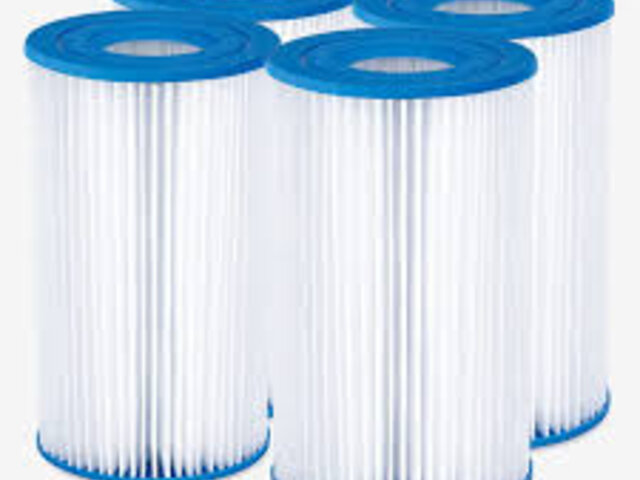
Cartridge filters use pleated fabric or paper elements that physically trap debris. These cannot be backwashed and must be manually removed, hosed off, and either cleaned with filter cleaner or replaced entirely.
When to Backwash Your Filter
Pressure Gauge Method (Most Reliable)
The most accurate indicator is your filter's pressure gauge. When you first install a clean filter or after backwashing, note the baseline pressure - typically 8-12 PSI for most residential systems. Backwash when pressure rises 8-10 PSI above this baseline. For example, if your clean pressure is 10 PSI, backwash when it reaches 18-20 PSI.
Visual and Performance Indicators
Beyond pressure readings, watch for these signs:
- Reduced water flow from return jets
- Cloudy or hazy water despite proper chemical balance
- Difficulty maintaining chlorine levels (debris consumes sanitizer)
- Shorter intervals between chemical adjustments
- Pool vacuum losing suction power
Time-Based Guidelines
While pressure is the best indicator, typical backwashing frequency ranges from:
- Heavy use periods (summer): Every 1-2 weeks
- Moderate use: Every 2-3 weeks
- Light use (off-season): Every 4-6 weeks
- After heavy contamination (storms, algae treatment): Immediately
How to Properly Backwash Your Filter
- Turn off the pool pump - Never operate the multiport valve while the pump is running, as this can damage the valve and filter internals
- Set valve to BACKWASH - Turn the multiport valve handle to the backwash position
- Start the pump - Run for 2-3 minutes or until the water in the sight glass runs clear
- Turn off pump again - Always shut off before changing valve positions
- Set to RINSE - This settles the sand bed and flushes residual dirty water out to waste so it doesn't return to the pool
- Run rinse cycle - 30-60 seconds is sufficient
- Return to FILTER - Turn off pump, set valve to filter position, restart pump
Special Considerations for DE Filters
DE filters require additional steps after backwashing. You must add fresh diatomaceous earth through the skimmer - approximately 1 pound per 10 square feet for a full charge. After a routine backwash you only need about 80% of that — so a 48 square foot DE filter that takes 5 pounds when new needs about 4 pounds after backwashing.
Common Backwashing Mistakes
Backwashing Too Frequently
A slightly dirty filter actually filters better than a perfectly clean one. The trapped debris helps catch smaller particles. Backwashing at the first sign of pressure increase wastes water and reduces filtration efficiency.
Inadequate Backwashing
Running backwash for only 30-60 seconds doesn't fully clean the filter media. Continue until the sight glass shows clear water, usually 2-3 minutes for sand filters.
Skipping the Rinse Cycle
The rinse cycle after backwashing is crucial. It settles the sand bed properly and prevents dirty water from entering your pool when you resume filtration.
Water Conservation Tips
Backwashing uses 200-500 gallons per cycle depending on your system size. To minimize waste:
- Monitor pressure closely and backwash only when necessary
- Consider installing a waste water recycling system
- Use backwash water for landscape irrigation (if no recent chemical treatments)
- Maintain proper water chemistry to reduce filter loading
Troubleshooting Backwashing Issues
If pressure remains high after backwashing, your filter may need deeper cleaning. For sand filters, this might indicate channeling in the sand bed or the need for sand replacement (every 5-7 years). DE filters may have damaged grids requiring replacement or cleaning.
Safety Note: Always ensure your backwash line drains to an appropriate area and check local regulations regarding pool backwash water disposal.
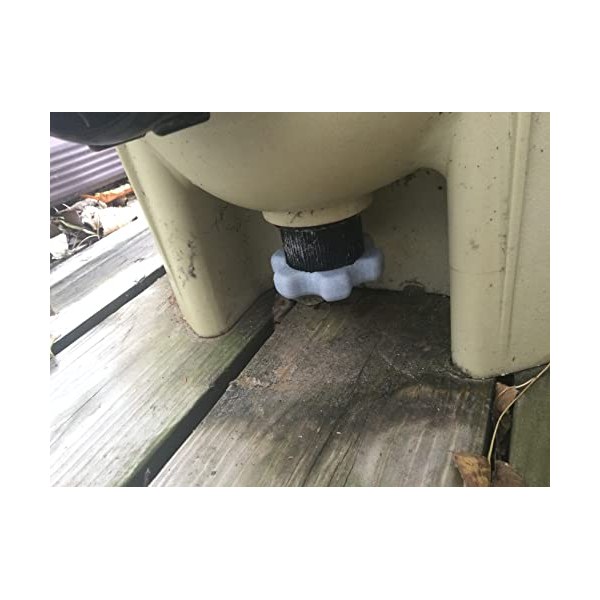 Filter Drain Plug Wrench (Pentair Clean & Clear/FNS)
Grips the drain plug on Pentair Clean & Clear and FNS filters. View on Amazon →
Filter Drain Plug Wrench (Pentair Clean & Clear/FNS)
Grips the drain plug on Pentair Clean & Clear and FNS filters. View on Amazon →
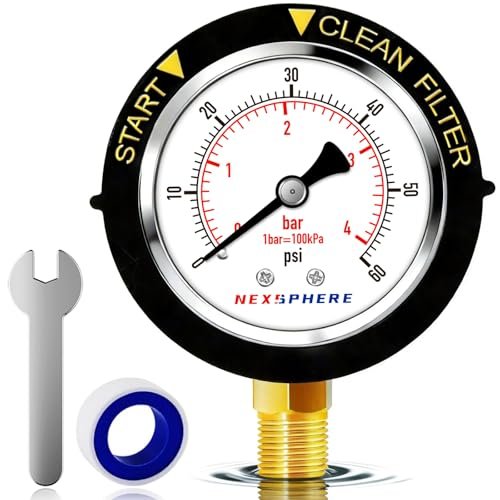 NexSphere Pool Filter Pressure Gauge, 0–60 PSI, 2 in Dial
Replacement back-mount gauge so you can read filter pressure and know when to backwash. View on Amazon →
NexSphere Pool Filter Pressure Gauge, 0–60 PSI, 2 in Dial
Replacement back-mount gauge so you can read filter pressure and know when to backwash. View on Amazon →
Still need help? Ask a Pool & Spa Expert AD
Get a personalized answer from PoolGuy810 — 30 years owning a pool and spa repair company. Describe your issue and get step-by-step help.
Related Pool Guides
Need More Help?
Try our free pool calculators and tools to help diagnose and fix your pool problems.
Browse Pool ToolsSLAM calculator, pH calculator, salt dosing & more