
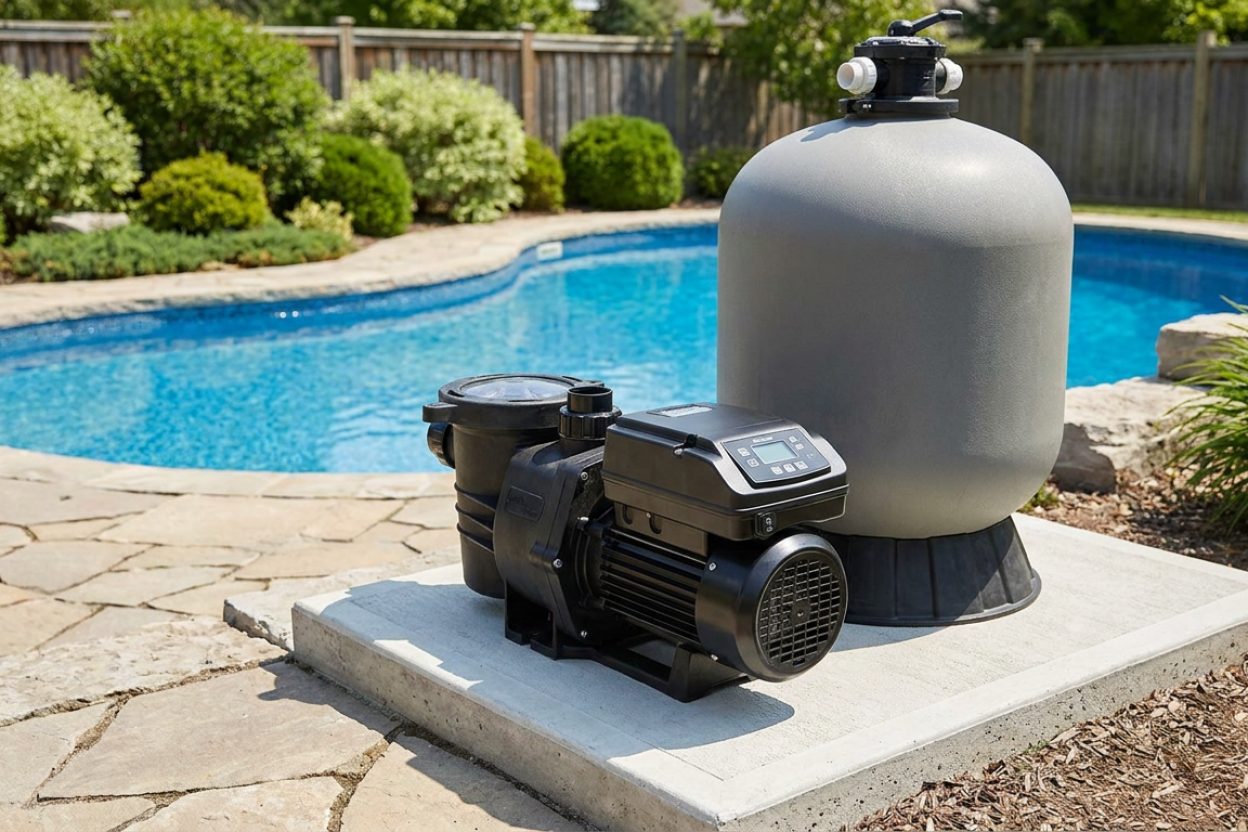
Can You Cover a Pool Pump to Reduce Noise? Safe Methods

What's the best way to reduce pump noise before winter storage?
Read full question
Tried the same pump cover trick that worked perfectly at my old house, but this winter setup has me stumped about keeping the neighbors happy. Before I close everything down for winter, I want to figure out if there's a safe way to cover or enclose the pump to muffle the sound. I've heard mixed things about covering pumps - some people say it's fine while others warn about overheating. What's the right approach here? I don't want to damage anything, but the noise is becoming a real problem.
Quick Answer
You can cover a pool pump to reduce noise, but proper ventilation is critical to prevent overheating. The best approach combines addressing the root cause of noise with strategic sound barriers that maintain airflow.
Understanding Pump Noise Before Adding Covers
Consider this a warning sign — a suddenly noisy pool pump is worth investigating — sometimes it's just a clogged basket or a low water level, but it can also be an early sign of wear that gets costlier the longer it's ignored. If the pump is louder than usual, covering it might mask a problem that needs attention. A properly functioning pump should run relatively quietly with just a gentle hum.
Common noise sources include:
- Cavitation from low water levels or clogged skimmer baskets
- Worn bearings in the motor
- Loose mounting hardware
- Debris in the impeller housing
- Air leaks in the suction lines
Safe Covering Options That Maintain Ventilation
If your pump is mechanically sound but still too loud, you can safely use covers designed specifically for pool equipment. The key is ensuring adequate airflow around the motor.
Purpose-Built Equipment Enclosures
Commercial pool equipment enclosures work well because they're designed with ventilation in mind. These typically feature louvered sides or strategic openings that allow air circulation while blocking direct sound transmission.
DIY Sound Barriers
You can create effective noise reduction using fence panels or lattice work positioned around (not directly on top of) the pump. Leave adequate clearance on all sides (consult manufacturer specifications for your specific pump model) and ensure the top remains open for heat dissipation.
What Never to Do When Covering Pumps
Never completely enclose a pump with materials like tarps, blankets, or solid boxes. Pool pump motors typically generate significant heat and require adequate air circulation to prevent overheating (verify ventilation requirements for your specific motor).
Avoid these common mistakes:
- Wrapping the motor housing directly
- Creating enclosed spaces without ventilation
- Using materials that can trap moisture
- Blocking the motor's cooling fan (if equipped)
Systematic Troubleshooting for Noisy Pumps
If the Noise is New or Suddenly Worse
Start by checking your water level - if it's below the skimmer opening, the pump is likely cavitating. You'll also want to clean your filter system and clear any debris from skimmer baskets.
If the Pump Has Always Been Loud
This often indicates either poor initial installation or the pump location amplifying normal operating sounds. Check that the pump sits level on a solid pad and that mounting bolts are properly tightened.
If You Hear Grinding or Scraping
This typically means internal wear and covering won't help - consult a professional pool technician for diagnosis and repair. Don't attempt to mask mechanical problems with sound barriers.
Alternative Noise Reduction Strategies
Sometimes the most effective approach doesn't involve covering the pump at all. Consider these options:
Vibration isolation: Rubber pads under the pump base can significantly reduce transmitted vibrations that amplify noise through decking or concrete.
Strategic landscaping: Dense shrubs or decorative screens positioned between the pump and noise-sensitive areas can provide excellent sound buffering without affecting equipment operation.
Timer adjustments: Running your pump during less noise-sensitive hours can be more effective than physical sound reduction.
Preparing for Winter Storage
One thing to keep in mind: a fully closed and winterized pump is shut off and silent all winter, so noise isn't an issue while the pool is closed. The cover and enclosure work below is really about quieting the pump during the running season — so the ideal time to do it is as you close up, ready for next season.
Since you're planning to close for winter, this is an ideal time to address pump noise issues. During your winterization process, you can thoroughly inspect the pump for wear, clean internal components, and plan any modifications to the installation for next season.
If you discover the noise stems from worn bearings or other internal issues, winter is the perfect time for repairs or replacement without impacting your swimming season.
Still need help? Ask a Pool & Spa Expert AD
Get a personalized answer from PoolGuy810 — 30 years owning a pool and spa repair company. Describe your issue and get step-by-step help.
Related Pool Guides
Need More Help?
Try our free pool calculators and tools to help diagnose and fix your pool problems.
Browse Pool ToolsSLAM calculator, pH calculator, salt dosing & more