
How to Clear Cloudy Milky Pool Water After Opening

My pool water turned milky white after opening - how do I fix it?
Read full question
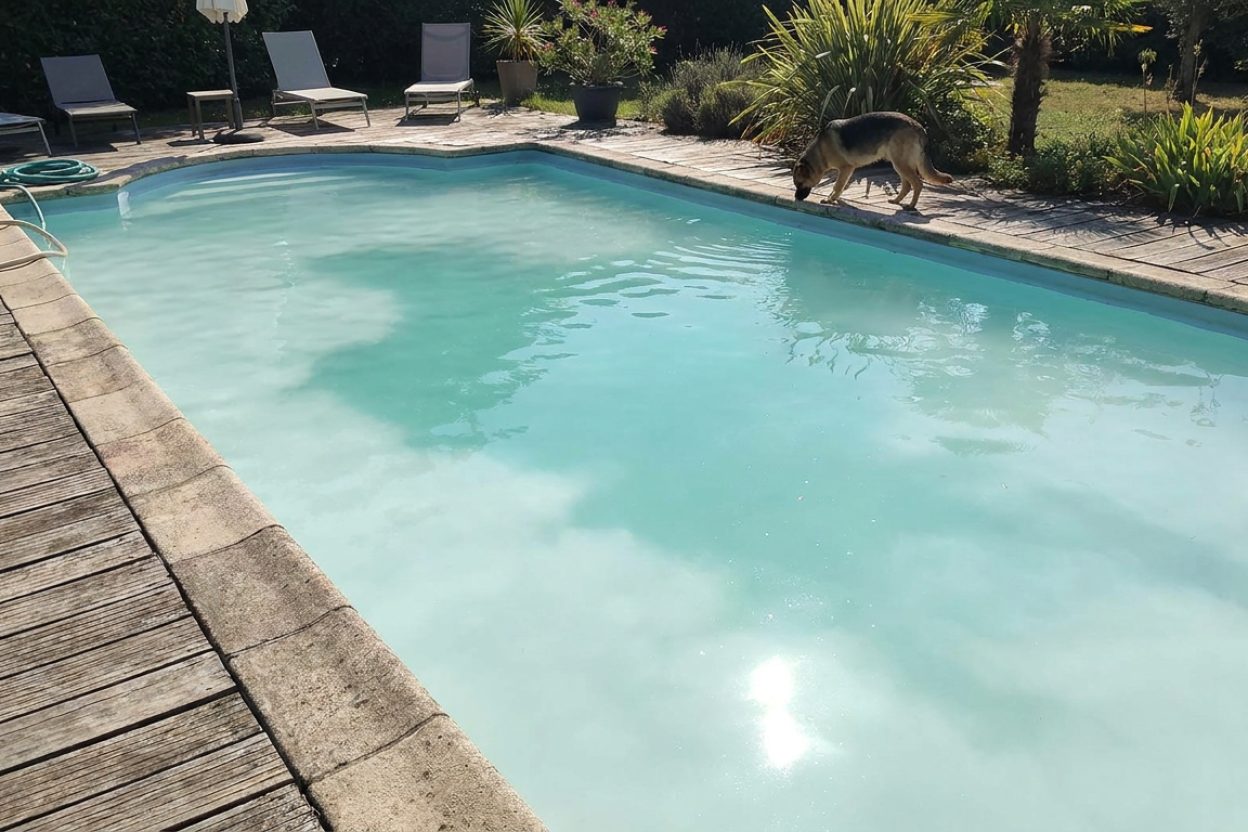
Nobody warned me that buying this house meant inheriting a pool that looks like a giant glass of milk from the previous owner's neglect. It's not green, just really cloudy and white-ish. I can barely see the bottom of the shallow end. I shocked it when I opened but that was about a week ago. The filter has been running but doesn't seem to be helping much. What's the best way to get this cleared up? I have a sand filter if that matters.
Quick Answer
Cloudy pool water is typically caused by poor filtration, imbalanced chemistry, or organic contamination. The solution involves testing and balancing your water chemistry, improving filtration, and potentially using the SLAM method for severe cases.
Understanding Why Your Pool Turned Cloudy
Most pool owners make one critical mistake when they see cloudy water after opening: they add a single dose of shock and stop there. A one-time shock isn't enough — cloudy, organic-laden water needs the chlorine held at shock level (the SLAMShock Level And Maintain — raise free chlorine to a target based on your CYA and hold it there until the algae is gone. It's a process, not a one-time dose. the SLAM walkthrough → process) until the water clears, or it just keeps clouding back up. The cloudiness is typically caused by tiny particles suspended in the water - these could be dead algae, organic debris that accumulated over winter, or precipitated minerals from unbalanced water chemistry.
The good news is that since your water isn't green, you're likely dealing with a filtration and chemistry issue rather than a full-blown algae bloom. This means we can usually clear it up relatively quickly with the right approach.
Start With Proper Water Testing
Before adding any chemicals, you'll want to get a complete picture of your water chemistry. I recommend taking a sample to a pool store for comprehensive testing, or invest in a good test kit that measures chlorine, pH, alkalinity, and cyanuric acid (CYACyanuric Acid (stabilizer) — Sunscreen for your chlorine — it keeps sunlight from burning it off. The catch: the more you have, the more chlorine you need to keep. learn more →). You can use our pool volume calculator to estimate how much water you're working with for accurate chemical dosing.
Pay special attention to your chlorine levels and pH. If your pH is above 7.6, your chlorine typically becomes much less effective, which allows organic matter to cloud your water. Similarly, if your total alkalinity is off, it can cause pH to swing wildly and create water balance issues.
The Step-by-Step Clearing Process
Balance Your Water Chemistry First
Start by adjusting your pH to between 7.4-7.6 if it's outside this range. Use our pH adjustment calculator to determine how much acid or base you need. Once pH is stable, ensure your total alkalinity is typically between 80-120 ppm, as this helps lock your pH in place.
Boost Your Chlorine
For cloudy water that's not green, you'll typically want to raise your free chlorine to the shock level for your CYA (about 40% of your CYA). This higher level helps oxidize the organic matter causing the cloudiness. Our chlorine dosing calculator can help you determine a good estimate of the amount needed based on your pool size and current levels.
Maximize Your Filtration
Since you have a sand filter, make sure it's been backwashed recently. If the water is still cloudy after balancing chemistry, try backwashing again - sometimes the filter media gets clogged with the debris it's trying to remove. Run your filter continuously (24 hours a day) until the water clears.
When to Consider the SLAM Method
If your water doesn't start clearing within 24-48 hours of balancing chemistry and running the filter, you might need to use the more aggressive SLAM (Shock Level And Maintain) process. This is particularly true if you're getting positive results on a combined chlorine test, which indicates organic contamination.
The SLAM method involves raising chlorine to the shock level for your CYA (about 40% of your CYA) and maintaining it until all organic matter is eliminated. You can find detailed instructions in our complete SLAM method guide, which walks you through the entire process safely.
Additional Tricks That Often Help
Sometimes a good pool flocculent can work wonders for stubborn cloudiness. Flocculants cause tiny particles to clump together into larger pieces that your filter can more easily capture. You'll need to vacuum the settled particles manually — ideally to waste on a sand or DE filter, since a cartridge filter has no waste port and the fine particles would just pass back through, but it can dramatically speed up the clearing process.
Another option is using a clarifier, which works more slowly but doesn't require vacuuming. The clarifier helps tiny particles stick together so your filter can grab them more effectively.
Prevention for Next Season
To avoid this issue when opening next year, consider maintaining a small amount of chlorine in the pool throughout winter if your climate allows, and make sure your water is properly balanced before closing. A good winter cover also prevents much of the organic debris from entering the water in the first place.
Most pools will clear up within 3-5 days using this approach, though timing can vary based on conditions, assuming you stay on top of the chemistry and keep that filter running. The key is patience and consistent monitoring - don't keep adding chemicals without testing first, as this can actually make the problem worse.
For the full breakdown of safe chlorine levels by CYA level, see our pool water chemistry guide.
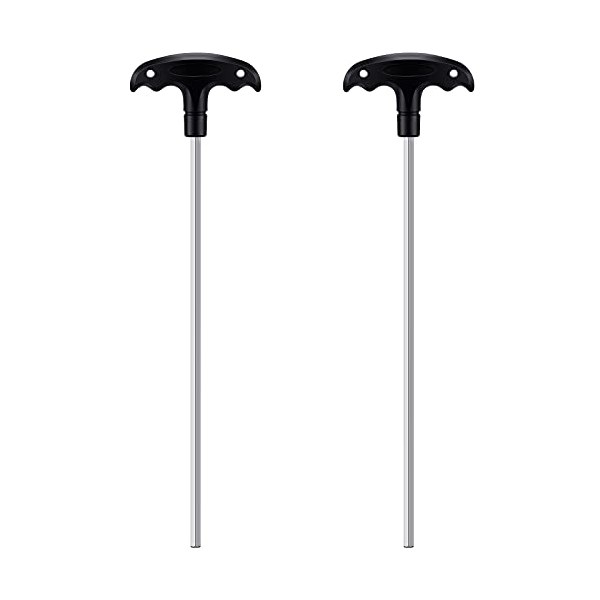 Pool Safety Cover Hex Key Tool (2-Pack)
Hex keys to install or remove a pool safety cover. View on Amazon →
Pool Safety Cover Hex Key Tool (2-Pack)
Hex keys to install or remove a pool safety cover. View on Amazon →
 Taylor K-2006C Complete FAS-DPD Pool & Spa Test Kit
The FAS-DPD kit pool pros trust — reads chlorine accurately even at shock/SLAM levels, plus pH, alkalinity, calcium hardness and CYA. View on Amazon →
Taylor K-2006C Complete FAS-DPD Pool & Spa Test Kit
The FAS-DPD kit pool pros trust — reads chlorine accurately even at shock/SLAM levels, plus pH, alkalinity, calcium hardness and CYA. View on Amazon →
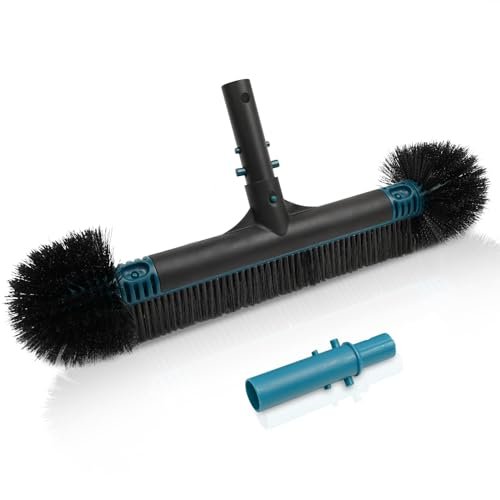 Poolvio 20" 2-in-1 Pool Brush Head (Walls & Floor)
Sturdy 20-inch brush head that clips onto any standard telescopic pole. View on Amazon →
Poolvio 20" 2-in-1 Pool Brush Head (Walls & Floor)
Sturdy 20-inch brush head that clips onto any standard telescopic pole. View on Amazon →
Still need help? Ask a Pool & Spa Expert AD
Get a personalized answer from PoolGuy810 — 30 years owning a pool and spa repair company. Describe your issue and get step-by-step help.
Need More Help?
Try our free pool calculators and tools to help diagnose and fix your pool problems.
Browse Pool ToolsSLAM calculator, pH calculator, salt dosing & more