
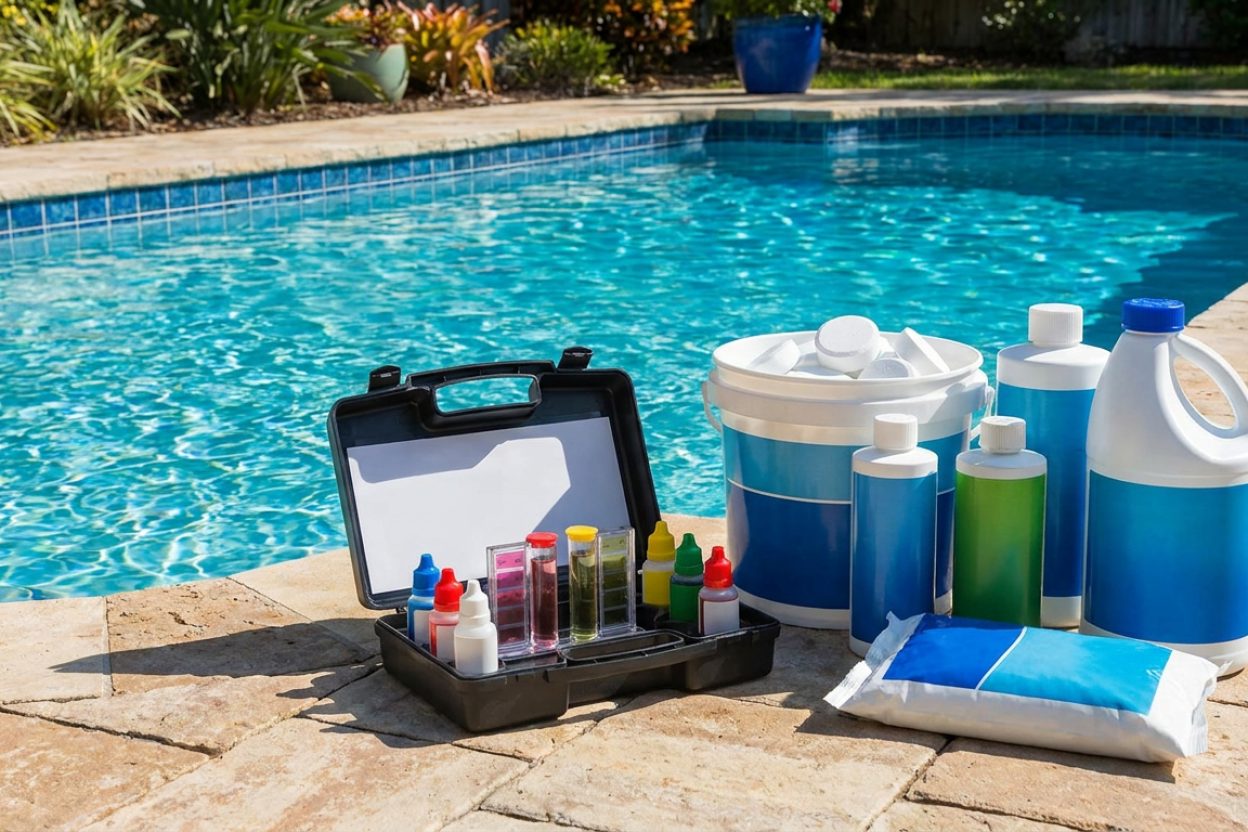
Can You Swim in a Pool with High CYA? Safety Guide

Is it safe to swim with high CYA levels in my pool?
Read full question
Around two weeks after my CYA hit 80 ppm, my 20,000 gallon inground pool is eating through chlorine way faster than it should. The water looks clear and I've been maintaining my free chlorine at 3-4 ppm, but I'm having to add way more chlorine than usual to keep it there.
My main concern is whether it's actually safe for my family to swim in the pool with these high stabilizer levels. I've read conflicting information online - some sources say high CYA itself is dangerous, while others focus more on the chlorine effectiveness issue. We've got kids who use the pool daily during summer, so I want to make sure I'm not putting anyone at risk.
Should I be keeping everyone out of the water until I can get the CYA levels down, or is it more about making sure I can maintain proper sanitization despite the high stabilizer? I'm trying to figure out if this is an immediate safety concern or more of a long-term maintenance headache.
Quick Answer
You can swim in a pool with high CYA levels as stabilizer itself isn't harmful, but high CYA reduces chlorine effectiveness, making it harder to maintain proper sanitization. The real concern is whether you can maintain adequate free chlorine levels. Use the all-in-one pool calculator to determine the minimum FC level for your CYA. Swimming is generally safe if you can maintain proper FC/CYA ratios and the water remains clear and sanitized.
Understanding High CYA and Swimming Safety
CYACyanuric Acid (stabilizer) — Sunscreen for your chlorine — it keeps sunlight from burning it off. The catch: the more you have, the more chlorine you need to keep. learn more →, also known as pool stabilizer or conditioner, is designed to protect chlorine from UV degradation. While beneficial in proper amounts (30-50 ppm for regular pools, 70-80 ppm for salt water generators), levels above 100 ppm create significant challenges for pool maintenance.
Why High CYA Becomes Problematic
The issue with high CYA isn't the stabilizer itself - it's what it does to your chlorine. As CYA levels increase, you need progressively higher free chlorine (FCFree Chlorine — The chlorine actively sanitizing your water right now. This is the number you keep an eye on. how much you need →) levels to achieve the same sanitizing effect. At 100 ppm CYA, you'd need to maintain at least 7.5 ppm FC for basic sanitation. At 150 ppm CYA, this jumps to over 11 ppm FC.
When Swimming is Safe with High CYA
Swimming is generally safe for sanitation when you can maintain the proper FC/CYAFC/CYA chart — The chart that sets your chlorine target from your stabilizer (CYA) level — the two go together. see the chart → ratio. One caveat on the high end: do not get in while free chlorine is above 10 ppm (the CDC ceiling for swimmers) — so if your CYA is so high it needs 11+ ppm FC to stay sanitary, that is another reason to lower it. Otherwise high CYA by itself does not make the water unsafe to swim in. Use the all-in-one pool calculator to determine your minimum FC level:
- CYA 80-90 ppm: minimum FC ~6-7 ppm, target 9-11 ppm
- CYA 100 ppm: minimum FC ~7.5 ppm, target 11-13 ppm
- CYA 120 ppm: Maintain FC at 9-11 ppm minimum
- CYA 150+ ppm: Maintain FC at 11+ ppm minimum
In your case, at CYA 80 your minimum FC is about 6 ppm (target ~9-11), so the 3-4 ppm you've been holding is actually below the safe minimum — which is likely why chlorine seems to vanish. Raise FC into range before considering the water well-sanitized.
Test your water with a quality test kit like the Taylor K-2006C to get accurate readings. Never rely on test strips for CYA measurements.
Warning Signs to Avoid Swimming
Do not swim if you notice any of these conditions, especially with high CYA:
- Cloudy or hazy water
- Green or off-color water
- Strong chloramine odor (that "pool smell")
- Inability to maintain minimum FC levels despite adding chlorine
- Algae growth on pool surfaces
- Inability to see the bottom clearly
High CYA makes it much harder to shock the pool and kill contaminants, so these warning signs are more serious than in a properly balanced pool.
The Reality of Maintaining High CYA Pools
While technically possible to swim safely with high CYA, the practical challenges are significant:
Chlorine Consumption
You'll use 2-3 times more liquid chlorine to maintain proper FC levels. This dramatically increases operating costs and makes routine maintenance more expensive.
Shock Treatment Difficulties
When problems occur, SLAMShock Level And Maintain — raise free chlorine to a target based on your CYA and hold it there until the algae is gone. It's a process, not a one-time dose. the SLAM walkthrough → (Shock Level And Maintain) treatment becomes extremely expensive and time-consuming. You might need to maintain FC levels at your specific SLAM target (based on your FC/CYA ratio) for days or weeks to clear issues.
Testing Frequency
You'll need to test FC levels daily, as the high chlorine demand makes levels drop quickly. Missing even a day of testing could allow problems to develop rapidly.
Long-Term Solutions for High CYA
Rather than managing high CYA indefinitely, consider these solutions:
Partial Drain and Refill
The most cost-effective long-term solution is partially draining and refilling your pool. Drain 1/3 to 1/2 of the water and refill with fresh water. This immediately reduces CYA levels proportionally.
Complete Water Replacement
For extremely high CYA (200+ ppm), complete water replacement may be most economical. Calculate the cost of water versus months of excessive chlorine usage.
CYA Reducer Products
Commercial CYA reducers exist but are expensive and work slowly. They're typically only cost-effective for smaller pools or when draining isn't possible.
Prevention Strategies
To avoid high CYA in the future:
- Use liquid chlorine (sodium hypochlorite) instead of stabilized chlorine tablets
- Add stabilizer separately, targeting 30-50 ppm
- Test CYA monthly during swimming season
- For salt water pools, maintain CYA at 70-80 ppm maximum
- Avoid trichlor tablets as primary sanitizer - they add 6 ppm CYA per 10 ppm FC added (exact ratio varies by manufacturer)
Bottom Line
You can swim in a pool with high CYA if you can maintain proper FC levels according to the all-in-one pool calculator and the water remains clear and properly sanitized. However, the practical challenges and costs usually make it worth addressing the high CYA through partial water replacement rather than managing it long-term. Always prioritize water clarity and proper FC levels over convenience when making swimming decisions.
For the full breakdown of safe chlorine levels by CYA level, see our pool water chemistry guide.
 Taylor K-2006C Complete FAS-DPD Pool & Spa Test Kit
The FAS-DPD kit pool pros trust — reads chlorine accurately even at shock/SLAM levels, plus pH, alkalinity, calcium hardness and CYA. View on Amazon →
Taylor K-2006C Complete FAS-DPD Pool & Spa Test Kit
The FAS-DPD kit pool pros trust — reads chlorine accurately even at shock/SLAM levels, plus pH, alkalinity, calcium hardness and CYA. View on Amazon →
 Liquid Chlorine / Sodium Hypochlorite (12.5%)
Everyday sanitizer — the B in BBB View on Amazon →
Liquid Chlorine / Sodium Hypochlorite (12.5%)
Everyday sanitizer — the B in BBB View on Amazon →
 Pool Mate 4-Pounds Premium Pool Stabilizer and Conditioner, Concentrated Cyanuric Acid for Pools, Helps Chlorine Last Longer
View on Amazon →
Pool Mate 4-Pounds Premium Pool Stabilizer and Conditioner, Concentrated Cyanuric Acid for Pools, Helps Chlorine Last Longer
View on Amazon →
Still need help? Ask a Pool & Spa Expert AD
Get a personalized answer from PoolGuy810 — 30 years owning a pool and spa repair company. Describe your issue and get step-by-step help.
Related Pool Guides
Need More Help?
Try our free pool calculators and tools to help diagnose and fix your pool problems.
Browse Pool ToolsSLAM calculator, pH calculator, salt dosing & more