
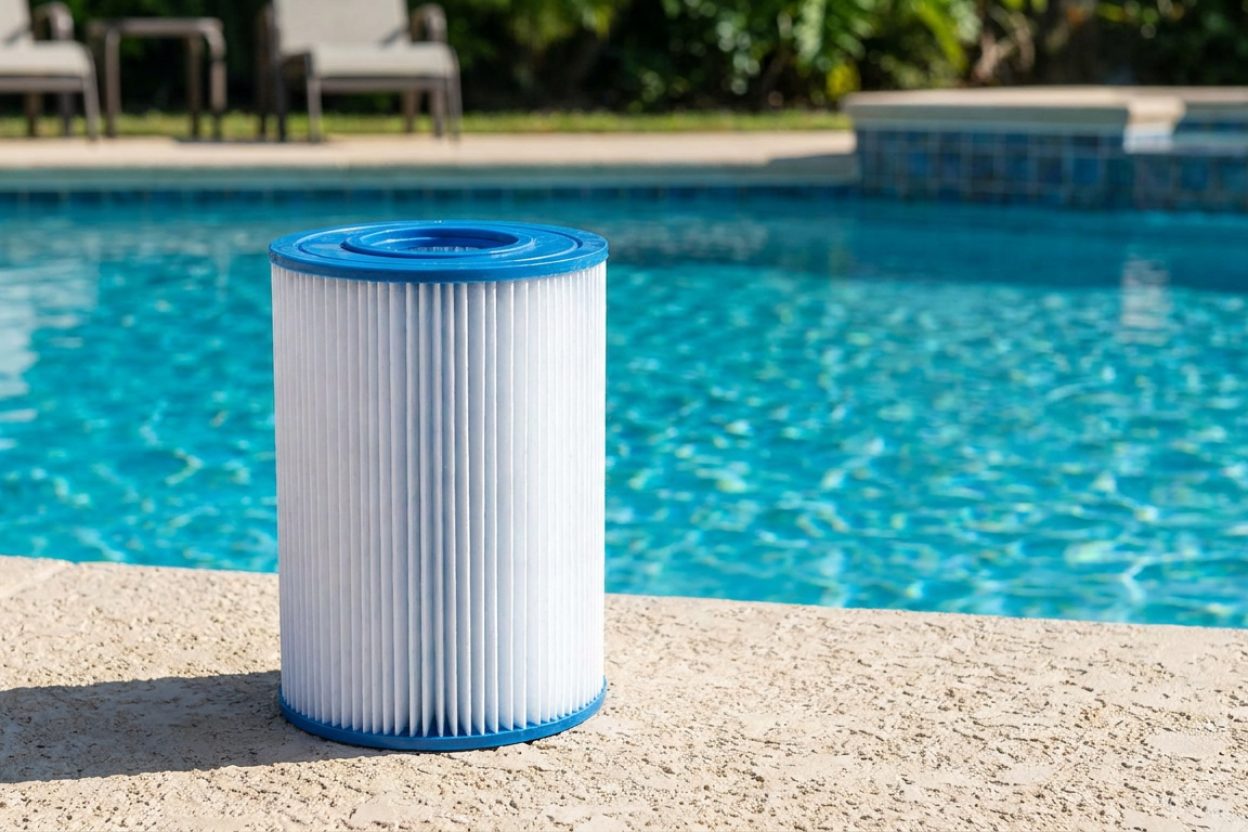
Can a Pool Sand Filter Be Too Big? Sizing Problems Explained

Is my 24" sand filter too big for my 15,000 gallon pool?
Read full question
During our weekly pool maintenance routine, my husband casually mentioned that our 15,000 gallon inground pool's water has looked consistently cloudy despite my best filtration efforts, and now I can't stop obsessing over what's wrong. The water isn't cloudy exactly, but it lacks that crystal-clear sparkle and seems to have a slight haze that won't go away. My chemical levels are all in range - chlorine at 2.5 ppm, pH 7.4, alkalinity 110 ppm, and I've shocked multiple times with no improvement.
I recently upgraded to a larger 24-inch sand filter thinking bigger would be better, but I'm starting to wonder if I made a mistake. My pump runs at about 45 GPM, and I've noticed that when I backwash, the water doesn't seem to flow very forcefully compared to my old smaller filter. Could the filter actually be too large for my system? I've heard that oversized filters can cause problems, but I'm not sure how to tell if that's what's happening here.
Quick Answer
Yes, a pool sand filter can be too big, causing poor water clarity due to insufficient backwash velocity and channeling. Proper sizing should match your pump's flow rate at 15-20 GPM per square foot of filter area.
Diagnosing an Oversized Sand Filter
First, let's diagnose whether your sand filter is actually too large for your system. An oversized filter typically shows these warning signs:
- Consistently cloudy or hazy water despite proper chemical balance
- Short filter cycles with rapid pressure increases
- Ineffective backwashing that doesn't clear the water in the sight glass
- Algae problems that persist even with adequate chlorine levels
- Sand channeling visible during backwash (uneven water flow patterns)
The root cause lies in backwash flow, not forward filtration. Slow forward flow through the sand actually improves particle capture; what an oversized filter can compromise is backwashing, because the pump may not move enough water upward to lift and clean the sand bed. Channeling itself comes from compacted, calcified, or mudballed sand and weak backwash agitation—not from low forward velocity.
Proper Sand Filter Sizing Principles
Sand filter sizing should be based on flow rate, not pool volume. The industry standard calls for 15-20 gallons per minute (GPM) per square foot of filter surface area.
For a quick estimate, our all-in-one pool calculator gives you sizing guidance from your pool size and pump flow rate, making it a handy reference to check whether your filter is properly matched to your system.
To do it by hand (note: real-world results vary with plumbing and pump conditions, so the calculator is more reliable), here's how to calculate if your filter is properly sized:
- Determine your pump's actual flow rate (not the maximum rating, but actual output considering head pressure)
- Divide your pump's GPM by the filter's square footage
- If the result is well below the 15-20 GPM/sq ft design range, your filter is large relative to your pump—fine for clarity, but verify your backwash flow is adequate
- If it's above 25 GPM per square foot, your filter is undersized
For example, if you have a 24-inch diameter sand filter (3.14 square feet) and your pump delivers 45 GPM, you're getting about 14.3 GPM per square foot – which is fine for water clarity but means the filter is on the large side for this pump, so confirm your backwash flow is adequate.
Problems Caused by Oversized Sand Filters
Insufficient Backwash Velocity
Proper backwashing requires 12-15 GPM per square foot of upward flow to lift and agitate the sand bed. An oversized filter may only receive 8-12 GPM per square foot, insufficient to properly clean the sand. This leads to:
- Compacted sand beds that trap debris
- Reduced filtration efficiency over time
- More frequent sand replacement needs
- Higher chemical consumption due to poor water clarity
Channeling and Bypass Issues
When an oversized bed isn't backwashed thoroughly, the sand compacts and calcifies; water then follows the path of least resistance through these hardened zones, creating channels. These channels allow dirty water to bypass the filtering sand, resulting in:
- Persistent fine particles that won't filter out
- Uneven sand bed utilization
- Premature sand bed failure in high-flow areas
- Inconsistent water quality
Solutions for Oversized Sand Filter Problems
Option 1: Increase Flow Rate
If your pump is undersized for the filter, consider upgrading to a higher capacity pump. Calculate the required GPM by multiplying your filter's square footage by 18 (the middle of the 15-20 GPM range). Warning: Ensure your plumbing can handle increased flow rates to avoid cavitation or system damage.
Option 2: Reduce Filter Size
Replace the oversized filter with a properly sized unit. This is often the most cost-effective long-term solution, especially if your current pump is appropriately sized for your pool's turnover requirements.
Option 3: Modify Backwash Procedure
For existing oversized systems, implement these backwash modifications:
- Extend backwash time to 3-5 minutes instead of the standard 2-3 minutes
- Perform backwashing more frequently when pressure rises 8-10 PSI above clean pressure
- Consider adding a sand agitator or performing manual sand stirring monthly
- Deep-clean the bed (open it up and hose/stir the sand) when it compacts or calcifies - filter sand rarely wears out on its own, but poor backwashing can gum it up sooner, so fix that rather than replacing on a fixed schedule
Prevention and Proper System Design
When installing new equipment, follow these guidelines to avoid oversizing issues:
- Size the filter based on pump flow rate, not pool volume
- Consider your actual operating conditions, including head loss from plumbing
- Account for variable speed pump settings if applicable
- Consult manufacturer flow rate charts for your specific sand filter model
- Factor in future equipment upgrades when making sizing decisions
When Professional Help Is Needed
Contact a pool professional if you experience:
- Persistent water quality issues despite proper chemical balance
- Frequent sand replacement needs (more than every 2 years)
- Pump cavitation or system pressure problems
- Uncertainty about proper equipment sizing for your specific pool
Remember, proper filtration is the foundation of pool water quality. An oversized sand filter can be just as problematic as an undersized one, affecting both water clarity and overall system efficiency.
Still need help? Ask a Pool & Spa Expert AD
Get a personalized answer from PoolGuy810 — 30 years owning a pool and spa repair company. Describe your issue and get step-by-step help.
Related Pool Guides
Need More Help?
Try our free pool calculators and tools to help diagnose and fix your pool problems.
Browse Pool ToolsSLAM calculator, pH calculator, salt dosing & more