
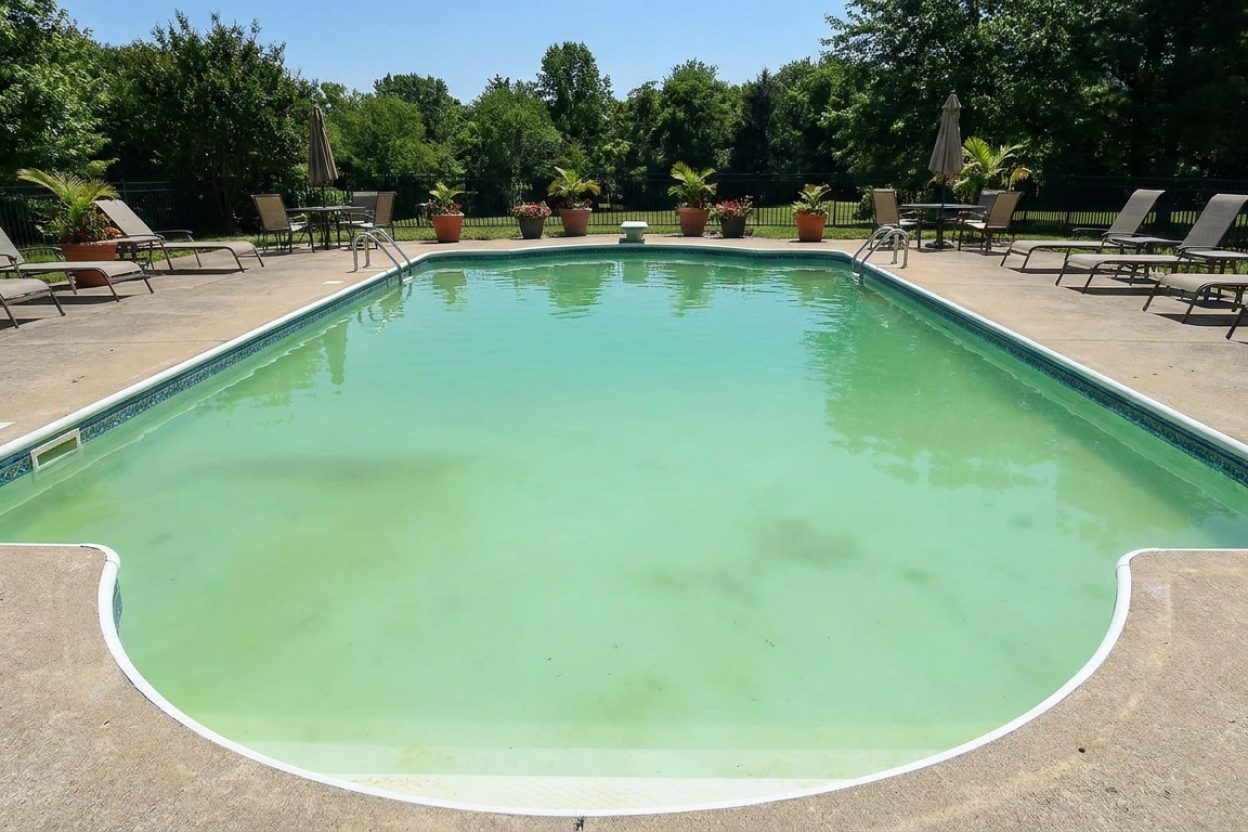
Can Pool Algae Be White? Types & Treatment Guide

White stuff growing in my pool - is this some weird algae?
Read full question
The white slime on my pool walls tripled in size after I followed three different YouTube cleaning tutorials. I've been treating it like regular green algae - shocked it multiple times, balanced my chemicals, the whole nine yards. But this white stuff just keeps coming back and it doesn't look like any algae I've dealt with before.
Is white algae even a thing? Or am I dealing with something completely different here? The texture is almost... fluffy? And it seems to stick to surfaces more than regular algae. I'm starting to think I need a different approach but I don't want to keep throwing chemicals at the wrong problem.
Quick Answer
Pool algae is typically green, but white growths in pools are usually white water mold, pink slime bacteria, or biofilms rather than true algae. These require similar shock treatment but may need additional scrubbing and filtration.
Understanding White Pool Algae and Look-Alikes
Yesterday your pool water was crystal clear — by this morning it's clouded with mysterious white growths that don't look like any algae you've ever seen. Technically speaking, true algae is rarely completely white, but several organisms commonly found in pools can appear white and behave similarly to algae in terms of treatment needs.
What Causes White Growths in Pools
The white, slimy, or filmy substances you're seeing are most likely one of these organisms:
White Water Mold
White water mold (Saprolegnia species, an Oomycota / fungus-like organism) appears as white, gray, or colorless stringy growths that feel slimy to the touch. This fungal organism thrives in warm water with low sanitizer levels and often appears in areas with poor circulation like behind ladders, in skimmer baskets, or around return fittings.
Pink Slime (White Variety)
Despite its name, pink slime bacteria can appear white, clear, or colorless. This biofilm-forming bacterium creates a slippery coating on pool surfaces and is particularly common in areas where organic matter accumulates.
Biofilms
Various bacteria can form clear to white biofilms that protect colonies of microorganisms. These appear as thin, slippery films on pool surfaces and equipment.
How to Identify White Pool Organisms
To properly identify what you're dealing with, examine these characteristics:
- Texture: White water mold feels slimy and stringy, while biofilms are typically thin and slippery
- Location: Check behind ladders, in skimmer baskets, around return jets, and other low-circulation areas
- Response to brushing: These organisms typically break apart when brushed but quickly reform
- Water clarity: Unlike green algae, white organisms may not significantly cloud the water initially
Testing Your Water Chemistry
Before treating, test your water using a reliable test kit like the Taylor K-2006. You'll need accurate readings for:
- Free Chlorine (FCFree Chlorine — The chlorine actively sanitizing your water right now. This is the number you keep an eye on. how much you need →)
- Combined Chlorine (CCCombined Chlorine — "Used-up" chlorine left over from doing its job. Above about 0.5 ppm is the classic sign water needs a shock. learn more →)
- pH level
- Cyanuric Acid (CYACyanuric Acid (stabilizer) — Sunscreen for your chlorine — it keeps sunlight from burning it off. The catch: the more you have, the more chlorine you need to keep. learn more →)
- Total Alkalinity (TATotal Alkalinity — The buffer that keeps your pH from bouncing around. Get this in range and pH gets a lot easier to manage. learn more →)
White water mold and similar organisms typically appear when free chlorine levels drop below 1.0 ppm or when the FC/CYAFC/CYA chart — The chart that sets your chlorine target from your stabilizer (CYA) level — the two go together. see the chart → ratio is inadequate for proper sanitization.
Treatment Protocol for White Pool Organisms
Step 1: Remove Physical Growth
Start by physically removing as much of the white growth as possible:
- Brush all pool surfaces vigorously with a stainless steel brush (only on bare unpainted gunite/concrete) or a nylon brush (plaster, vinyl, fiberglass)
- Clean out skimmer baskets, pump baskets, and any pool equipment
- Remove and clean pool accessories like ladders, toys, and cleaning equipment
- Vacuum debris to waste if possible, or use a manual vacuum
Step 2: Shock Treatment Using SLAM Method
Apply the SLAMShock Level And Maintain — raise free chlorine to a target based on your CYA and hold it there until the algae is gone. It's a process, not a one-time dose. the SLAM walkthrough → (Shock Level And Maintain) protocol:
- Calculate your shock level based on your CYA reading using the all-in-one pool calculator
- For CYA of 30-50 ppm, hold shock-level FC throughout treatment (about 12 ppm at CYA 30, 16 at CYA 40, and 20 at CYA 50; use the calculator above)
- Add liquid chlorine (sodium hypochlorite) - typically 1 gallon per 10,000 gallons raises FC by approximately 13 ppm
- Run your pump continuously during treatment
- Test FC every few hours and add chlorine to maintain shock level
Step 3: pH Management
Maintain pH between 7.4-7.6 (acceptable 7.2-7.8) during treatment to avoid scaling and cloudiness and keep FC readings accurate; at shock-level FC, pH has little effect on sanitizing power. Use muriatic acid to lower pH if needed - dosage varies based on current pH and total alkalinity, so follow manufacturer guidelines or use a pool calculator.
Step 4: Enhanced Filtration
Since these organisms can clog filters quickly:
- Clean or backwash your filter daily during treatment
- Run your pump 24/7 until the problem is resolved
Prevention Strategies
Preventing white organisms requires consistent maintenance:
- Maintain proper FC levels: Keep FC at appropriate levels based on your CYA (typically 4-6 ppm for CYA of 30-50)
- Regular brushing: Brush pool surfaces weekly to prevent biofilm formation
- Equipment cleaning: Clean skimmer and pump baskets weekly
- Circulation: Ensure adequate water circulation to all pool areas
- Regular testing: Test water chemistry 2-3 times per week
When to Seek Professional Help
Contact a pool professional if:
- The white growth returns repeatedly despite proper treatment
- You're unable to maintain proper chlorine levels
- The growth appears in your pool equipment or plumbing lines
- You're dealing with a large infestation covering significant pool area
Safety Warning: Always add chemicals according to manufacturer instructions, never mix different chemicals, and ensure proper ventilation when handling pool chemicals.
Timeline and Expectations
Expect the treatment process to take 3-7 days of consistent SLAM protocol. The white organisms should begin breaking apart within 24-48 hours, but maintaining shock levels ensures complete elimination and prevents quick reformation.
For the full breakdown of safe chlorine levels by CYA level, see our pool water chemistry guide.
 Taylor K-2006C Complete FAS-DPD Pool & Spa Test Kit
The FAS-DPD kit pool pros trust — reads chlorine accurately even at shock/SLAM levels, plus pH, alkalinity, calcium hardness and CYA. View on Amazon →
Taylor K-2006C Complete FAS-DPD Pool & Spa Test Kit
The FAS-DPD kit pool pros trust — reads chlorine accurately even at shock/SLAM levels, plus pH, alkalinity, calcium hardness and CYA. View on Amazon →
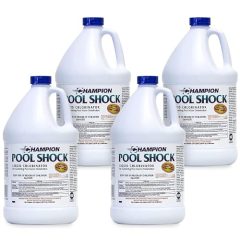 Liquid Chlorine / Sodium Hypochlorite (12.5%)
Everyday sanitizer — the B in BBB View on Amazon →
Liquid Chlorine / Sodium Hypochlorite (12.5%)
Everyday sanitizer — the B in BBB View on Amazon →
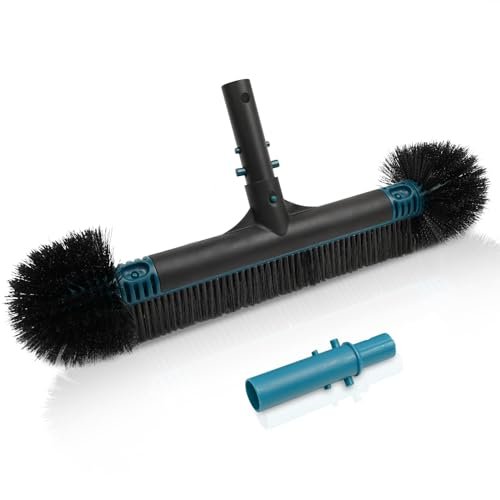 Poolvio 20" 2-in-1 Pool Brush Head (Walls & Floor)
Sturdy 20-inch brush head that clips onto any standard telescopic pole. View on Amazon →
Poolvio 20" 2-in-1 Pool Brush Head (Walls & Floor)
Sturdy 20-inch brush head that clips onto any standard telescopic pole. View on Amazon →
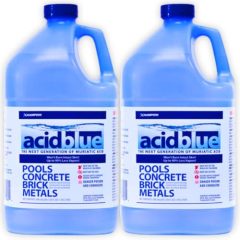 Acid Blue - Low Fume Muriatic Acid for Swimming Pools & Spas - Lower's pH, Reduces Alkalinity - 2 Gallon
View on Amazon →
Acid Blue - Low Fume Muriatic Acid for Swimming Pools & Spas - Lower's pH, Reduces Alkalinity - 2 Gallon
View on Amazon →
Still need help? Ask a Pool & Spa Expert AD
Get a personalized answer from PoolGuy810 — 30 years owning a pool and spa repair company. Describe your issue and get step-by-step help.
Related Pool Guides
Need More Help?
Try our free pool calculators and tools to help diagnose and fix your pool problems.
Browse Pool ToolsSLAM calculator, pH calculator, salt dosing & more