
Add a Shutoff Valve to Your Pool Waste Line

How do I add a shutoff valve to my pool waste line?
Read full question
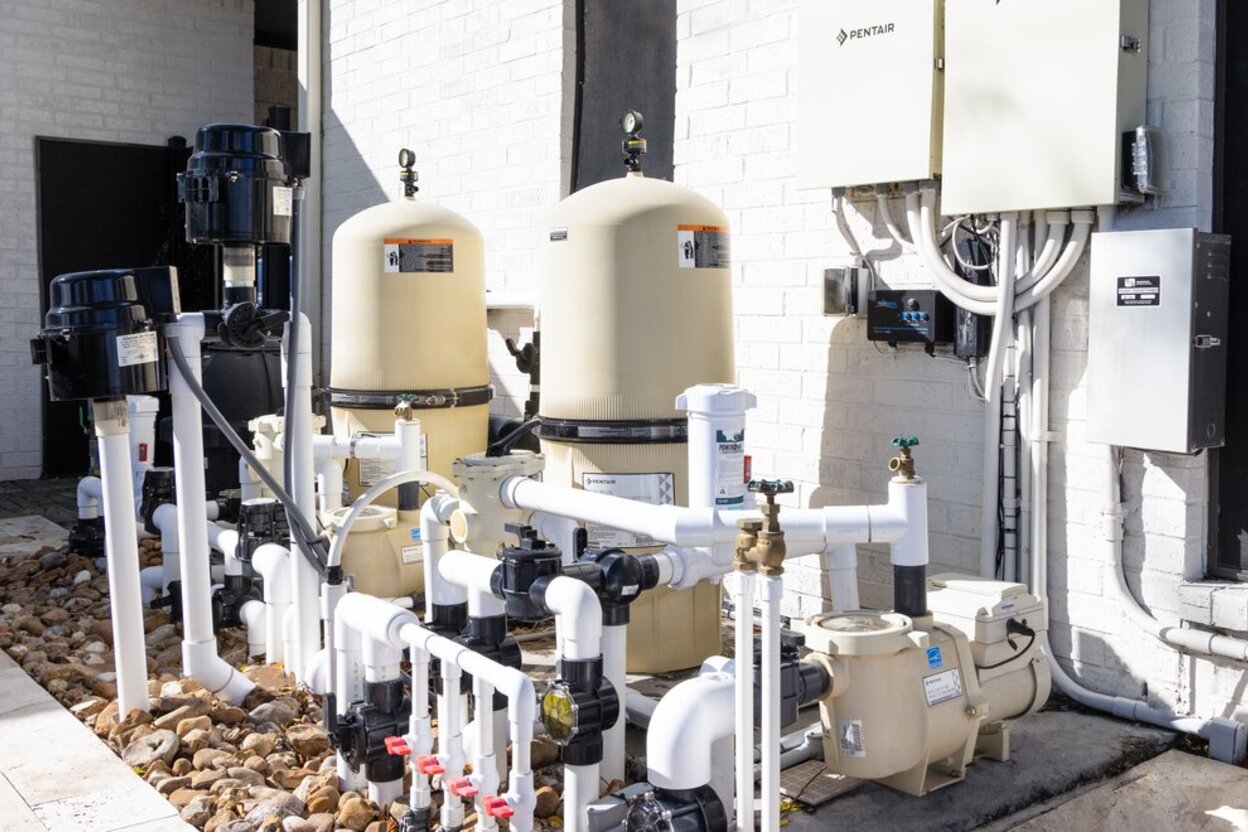
My pool equipment pad has a waste line that just dumps straight out to the side yard with zero control — no valve, nothing. I found a YouTube tutorial on how to splice in a shutoff valve, grabbed the supplies, and cut into the pipe... and now I've got a bigger mess than before. The dry-fit didn't hold the way the video showed, one of my cuts came out slightly angled, and I'm second-guessing the whole thing before I actually glue anything permanently.
The waste line is 1½-inch PVC coming off the back of my multiport filter valve. It dribbles between backwash cycles because there's nothing shutting it off, and I'd like to fix that properly. I want to understand what type of valve to actually use here, how to prep the pipe ends correctly after a rough cut, and how to solvent-weld everything so it doesn't leak or blow apart under pressure.
Can someone walk me through the real process — choosing the right valve, making clean cuts, dry-fitting, priming and cementing, and how long I need to wait before firing the pump back up? I want to get this right the second time.
Quick Answer
Adding a shutoff valve to your pool waste line is a manageable DIY project that involves cutting a straight section of 1½-inch PVC, dry-fitting a full-port ball valve with couplings or unions, then solvent-welding with primer and PVC cement. Allow the cement to cure before repressurizing — about 2 hours before light pressure, and ideally 24 hours before running the pump at full operating pressure in warm weather — and test by opening and closing the valve while the pump runs.
Good Timing to Tackle This — Here's Why Season Matters
If you're doing this in late spring or early summer before peak swim season, you're in an ideal window. Warmer temperatures (above 60°F) actually help PVC cement cure faster and more reliably, which matters more than most people realize. If you're doing this in cooler weather or a shaded equipment pad, you'll want to extend your cure time accordingly. Either way, the goal is the same: get a clean, controlled shutoff on that waste line so you're not fighting a slow drip every time the pump cycles.
A waste line that dribbles continuously — especially heading into heavy-use summer months — can also waste hundreds of gallons over a season, so this fix pays for itself quickly.
Choosing the Right Valve Before You Touch the Pipe
This is where a lot of DIYers go wrong first: grabbing whatever's on the hardware store shelf. For a pool waste line, you want a full-port ball valve — not a gate valve, not a butterfly valve. Ball valves open and close with a quarter-turn, create minimal flow restriction when open, and hold a positive shutoff when closed. They're also far more reliable over time in an outdoor environment.
For most residential systems, your waste line is 1½-inch PVC (some systems use 2-inch — measure the outer diameter before shopping). You'll want a valve rated for at least 150 psi and 140°F — a comfortable safety margin for most residential systems, though your waste line itself typically sees minimal pressure. Check your equipment documentation if you're unsure of your system's rated pressure. Your options include:
- PVC full-port ball valve — Lightweight, won't corrode, easy to solvent-weld directly. Good all-around choice for a simple waste line.
- Brass full-port ball valve — More durable under UV and heat cycles. PVC or brass full-port ball valves from pool equipment brands (Pentair, Jandy, Hayward, etc.) typically range from around $30–$80 depending on material and source — check current pricing at your pool supply retailer. Both PVC and brass models use either NPT threaded or slip/socket connections depending on the product.
- Automated valve option — Actuated/automated valve options (e.g., motorized actuators compatible with pool automation systems) are available for $200–$400+, but are generally overkill for a basic waste line shutoff. Check your automation system manufacturer for compatible valve actuators.
Verify your connection style before ordering — pool plumbing valves come in threaded (NPT) or slip/socket (solvent-weld) configurations. BSPP threads are rarely seen in U.S. residential pool plumbing, but if ordering an imported valve, confirm it's NPT-compatible.
Fixing That Angled Cut and Prepping the Pipe
Safety first: Before cutting into any pool plumbing, turn the pump off at the breaker and relieve any line pressure — never cut into a pressurized line. Open a drain or bleeder fitting if needed to confirm pressure has dropped before proceeding.
If your first cut came out angled, don't panic — that's one of the most common DIY mistakes and it's completely fixable. The cleanest solution is a ratcheting PVC pipe cutter (the scissor-style tool, not a hacksaw). It makes a square, clean cut in one motion with no blade wobble. If you're working in a tight spot and must use a hacksaw, wrap a piece of tape around the pipe as a straight-cut guide and go slow.
After every cut — whether clean or remedial — you need to deburr the inside and outside edges. A deburring tool, a pocket knife, or even 120-grit sandpaper works. Any burr left inside the pipe edge will catch cement unevenly and can create a weak joint or a small turbulence point that drips over time. Take 30 seconds on this step; it matters.
The Dry-Fit Step (Don't Skip It)
Before any primer or cement touches the pipe, do a full dry-fit of your assembly: valve + couplings (or unions) on both sides. Make sure everything lines up, the valve lever will actually be accessible once installed, and the flow-direction arrow on the valve body is correctly oriented. Some ball valves have a flow-direction arrow — if yours does, orient it in the direction water will flow toward the drain outlet, though most full-port ball valves function correctly in either direction for a basic shutoff application. If you're using socket-style PVC fittings and a PVC ball valve, you can glue directly. If you're using a threaded brass valve, you'll need threaded PVC adapters on each cut pipe end, or slip-by-thread unions that let you remove the valve later without cutting again — unions are the smarter long-term choice.
Mark the alignment with a felt marker across each joint before pulling it apart. That reference line tells you exactly how far to push the fitting during final assembly and confirms it's rotated correctly.
Solvent-Welding the Right Way
PVC solvent welding is a chemical fusion, not just glue — the cement literally melts the outer layer of both surfaces so they bond into one piece. The process:
- Apply purple PVC primer to the outside of the pipe end and the inside of the fitting socket. Don't skip primer — it softens the material and dramatically improves bond strength. Work quickly; primer flashes off fast.
- Apply PVC cement to both the pipe end and the fitting socket immediately after priming, while surfaces are still tacky. Use a full, even coat — don't glob it on one side only.
- Push the fitting fully onto the pipe with a slight quarter-turn as you insert it to spread cement evenly. Push to the depth of the socket, not halfway.
- Hold the joint firmly for at least 30 seconds without moving it — check your cement manufacturer's instructions, as recommended hold times vary by product and conditions.
- Wipe excess cement from the outside of the joint. A small, uniform bead around the rim is normal and good. No bead at all means you may have used too little cement.
Work through your assembly in logical order — typically one side of the valve first, let it set briefly, then the other side. If your valve has unions, you can glue the stub-outs to the existing pipe on each side, let them cure, then thread the valve in between them — a much more forgiving approach for a solo installer.
Cure Time: Don't Rush This
This is what trips people up more than anything. Cement needs time to cure before it can handle pressure. General guidance for 1½-inch pipe at temperatures above 60°F: wait at least 2 hours before light pressure, and ideally 24 hours for full cure before running the pump at normal operating pressure. In cooler or humid conditions, extend that to 24–48 hours. The cement may feel hard to the touch long before it's actually cured through the joint — don't trust surface feel alone.
Startup and Testing
When cure time is complete, close the new valve before turning the pump on. Power up the pump, let it build pressure, then slowly open the valve. Watch every joint for weeping or drips. Run the pump through a full backwash cycle if applicable — that's the highest-demand moment for this line and a perfect functional test.
Once it's confirmed leak-free, label the valve with a weatherproof label or paint marker: "WASTE LINE — Open for backwash/drain only." Future-you (and any service tech) will appreciate it. If the valve is in an awkward position, a simple pipe support bracket will keep stress off the joints over time.
For more on keeping your equipment pad running smoothly through peak season, the pool filter types guide covers backwash frequency and multiport valve care in detail.
Still need help? Ask a Pool & Spa Expert AD
Get a personalized answer from PoolGuy810 — 30 years owning a pool and spa repair company. Describe your issue and get step-by-step help.
Need More Help?
Try our free pool calculators and tools to help diagnose and fix your pool problems.
Browse Pool ToolsSLAM calculator, pH calculator, salt dosing & more