
Can You Vacuum Pool on Recirculate? Complete Guide

Is it safe to vacuum on recirculate with kids swimming soon?
Read full question
Pulled a ton of storm debris out of our pool and now I'm trying to decide between normal filtration and recirculate mode for vacuuming.
The pool is so messy that I'm concerned about clogging up our filter system if I vacuum normally, but I also don't want to compromise water quality.
Can I vacuum the pool using the recirculate setting instead? I want to make sure I understand what this does - will it actually clean the water properly or just move things around? My main concern is whether the water will be safe and clean enough for the kids to swim in afterward, or if I need to take additional steps to ensure proper filtration.
Quick Answer
On a sand or DE (multiport) system you can vacuum on recirculate, but it bypasses the filter entirely - debris goes right back into the pool through the returns, so it doesn't clean. For heavy storm debris, vacuum to waste instead: it removes debris for good without loading the filter, so nothing clogs. Use recirculate only for moving water and chemicals. (Cartridge filters have no recirculate or waste setting - vacuum on filter and net out big debris first.)
For Heavy Storm Debris, Vacuum to Waste
If you've pulled a load of storm debris into the pool and you're worried about clogging the filter, the cleanest answer is the waste (or "drain") setting on your multiport valve - not recirculate. On waste, the water you vacuum goes straight out the backwash line and never passes through the filter, so there's nothing to clog. You're removing the debris permanently instead of moving it around.
The trade-off is water: vacuuming to waste sends pool water down the drain, so the level drops and you'll need to top off afterward. For a heavy debris load that's usually worth it - it's faster and far less frustrating than repeatedly clogging and backwashing. Vacuum slowly so you don't lift more than the suction can carry, and keep an eye on the water level so the pump doesn't lose prime.
What Recirculate Actually Does
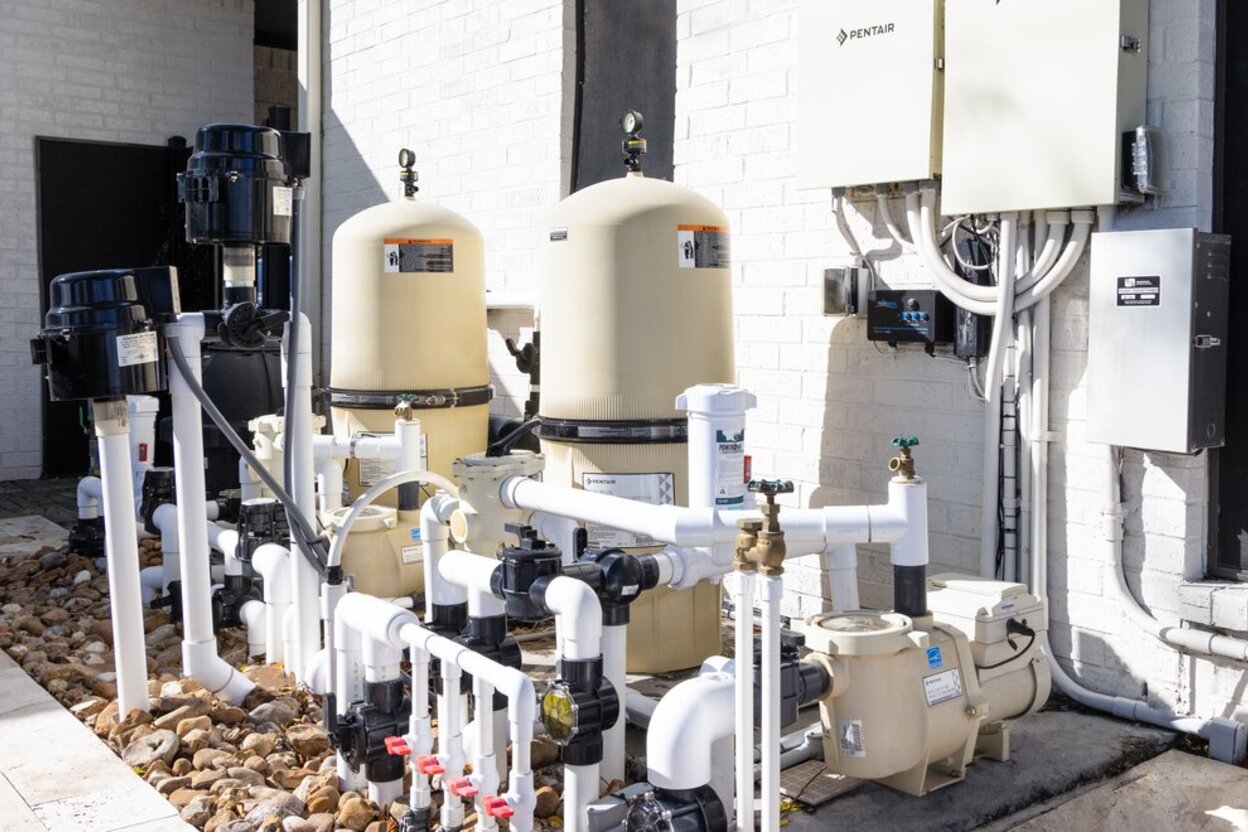
On recirculate, water flows from the pool, through the pump, and directly back through the return jets, completely bypassing the filter tank. It moves water without cleaning it - which makes it useful for a few narrow, non-cleaning jobs:
- Distributing chemicals. After adding chlorine, acid, or algaecide, recirculate spreads them evenly without the filter pulling them out.
- Keeping water moving while you vacuum to waste, or running circulation when you specifically don't want to load the filter.
What it does not do is remove debris. Everything you vacuum on recirculate returns to the pool through the jets - you're stirring and redistributing dirt, not getting it out. If clean water is the goal, recirculate is the wrong tool.
Does Letting It Settle, Then Filtering, Finish the Job?
Partly - it depends on how heavy the debris is.
Fine material (silt, dust, dead or flocced algae) never fully commits to the floor. Circulation keeps nudging it, so over several turnovers it works its way to the main drain and skimmer, reaches the filter, and sand or DE catches it. This is the same mechanism that clears a cloudy pool by just running the pump. For fines, settle-then-filter genuinely works.
Heavy debris (leaves, twigs, larger particles) is different. Once it settles on the bottom, normal circulation won't lift it back up: the skimmer only pulls from the surface, and the main drain won't draw a leaf up off the floor - and if a leaf did reach the pump, it would land in the pump basket, not the filter. So filtering alone does not recover settled heavy debris. You have to physically vacuum it up, and on a sand or DE system the right setting for that is waste (or filter, if you don't mind backwashing as it loads). Recirculate just blows it back out the returns.
During a SLAM, Keep the Filter Running
One common mix-up: recirculate is not a green-pool recovery step. During a SLAMShock Level And Maintain — raise free chlorine to a target based on your CYA and hold it there until the algae is gone. It's a process, not a one-time dose. the SLAM walkthrough → (Shock Level And Maintain), clearing the dead algae is the filter's job - you want it running continuously, cleaning or backwashing it as it loads up. Bypassing the filter on recirculate defeats the whole point. The only narrow place recirculate fits mid-SLAM is keeping water moving while you vacuum a heavy layer of dead algae out to waste. Hold your free chlorine at the shock level for your CYACyanuric Acid (stabilizer) — Sunscreen for your chlorine — it keeps sunlight from burning it off. The catch: the more you have, the more chlorine you need to keep. learn more → (use our all-in-one pool calculator) and let the filter do the clearing.
If You Have a Cartridge Filter
Everything above assumes a sand or DE filter with a multiport valve. Cartridge filters don't have one - there's no recirculate, waste, or backwash position to choose. Water just goes pool → pump → cartridge → returns. So on cartridge: vacuum on your normal (filter) setting, net out the big leaves and debris by hand first so the cartridge doesn't clog, and pull and rinse the element partway through if pressure climbs. The settle-and-switch-modes routine doesn't apply to you.
How to Vacuum (Sand/DE Multiport Systems)
Preparation
Turn off the pump, set the multiport valve to the position you need - Waste to remove heavy debris, or Recirculate to circulate without filtering - and restart. Connect the vacuum head to the telescoping pole, attach the hose, and prime it by holding the open end against a return jet until it fills completely with water. This pushes the air out so the pump doesn't lose prime.
Technique
Move slowly and deliberately. Going fast just stirs debris up into the water column - especially on recirculate, where it has nowhere to go but back into the pool. Work in slow, overlapping passes like mowing a lawn, and take your time around steps, corners, and the deep end where heavier debris collects. If you're on waste, watch the water level and top off as needed so the pump stays primed.
Swimming Safety
It's not safe for kids - or anyone - to swim until the water is genuinely clean. If you vacuumed on recirculate, the debris is still in the pool, so wait until it has settled (a few hours), you've run the filter for at least one full turnover, and the water is clear. The real test is visibility: you should be able to clearly see the bottom and the main drain from the deck. Per the CDC's Model Aquatic Health Code, free chlorine shouldn't exceed 10 ppm with anyone in the water, with pH held at 7.2-7.8 - so if you've been holding shock level, let FCFree Chlorine — The chlorine actively sanitizing your water right now. This is the number you keep an eye on. how much you need → drift back under about 10 ppm before anyone gets in. You can vacuum at any chlorine level; the gate for swimming is clarity and FC, not the vacuuming itself.
Other Options
Filter setting with frequent backwashing. For a moderately dirty pool (not a heavy storm load), you can vacuum on the normal filter setting and just backwash or clean the filter more often to stay ahead of the pressure.
Hand removal first. For large leaves, twigs, or toys, scoop or net them out before vacuuming - it cuts the load on the filter (or the waste line) no matter which setting you use, and it's the single biggest thing you can do to avoid clogging.
Maintenance Tips
Regular upkeep keeps you out of the heavy-debris situation in the first place: skim daily, brush weekly, keep a cover on during storm season, and hold your chemistry steady so algae never gets going. When the pool stays clean, ordinary filter-setting vacuuming handles everything and you never need to think about recirculate or waste.
Still need help? Ask a Pool & Spa Expert AD
Get a personalized answer from PoolGuy810 — 30 years owning a pool and spa repair company. Describe your issue and get step-by-step help.
Need More Help?
Try our free pool calculators and tools to help diagnose and fix your pool problems.
Browse Pool ToolsSLAM calculator, pH calculator, salt dosing & more