

How to Vacuum Your Pool: Complete Step-by-Step Guide

What's the proper way to set up and use a pool vacuum?
Read full question
Called three pool stores asking which vacuum head to buy and got three different answers, now I'm more confused than when I started. Last time I tried, I think I messed up the connection and didn't get good suction.
What's the right order to hook everything up? And is there a technique to actually vacuuming that works better than just randomly pushing it around? I feel like I'm missing some obvious steps here!
Quick Answer
Connect your vacuum head to telescoping pole and hose, prime the system by submerging the hose underwater until bubbles stop, then attach to skimmer and systematically vacuum in overlapping strokes.
Equipment You'll Need
Before starting, gather these essential components:
- Vacuum head - Choose between wheeled or weighted models: brush or wheeled heads suit vinyl liners and fine debris, while weighted flex or triangular heads grip concrete and follow floor contours
- Telescoping pole - Should extend to reach your pool's deepest areas
- Vacuum hose - Length should exceed your pool's longest dimension
- Skim-Vac or vacuum plate - Fits over your skimmer basket
- Pool brush - For pre-cleaning stubborn debris
Step-by-Step Vacuuming Process
1. Prepare Your Pool
Start by removing large debris with your leaf net and turn off any automatic pool cleaners. Brush the pool walls and floor to loosen any algae or stuck-on dirt - this prevents you from just stirring up debris while vacuuming. Check that your pool's circulation system is running and the skimmer basket is clean. Ensure all electrical equipment is properly grounded and avoid handling electrical components with wet hands. Never vacuum while swimmers are in the pool due to suction entrapment risks.
2. Assemble Your Equipment
Attach the vacuum head firmly to your telescoping pole. The connection should be secure to prevent the head from detaching underwater. Next, connect one end of your vacuum hose to the vacuum head. Most hoses have universal fittings, but ensure a tight seal to maintain proper suction.
3. Prime the Vacuum Hose
This is the most critical step that many pool owners skip. You must remove all air from the hose to create proper suction. Hold the vacuum head underwater in the shallow end, then gradually feed the entire hose underwater, allowing water to fill it completely. You'll see air bubbles escaping from the free end of the hose. Keep the hose submerged until the bubbles stop completely - this indicates the hose is fully primed.
4. Connect to Skimmer
While keeping the free end of the hose underwater (to prevent air from re-entering), quickly move it to your skimmer. If using a Skim-Vac plate, place it over your skimmer basket first, then connect your hose to the plate's center opening. For dedicated vacuum ports, simply connect the hose directly. You should immediately feel strong suction if properly primed.
5. Begin Vacuuming
Start in the shallow end and work systematically toward the deep end. This prevents debris from settling back into areas you've already cleaned as particles naturally sink to lower areas. Move the vacuum head slowly - about 1-2 feet per 6-8 seconds depending on debris load. Rapid movements will stir up debris faster than your system can capture it, creating a cloudy mess.
Use overlapping strokes like mowing a lawn. Each pass should overlap the previous one by 6 inches to ensure complete coverage. Pay special attention to areas where debris typically accumulates: around steps, behind ladders, and in corners where circulation is weaker.
Advanced Techniques
Dealing with Heavy Debris
For pools with significant leaf accumulation or algae patches, consider using the "waste" setting on your multiport valve if available. This bypasses your filter and sends debris directly to waste, preventing filter clogging. Remember to monitor your water level closely when using waste mode, as you'll need to add water to compensate.
Maintaining Suction
If suction weakens during vacuuming, check these common issues:
- Air leaks at connections - retighten all fittings
- Clogged skimmer basket - clean and reinstall
- Dirty filter - backwash or clean as needed
- Hose kinks or tangles - straighten carefully
Automatic Pool Cleaners
While manual vacuuming provides thorough control, automatic cleaners offer convenience for regular maintenance. Suction-side cleaners attach to your skimmer and move randomly around the pool. Pressure-side cleaners use return water pressure and often include debris bags.
Robotic cleaners operate independently with their own filtration systems and programmable cycles. Top 2026 models include the Aiper Scuba S1, a cordless unit weighing under 20 lb that cleans floors, walls, and the waterline for around $600; the Beatbot AquaSense 2, a premium navigation model with smart mapping that starts around $1,300 (more for the Pro and Ultra versions); and the Hayward SharkVac XL, compatible with pools up to 40 ft long, featuring a three-hour cleaning cycle and dual fine-porosity filters that capture particles as small as 5 microns. These premium options provide the most thorough cleaning but require higher initial investment.
Post-Vacuuming Care
After vacuuming, immediately clean your skimmer basket and backwash or clean your filter system. Debris captured during vacuuming can quickly clog filters and reduce circulation efficiency.
Test your water chemistry within 24 hours, as disturbed debris can affect pH and chlorine demand. Brush any areas where debris was heavily concentrated to prevent algae growth in those spots.
Pro tip: Vacuum weekly during swimming season to prevent debris buildup that requires more aggressive cleaning methods. Regular maintenance keeps your pool crystal clear and reduces chemical demands.
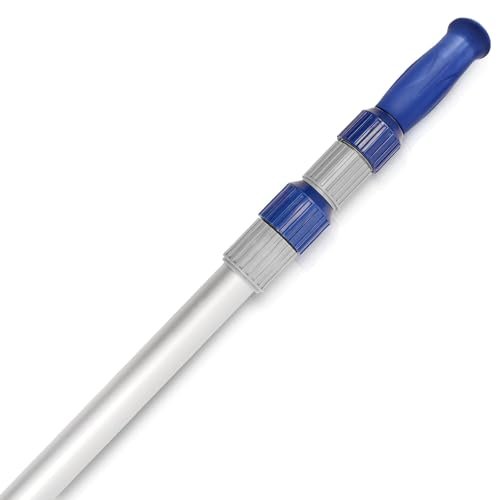 Poolvio 15 ft Telescopic Pool Pole (3-Piece Aluminum)
Telescoping pole that fits brushes, skimmer nets, and vacuum heads. View on Amazon →
Poolvio 15 ft Telescopic Pool Pole (3-Piece Aluminum)
Telescoping pole that fits brushes, skimmer nets, and vacuum heads. View on Amazon →
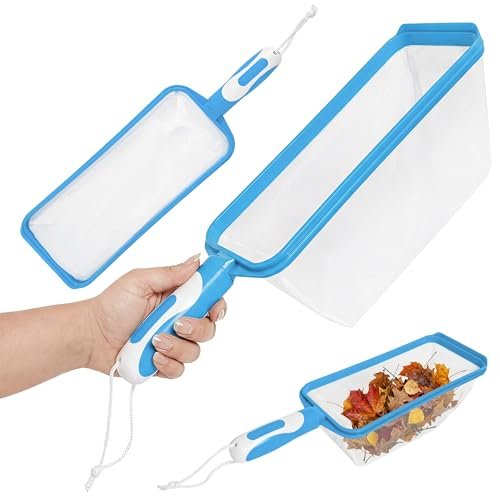 The Skimmie Handheld Pool Skimmer Net
Grab-and-go hand skimmer for leaves and debris off the surface. View on Amazon →
The Skimmie Handheld Pool Skimmer Net
Grab-and-go hand skimmer for leaves and debris off the surface. View on Amazon →
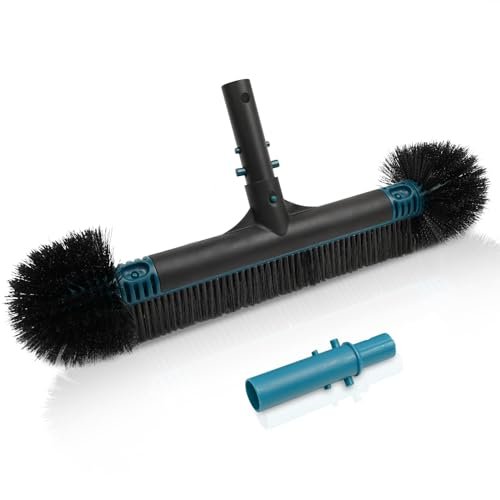 Poolvio 20" 2-in-1 Pool Brush Head (Walls & Floor)
Sturdy 20-inch brush head that clips onto any standard telescopic pole. View on Amazon →
Poolvio 20" 2-in-1 Pool Brush Head (Walls & Floor)
Sturdy 20-inch brush head that clips onto any standard telescopic pole. View on Amazon →
Still need help? Ask a Pool & Spa Expert AD
Get a personalized answer from PoolGuy810 — 30 years owning a pool and spa repair company. Describe your issue and get step-by-step help.
Need More Help?
Try our free pool calculators and tools to help diagnose and fix your pool problems.
Browse Pool ToolsSLAM calculator, pH calculator, salt dosing & more