
Should You Shock Pool When Chlorine Is Already High?

Should I shock my pool when chlorine levels are already high?
Read full question
Called my pool guy about my 8-year-old chlorination system that's overdosing — should I shock anyway or risk algae growth? My pool's total chlorine reading is showing high levels, but I'm uncertain whether shocking is still necessary or potentially harmful in this situation.
Specifically, I want to understand the relationship between total chlorine, free chlorine, and combined chlorine levels when determining shock treatment protocols. What's the proper testing sequence and decision matrix for shock treatment when initial chlorine readings appear elevated?
Quick Answer
You typically don't need to shock if free chlorine is genuinely high, but you should test for combined chlorine (chloramines) first. High total chlorine with low free chlorine indicates you need to shock to break down chloramines. Use the SLAM method to shock to the appropriate level for your CYA and hold until combined chlorine drops below 0.5 ppm. Maintain proper CYA and pH levels to prevent future issues.
First, Let's Diagnose the Real Problem
Despite what you've heard, high chlorine readings don't always mean you should skip shocking your pool—in fact, sometimes it's exactly when you need to shock most. Many pool owners make the mistake of looking only at total chlorine, when the key is understanding the difference between free chlorine (FCFree Chlorine — The chlorine actively sanitizing your water right now. This is the number you keep an eye on. how much you need →) and combined chlorine (CCCombined Chlorine — "Used-up" chlorine left over from doing its job. Above about 0.5 ppm is the classic sign water needs a shock. learn more →).
The most common scenario where chlorine appears high but shocking is still needed occurs when you have high combined chlorine levels (chloramines). These are spent chlorine molecules that have already done their sanitizing work but remain in the water, creating that strong "chlorine" smell and eye irritation that many people associate with over-chlorinated pools.
Step 1: Test Your Water Properly
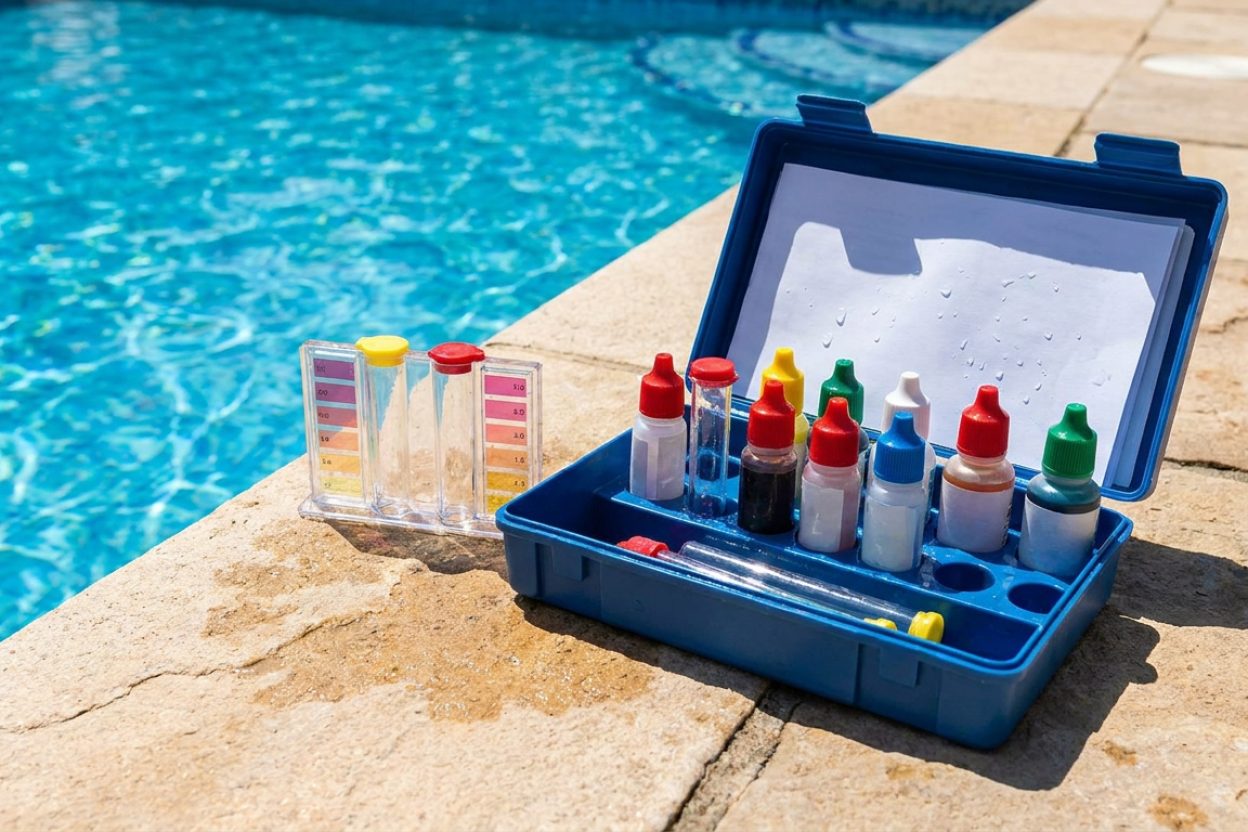
Use a quality test kit like the Taylor K-2006 or Taylor K-2005 to get accurate readings of both free chlorine and total chlorine. Pool test strips are notoriously inaccurate for this type of diagnosis and can lead you to make incorrect treatment decisions.
What to look for:
- Free Chlorine (FC): The active sanitizer currently working in your pool
- Total Chlorine (TC): Free chlorine plus combined chlorine
- Combined Chlorine (CC): Calculate this by subtracting FC from TC
If your combined chlorine is above 0.5 ppm, you need to shock regardless of how high your total chlorine reading appears.
Step 2: Determine If Shocking Is Necessary
Here are the scenarios where you should proceed with shocking even when chlorine appears high:
High Combined Chlorine (Chloramines)
If CC is above 0.5 ppm, it is time to shock. The classic rule of thumb is to raise free chlorine to the SLAMShock Level And Maintain — raise free chlorine to a target based on your CYA and hold it there until the algae is gone. It's a process, not a one-time dose. the SLAM walkthrough → level for your CYACyanuric Acid (stabilizer) — Sunscreen for your chlorine — it keeps sunlight from burning it off. The catch: the more you have, the more chlorine you need to keep. learn more → and hold it until CC clears. Our all-in-one pool calculator works out how much chlorine to add for your pool size — always re-test as you go. The shock level is temporary: once CC drops below 0.5 ppm, FC falls back to normal.
Algae Growth Despite High Readings
If you're seeing algae growth but your test shows high chlorine, you likely have a cyanuric acid (CYA) problem. Test your stabilizer levels - they should be between 30-50 ppm for regular pools or 60-80 ppm for salt water generators. If CYA is above 100 ppm, your chlorine becomes ineffective regardless of the reading, and you'll need to partially drain and refill your pool.
Cloudy Water or Strong Chlorine Odor
These symptoms typically indicate chloramines, even if your total chlorine reads high. The strong smell means your chlorine isn't working effectively and needs to be "reset" through shocking.
Step 3: When NOT to Shock
Don't shock your pool if:
- Free chlorine is genuinely high (above 10 ppm) with low combined chlorine (under 0.5 ppm)
- You recently shocked and FC levels haven't dropped yet
- pH is above 8.0 (lower pH first, mainly to prevent scaling/cloudiness and keep readings accurate)
- You're using trichlor tablets heavily (these add cyanuric acid and can cause false high readings)
Step 4: Proper Shocking Technique
If you've determined shocking is necessary despite high chlorine readings:
- Confirm pH is in the normal 7.2-7.8 range before shocking; there's no need to force it to a narrow band for sanitizing
- Calculate the amount of liquid chlorine needed using our all-in-one pool calculator
- Add liquid chlorine in the evening to prevent sun degradation
- Run your pump continuously during the shocking process
- Retest FC and CC levels after 1 hour, then every few hours
- Continue adding chlorine until CC drops below 0.5 ppm
Dosing guideline: Generally, 1 gallon of liquid chlorine (12.5% sodium hypochlorite) will raise FC by about 6 ppm in a 20,000-gallon pool.
Step 5: Prevent Future Issues
To avoid confusion about chlorine levels in the future:
- Test FC and TC separately, not just total chlorine
- Maintain proper cyanuric acid levels (30-50 ppm for regular pools, 60-80 ppm for salt water generators)
- Keep pH between 7.2-7.8 (no need to force it to a narrow band for sanitizing)
- Maintain a higher FC target for your CYA during heavy use periods
- Consider switching from trichlor tablets to liquid chlorine for better control
Safety Warning: Never mix different types of pool chemicals, and always add chemicals to water, not water to chemicals. Wear safety goggles and gloves when handling pool chemicals.
Monitoring and Retesting
After shocking, test your water every 2-4 hours until free chlorine stabilizes back at your normal target for your CYA level (see the all-in-one pool calculator for an estimate of the free chlorine for your CYA). The process may take 6-24 hours depending on your starting combined chlorine level and pool size.
Remember that high chlorine readings don't always mean effective sanitization. By properly diagnosing whether you're dealing with free or combined chlorine, you can make the right decision about whether shocking is necessary for your specific situation.
For the full breakdown of safe chlorine levels by CYA level, see our pool water chemistry guide.
 Taylor K-2006C Complete FAS-DPD Pool & Spa Test Kit
The FAS-DPD kit pool pros trust — reads chlorine accurately even at shock/SLAM levels, plus pH, alkalinity, calcium hardness and CYA. View on Amazon →
Taylor K-2006C Complete FAS-DPD Pool & Spa Test Kit
The FAS-DPD kit pool pros trust — reads chlorine accurately even at shock/SLAM levels, plus pH, alkalinity, calcium hardness and CYA. View on Amazon →
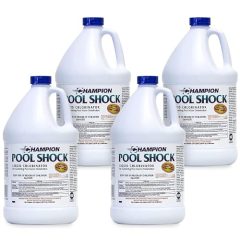 Liquid Chlorine / Sodium Hypochlorite (12.5%)
Everyday sanitizer — the B in BBB View on Amazon →
Liquid Chlorine / Sodium Hypochlorite (12.5%)
Everyday sanitizer — the B in BBB View on Amazon →
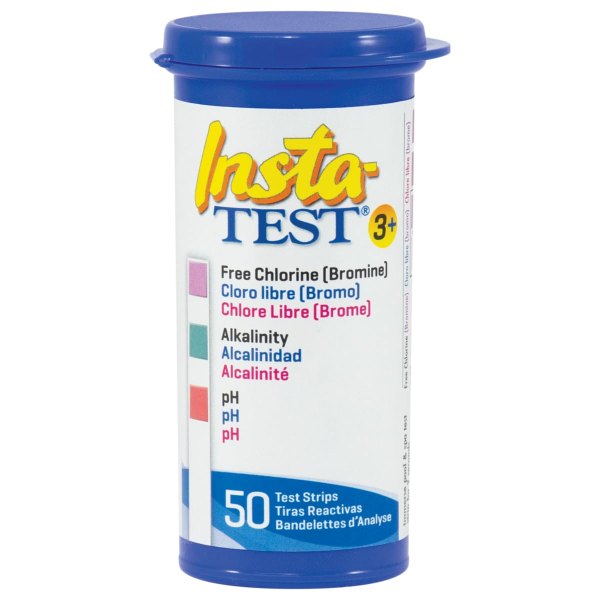 LaMotte Insta-Test 3 Pool Strips (50 ct)
Pro-grade 3-way strips from LaMotte — chlorine, pH & alkalinity, fast and accurate. Top-rated at 4.8★. View on Amazon →
LaMotte Insta-Test 3 Pool Strips (50 ct)
Pro-grade 3-way strips from LaMotte — chlorine, pH & alkalinity, fast and accurate. Top-rated at 4.8★. View on Amazon →
Still need help? Ask a Pool & Spa Expert AD
Get a personalized answer from PoolGuy810 — 30 years owning a pool and spa repair company. Describe your issue and get step-by-step help.
Related Pool Guides
Need More Help?
Try our free pool calculators and tools to help diagnose and fix your pool problems.
Browse Pool ToolsSLAM calculator, pH calculator, salt dosing & more