
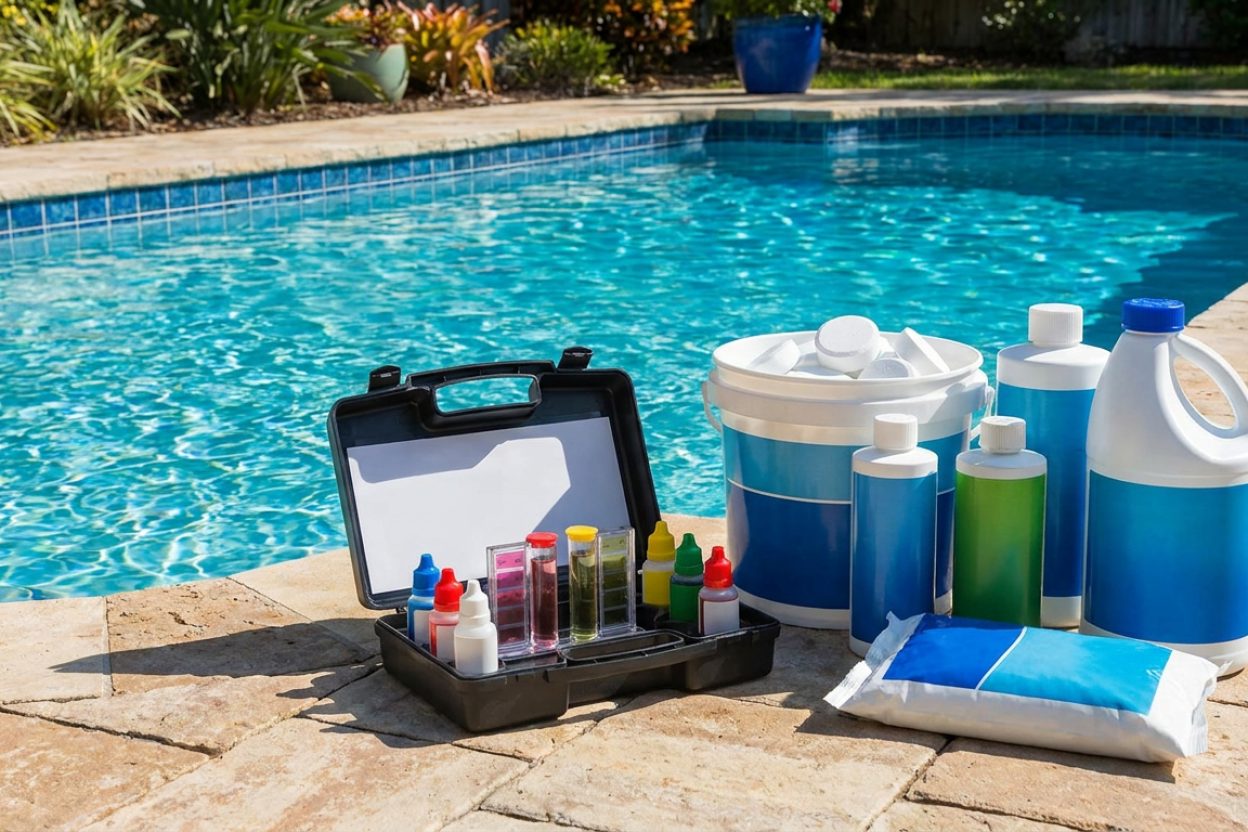
How to Raise Pool pH: Step-by-Step Guide for Pool Owners

What's the proper procedure for raising low pool pH levels?
Read full question
Woke up to find my pool eating through pH increaser like it's candy and I can't figure out why the levels keep crashing. My pool is approximately 10,000 gallons, and recent testing shows pH has fallen to unacceptable levels requiring adjustment.
What specific chemical should I use, what dosage calculations apply, and what's the proper sequence of steps? I want to ensure I follow proper water chemistry protocols including testing intervals and circulation requirements to achieve accurate results without overcorrection.
Quick Answer
To raise pool pH, add soda ash (sodium carbonate) at about 6 oz per 10,000 gallons to raise pH by about 0.2 units (or about 1 lb per 10,000 gallons as a starting dose when pH is below 7.2). Test pH first, add chemicals with pump running, wait 4-6 hours, then retest and adjust as needed.
Step-by-Step Guide to Raise Pool pH
Step 1: Test Current pH and Total Alkalinity Levels
- Use a reliable test kit like the Taylor K-2006 or TF-100 to measure your current pH level
- Also test total alkalinity (TATotal Alkalinity — The buffer that keeps your pH from bouncing around. Get this in range and pH gets a lot easier to manage. learn more →) as it directly affects pH stability
- Record both numbers - ideal pH range is 7.4-7.6, ideal TA is 80-120 ppm for regular chlorine pools or 60-80 ppm for salt water generators
- If your pH is below 7.2, raise it to protect equipment and surfaces from corrosion and for swimmer comfort (low pH actually makes chlorine slightly more active, so disinfection isn't the reason)
Step 2: Choose the Right Chemical
- Soda Ash (Sodium Carbonate): Use when you need to raise pH without significantly affecting total alkalinity. Best choice when TA is already in range
- Sodium Bicarbonate (Baking Soda): Primarily a total-alkalinity raiser — it moves pH only a little. Use it when TA is low; adding enough to shift pH would overshoot TA. For pH-only adjustment, use soda ash (or borax/aeration) instead
- Avoid using borax or other alternative chemicals unless you fully understand their effects on water balance
Step 3: Pick a Starting Dose (Then Size It With the Calculator)
- For Soda Ash: Use approximately 6 oz per 10,000 gallons to raise pH by 0.2 units (a ~1 lb per 10,000 gallon starting dose is common when pH is below 7.2) (general guideline - check manufacturer specifications)
- For Sodium Bicarbonate: Use approximately 1.5 lbs per 10,000 gallons to raise total alkalinity by about 10 ppm (it barely moves pH on its own — check manufacturer specifications)
- Start with smaller doses if you're unsure - you can always add more, but removing excess is difficult
- For the amount that fits your pool, size the dose with our easy-to-use pool calculator or browse our pool guides rather than working it out by hand — then add gradually and retest.
Step 4: Prepare for Chemical Addition
- Put on safety equipment: gloves, safety glasses, and closed-toe shoes
- Ensure your pool pump and filter system are running for proper circulation
- Never add chemicals to a static pool - circulation prevents localized high concentrations
- Have a clean bucket ready for pre-dissolving if using powder chemicals
Step 5: Add the Chemical Safely
- For liquid sodium carbonate: Pour slowly around the perimeter of the pool while walking, never dumping in one spot
- For powder soda ash: Pre-dissolve in a bucket of pool water, then pour the solution around the pool perimeter
- Distribute evenly around the pool perimeter to ensure good mixing
- Never add more than 2 lbs of soda ash per 10,000 gallons at one time - this prevents overshooting and potential scaling
- Keep the pump running for at least 4 hours after addition
Step 6: Wait and Retest
- Wait 4-6 hours before retesting pH levels to allow complete mixing and chemical reaction
- Test pH again using the same reliable test kit
- If pH is still below your target range, size the next dose with the calculator and add it
- Always wait another 4-6 hours between additions to avoid overshooting
Step 7: Monitor and Adjust Total Alkalinity if Needed
- Check total alkalinity after pH adjustments, as the two are closely related
- If TA is now too high (above 120 ppm for regular pools), you may need to lower it using muriatic acid
- Make small adjustments and retest - water chemistry changes can take 24 hours to fully stabilize
Important Safety and Timing Considerations
Safety Warnings
- Never mix chemicals together - add one type at a time with proper waiting periods
- Store chemicals in a cool, dry place away from direct sunlight
- Always add chemicals to water, never water to chemicals
- Keep pool area ventilated when adding chemicals
When to Retest
Test pH levels 2-3 times per week during swimming season, and always test before adding any chemicals. pH tends to rise in pools with salt water generators and fall in pools with heavy bather loads or rainfall.
Common Mistakes to Avoid
- Adding too much chemical at once - this can cause pH to overshoot above 8.0
- Not running circulation during chemical addition
- Testing too soon after chemical addition
- Ignoring total alkalinity levels when adjusting pH
Remember that maintaining proper pH is crucial for chlorine effectiveness, equipment longevity, and swimmer comfort. A pH below 7.2 can cause swimmer discomfort and equipment corrosion/etching; keeping pH in range protects your pool and keeps water comfortable (low pH actually slightly increases chlorine's active form) to keep your pool safe and clear.
For the full breakdown of safe chlorine levels by CYACyanuric Acid (stabilizer) — Sunscreen for your chlorine — it keeps sunlight from burning it off. The catch: the more you have, the more chlorine you need to keep. learn more → level, see our pool water chemistry guide.
 Taylor K-2006C Complete FAS-DPD Pool & Spa Test Kit
The FAS-DPD kit pool pros trust — reads chlorine accurately even at shock/SLAM levels, plus pH, alkalinity, calcium hardness and CYA. View on Amazon →
Taylor K-2006C Complete FAS-DPD Pool & Spa Test Kit
The FAS-DPD kit pool pros trust — reads chlorine accurately even at shock/SLAM levels, plus pH, alkalinity, calcium hardness and CYA. View on Amazon →
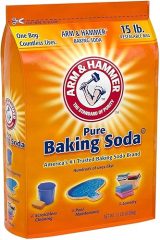 Arm & Hammer Pure Baking Soda (Alkalinity Up)
Raises Total Alkalinity cheaply View on Amazon →
Arm & Hammer Pure Baking Soda (Alkalinity Up)
Raises Total Alkalinity cheaply View on Amazon →
Still need help? Ask a Pool & Spa Expert AD
Get a personalized answer from PoolGuy810 — 30 years owning a pool and spa repair company. Describe your issue and get step-by-step help.
Related Pool Guides
Need More Help?
Try our free pool calculators and tools to help diagnose and fix your pool problems.
Browse Pool ToolsSLAM calculator, pH calculator, salt dosing & more