
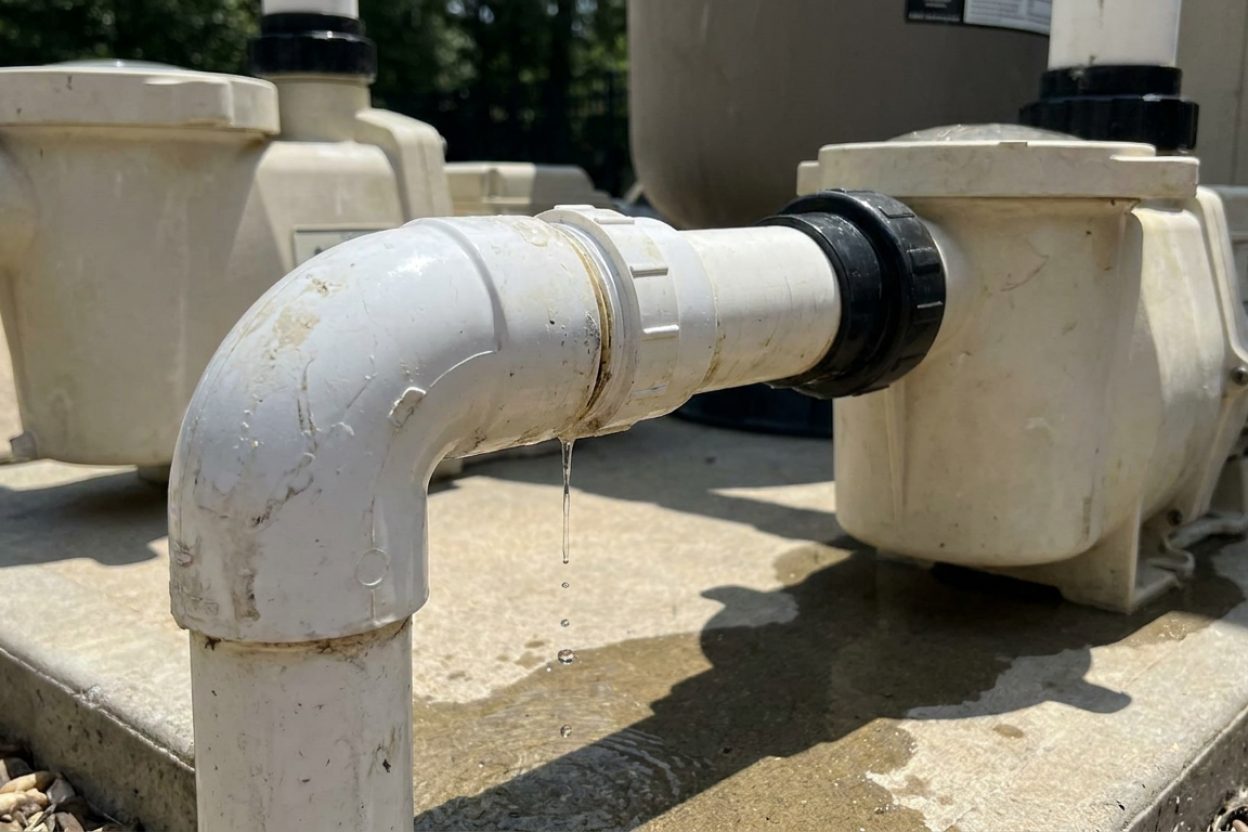
How to Know If Your Pool Has a Leak - Detection Signs & Tests

What are the signs that my pool is leaking water?
Read full question
Pulled back my pool cover this morning to find the water level dropped three inches overnight, and now I'm panicking about whether it's evaporation or a real leak. The water level seems to be dropping faster than usual, especially after I top it off.
What should I be looking for to confirm whether it's really leaking? Are there specific tests I can do myself, or obvious signs around the pool area that would give it away? I'd rather catch this early before it becomes a bigger problem!
Quick Answer
Pool leaks are identified by water loss exceeding normal evaporation (roughly 1/4–1/2 inch per day), confirmed by the bucket test, wet spots around the pool, and failing the bucket test. Look for equipment leaks, structural damage, and perform dye tests to confirm leak locations.
Visual Signs Your Pool Has a Leak
Before conducting any tests, start by observing these common visual indicators that suggest your pool is leaking water rather than experiencing normal evaporation:
- Wet or soggy areas around the pool deck, especially when the pool hasn't been used recently
- Settling or sinking of deck pavers or concrete around the pool perimeter
- Cracks in the pool shell, particularly at corners, steps, or where the main drain connects
- Loose or missing tiles at the waterline, which often indicate movement from water loss
- Air bubbles consistently entering through return jets when the pump is running
- Constantly running auto-fill systems or needing to add water more than twice per week
Equipment-Related Leak Indicators
Many pool leaks originate from equipment rather than the pool structure itself. Check these areas regularly:
Pump and Filter System
Inspect around your pool pump, filter housing, and heater for signs of water accumulation. Look for white calcium buildup or rust stains, which indicate chronic water exposure. Check all unions, o-rings, and connection points where different pieces of equipment join together.
Plumbing Connections
Underground plumbing leaks are among the most serious and expensive to repair. Signs include consistently low water levels despite no visible leaks, unusually high water bills, or soft spots in the yard near pool plumbing runs.
The Bucket Test - Definitive Leak Detection
This simple test distinguishes between normal evaporation and actual leaks with remarkable accuracy:
- Fill a 5-gallon bucket with pool water to about 2 inches from the top
- Place the bucket on the first or second step of your pool, ensuring it's partially submerged but won't tip over
- Mark the water level inside the bucket and on the outside where it matches the pool water level using a waterproof marker or tape
- Turn off your pool pump and any auto-fill systems during the test period
- Wait 24-48 hours without using the pool or adding water
- Compare water loss between the bucket and pool - if the pool loses significantly more water than the bucket, you have a leak
Safety Warning: Never perform this test during windy conditions or when significant rainfall is expected, as this will skew results.
Measuring Water Loss Rates
Normal evaporation varies by climate, but generally ranges from 1/4 to 1/2 inch per day (and can reach 1 inch per day in hot, dry, windy regions); 1/8–1/4 inch is typical only in humid climates. Factors affecting evaporation include temperature, humidity, wind, and sun exposure. If your pool consistently loses more than about 1/2 inch daily (or clearly more than the bucket test shows), investigate further.
To accurately measure water loss, use a piece of electrical tape or a grease pencil to mark the water level at the skimmer. Check this mark at the same time each day for several days, measuring any loss with a ruler.
Advanced Leak Detection Methods
Dye Testing
Once you suspect a leak location, use pool leak detection dye (available at pool supply stores) to pinpoint the exact spot. With the pump off, squeeze a small amount of dye near suspected areas like cracks, fittings, or tile joints. The dye will be drawn toward any leak, creating a visible stream.
Pressure Testing
For suspected plumbing leaks, professional technicians use pressure testing equipment to isolate individual lines. This involves plugging line ends and pressurizing each section to identify which specific pipe or fitting is compromised.
Chemical Clues to Pool Leaks
Unexplained chemical imbalances can indicate leaks, particularly when you're constantly adding the same chemicals. If you find yourself repeatedly adding stabilizer (CYACyanuric Acid (stabilizer) — Sunscreen for your chlorine — it keeps sunlight from burning it off. The catch: the more you have, the more chlorine you need to keep. learn more →) or shocking more often than normal, the fresh water you keep adding to replace leaked water may be diluting your chemical levels.
Similarly, if you're constantly topping off, the steady addition of fill water can require more frequent chemical adjustments — fill-water chemistry (e.g., hard or alkaline tap/well water) can push your pH and alkalinity around over time.
When to Call Professionals
While homeowners can identify most obvious leaks, certain situations require professional leak detection services:
- Suspected underground plumbing leaks
- Structural cracks requiring pressure injection repairs
- Leaks losing more than 1 inch per day
- Multiple potential leak sources requiring systematic elimination
- Warranty work on newer pools or recent renovations
Professional leak detection typically uses electronic listening equipment, pressure testing, and specialized dyes to pinpoint exact leak locations without unnecessary digging or demolition.
Still need help? Ask a Pool & Spa Expert AD
Get a personalized answer from PoolGuy810 — 30 years owning a pool and spa repair company. Describe your issue and get step-by-step help.
Need More Help?
Try our free pool calculators and tools to help diagnose and fix your pool problems.
Browse Pool ToolsSLAM calculator, pH calculator, salt dosing & more