
How to Tell If Your Pool Has a Leak - Step-by-Step Detection

How can I figure out if my pool is actually leaking?
Read full question
Noticed my pool water dropped three inches this week at 11 PM tonight — need to figure out if there's a leak before my pool guy arrives tomorrow morning. I mean, I know some water evaporates naturally, especially with this heat, but it seems like more than usual.
Is there like a reliable way to test whether it's just normal evaporation or if there's actually a leak? I don't want to call a pool guy and pay a fortune if it turns out to be nothing, but I also don't want to ignore a real problem.
Quick Answer
To determine if you have a pool leak, perform the bucket test by placing a bucket of water on your pool step and marking water levels in both. After 24 hours, if the pool water dropped more than the bucket water, you likely have a leak.
Step-by-Step Pool Leak Detection
Step 1: Perform the Basic Observation Test
- Mark your current water level on the skimmer or pool wall using a waterproof marker or tape
- Turn off your pool equipment (pump, heater, automatic fill valve) for 24 hours
- Measure the water loss after 24 hours
- If you lost more than ½ inch, proceed to the bucket test for confirmation
Step 2: Conduct the Bucket Test
- Fill a plastic bucket with pool water to about 1 inch from the top
- Place the bucket on the first or second step so it sits in the water (weigh it down with a rock or brick so it won't float away), with the water level inside the bucket matching the pool's water level. Don't set it on the deck — it needs to share the pool's sun, wind, and water temperature for an accurate reading
- Mark the water level inside the bucket and the pool water level outside the bucket
- Turn off all pool equipment including automatic fill systems
- Wait 24 hours and measure both water levels again
- Compare the water loss: if your pool lost significantly more water than the bucket, you have a leak
Step 3: Determine Leak Location Type
- Test with equipment running: Repeat the bucket test with your pump and filter running for 24 hours
- If water loss increases when equipment runs, the leak is likely in your circulation system (pipes, pump, filter)
- If water loss is the same or greater with the pump off, the leak is likely on the suction side or in the pool shell/liner
- Note where water stops dropping - structural leaks typically stop losing water when they reach the leak level (equipment leaks may continue regardless of water level)
Step 4: Inspect Common Leak Areas
- Check skimmers: Look for cracks around the skimmer box, loose fittings, or gaps in caulking
- Examine returns: Inspect return fittings for loose connections or cracked housings
- Inspect main drain: Look for visible cracks or shifting around the drain cover
- Check lights: Pool lights are common leak sources - look for loose conduit or housing issues
- Examine steps and corners: These stress points often develop cracks in concrete pools
- Review vinyl liner: Look for tears, holes, or separation from the coping
Step 5: Perform the Dye Test
- Purchase pool leak detection dye (available at pool supply stores)
- With water still and pump off, squeeze dye near suspected leak areas
- Watch the dye movement - it will be drawn toward any leak openings
- Test around all fittings, corners, cracks, and equipment connections
- Mark any areas where dye gets pulled in for professional repair
Understanding Normal Water Loss vs. Leaks
Normal evaporation rates:
- ¼ inch per day in moderate climates
- Up to ½ inch per day in hot, dry, windy conditions
- Less in humid climates or with pool covers
- More with heated pools, spas, or water features
Signs pointing to leaks:
- Water loss consistently exceeds normal evaporation rates for your climate conditions
- Water level drops to the same spot repeatedly
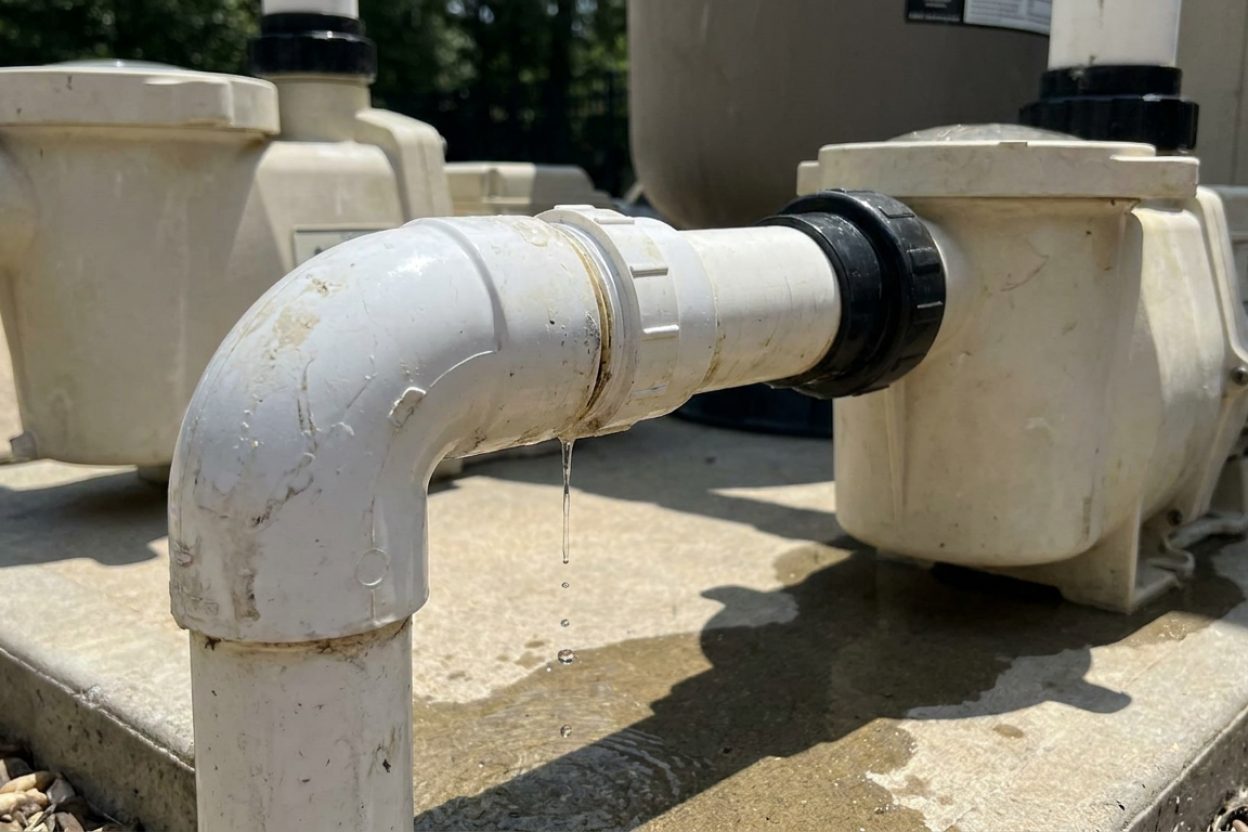
- Wet spots around pool equipment
- Air bubbles in return lines when pump starts
- Cracks in pool deck settling toward the pool
- Algae growth in specific areas (nutrients from soil intrusion)
When to Call a Professional
Contact a pool leak detection specialist if:
- Your bucket test confirms a leak but you cannot locate it visually
- The leak appears to be underground in your plumbing system
- You're losing more than 1 inch of water per day
- You find structural cracks that may indicate serious foundation issues
- Electronic leak detection equipment is needed for precise location
Professional leak detection typically costs $300-500 but can save thousands in water bills and structural damage. Many leak detection specialists use electronic equipment, pressure testing, and specialized dyes to pinpoint exact leak locations.
Immediate Steps After Confirming a Leak
- Document the leak rate and location for repair estimates
- Maintain proper water level for equipment operation (above skimmer bottom)
- Monitor your water bill for unusual increases
- Get multiple repair quotes for significant structural leaks
- Consider temporary measures like pool putty for minor leaks until professional repair
Remember that small leaks often become larger ones, and underground leaks can cause serious foundation and deck damage over time. Early detection and repair protect both your pool investment and your property.
Still need help? Ask a Pool & Spa Expert AD
Get a personalized answer from PoolGuy810 — 30 years owning a pool and spa repair company. Describe your issue and get step-by-step help.
Need More Help?
Try our free pool calculators and tools to help diagnose and fix your pool problems.
Browse Pool ToolsSLAM calculator, pH calculator, salt dosing & more