

How to Connect Pool Vacuum - Complete Setup Guide

Steps to hook up pool vacuum? First time setup.
Read full question
Staring at pool vacuum options online with my credit card ready, but genuinely wondering if I'm about to blow money on something that'll actually work. Need to connect it properly but instructions are confusing. What's the right order to attach everything - the head, pole, hose? And how do I connect to the skimmer without losing suction?
Quick Answer
Connect your pool vacuum by attaching the vacuum head to telescoping pole, connecting vacuum hose from head to skimmer, and priming the system by submerging the hose completely underwater before turning on the pump.
Types of Pool Vacuum Connections
The connection method depends on your vacuum type and pool setup. Most pools accommodate three main vacuum types: manual vacuums that connect to your filtration system, automatic suction cleaners, and robotic cleaners with independent power sources.
Manual Vacuum Connection
Manual vacuums are the most common and require direct connection to your pool's circulation system through either the skimmer or a dedicated vacuum port.
Automatic Suction Cleaner Connection
These cleaners connect similarly to manual vacuums but operate independently once connected, moving around your pool automatically.
Robotic Vacuum Connection
Robotic cleaners simply plug into electrical outlets and operate independently of your pool's filtration system.
Step-by-Step Connection Guide
For Manual and Automatic Suction Vacuums
- Assemble your vacuum head: Attach the vacuum head securely to your telescoping pole. Ensure the connection is tight to prevent disconnection during use.
- Connect the vacuum hose: Attach one end of your vacuum hose to the vacuum head. Most connections use a simple twist-lock or push-fit mechanism.
- Prime the vacuum hose: This critical step prevents air from entering your system. Hold the free end of the hose against a return jet, or slowly lower the entire hose into the pool, allowing water to fill it completely. You'll see air bubbles escaping - wait until they stop.
- Maintain hose prime: Keep your thumb over the hose end to prevent air from entering while moving to the connection point.
- Remove skimmer basket: Take out your skimmer basket and set it aside safely.
- Connect to skimmer: Insert the free end of the vacuum hose through the skimmer opening and into the suction port at the bottom. If you have a vacuum plate or skimmer adapter, place it over the hose end first.
- Alternative - dedicated vacuum port: If your pool has a dedicated vacuum port, connect directly to this instead of the skimmer.
- Turn on the pump: Start your pool pump and verify strong suction at the vacuum head.
- Begin vacuuming: Lower the vacuum head into the pool and start cleaning, moving slowly for best results.
For Robotic Pool Cleaners
- Unpack and inspect: Remove your robotic cleaner from packaging and inspect for any shipping damage.
- Charge if necessary: Some models require initial charging - check your manual.
- Connect power supply: Plug the power supply into a GFCI-protected outlet at least 12 feet from the pool edge.
- Lower into pool: Gently lower the cleaner into the pool, allowing it to sink to the bottom.
- Start cleaning cycle: Press the power button or use remote control to begin operation.
Common Connection Problems and Solutions
Poor Suction Issues
Weak suction usually indicates air leaks in your system. Check all hose connections, ensure proper priming, and verify your skimmer basket area is properly sealed. Warning: Never operate your pump without water circulation as this can cause severe damage.
Hose Floating Problems
If sections of your hose float, it contains air. Disconnect and re-prime the entire hose, ensuring complete water filling before reconnecting.
Vacuum Head Won't Stay Down
This typically results from insufficient suction due to air leaks or pump issues. Check your pump basket for debris and ensure proper hose priming.
Equipment Compatibility and Selection
Hose Length Requirements
Your vacuum hose should be long enough to reach the farthest corner of your pool plus an additional 3 feet. Measure from your skimmer to the opposite far corner for proper sizing.
Vacuum Head Types
Choose vacuum heads based on your pool surface: brush/soft-bristle heads for vinyl liners (gentle, won't scratch), weighted wheeled heads for concrete and gunite, and combination heads for versatility across surface types.
Maintenance and Safety Tips
Always turn off your pump before disconnecting vacuum equipment to prevent damage. Store vacuum hoses in shade when not in use to prevent UV degradation. Clean vacuum heads after each use to maintain optimal performance.
Safety Warning: Never leave electrical equipment plugged in around the pool area when not in use. Always use GFCI protection for all electrical connections.
Optimizing Vacuum Performance
For best results, vacuum when your pool's circulation system is operating efficiently. Check and clean your filter before vacuuming heavily soiled areas. Consider backwashing sand or DE filters before major cleaning sessions. (Cartridge filters cannot be backwashed — rinse or replace the element instead.)
If you're dealing with algae or heavily contaminated water, focus on water chemistry correction using the SLAMShock Level And Maintain — raise free chlorine to a target based on your CYA and hold it there until the algae is gone. It's a process, not a one-time dose. the SLAM walkthrough → method (Shock Level And Maintain) before attempting to vacuum debris, as stirring contaminated water can make the problem worse.
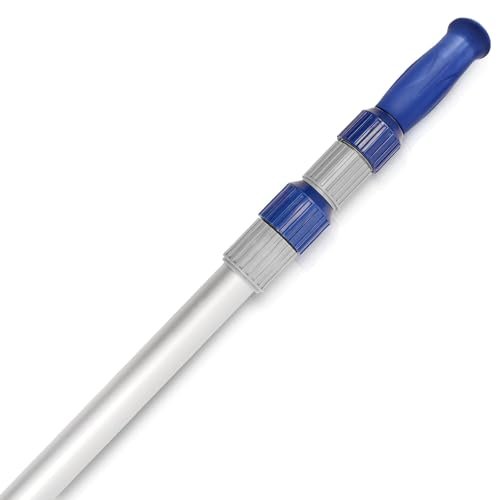 Poolvio 15 ft Telescopic Pool Pole (3-Piece Aluminum)
Telescoping pole that fits brushes, skimmer nets, and vacuum heads. View on Amazon →
Poolvio 15 ft Telescopic Pool Pole (3-Piece Aluminum)
Telescoping pole that fits brushes, skimmer nets, and vacuum heads. View on Amazon →
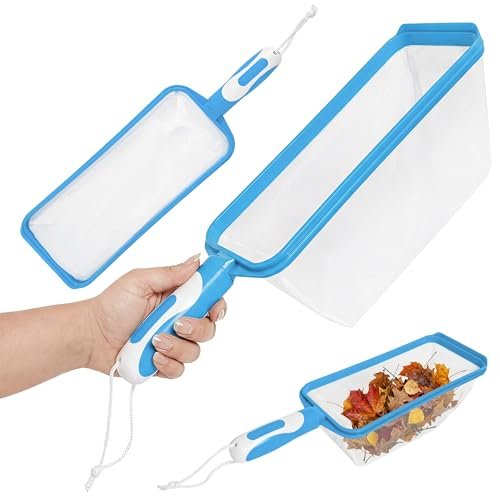 The Skimmie Handheld Pool Skimmer Net
Grab-and-go hand skimmer for leaves and debris off the surface. View on Amazon →
The Skimmie Handheld Pool Skimmer Net
Grab-and-go hand skimmer for leaves and debris off the surface. View on Amazon →
Still need help? Ask a Pool & Spa Expert AD
Get a personalized answer from PoolGuy810 — 30 years owning a pool and spa repair company. Describe your issue and get step-by-step help.
Need More Help?
Try our free pool calculators and tools to help diagnose and fix your pool problems.
Browse Pool ToolsSLAM calculator, pH calculator, salt dosing & more